
{
“@context”: “https://schema.org”,
“@graph”: [
{
“@type”: “FAQPage”,
“mainEntity”: [
{
“@type”: “Question”,
“name”: “Abgrenzung zum klassischen Personalwesen”,
“acceptedAnswer”: {
“@type”: “Answer”,
“text”: “Der grosse Unterschied zum traditionellen Personalwesen? Die Perspektive. Während das klassische Personalwesen oft rein verwaltend arbeitet – Verträge aufsetzen, Löhne überweisen, Absenzen verwalten –, denkt modernes HR vorausschauend und aktiv.”
}
},
{
“@type”: “Question”,
“name”: “Von der Einstellung bis zur Weiterentwicklung”,
“acceptedAnswer”: {
“@type”: “Answer”,
“text”: “Die Reise eines Mitarbeitenden beginnt lange vor dem ersten Arbeitstag. Alles startet mit der Personalbeschaffung. Hier geht es darum, die richtigen Talente für offene Stellen zu finden und sie davon zu überzeugen, dass dein Unternehmen die beste Wahl ist.”
}
},
{
“@type”: “Question”,
“name”: “Administrative Aufgaben, die den Betrieb sichern”,
“acceptedAnswer”: {
“@type”: “Answer”,
“text”: “Neben den strategischen Weichenstellungen gibt es natürlich auch die administrativen Pflichten, die für den täglichen Betrieb unerlässlich sind. Die Personaleinsatzplanung ist hier ein gutes Beispiel. Im Hotel muss das HR dafür sorgen, dass die Rezeption rund um die Uhr besetzt ist – auch bei kurzfr”
}
},
{
“@type”: “Question”,
“name”: “Flexibilität als Wettbewerbsvorteil”,
“acceptedAnswer”: {
“@type”: “Answer”,
“text”: “Der grösste Hebel für KMU liegt im Aufbau eines”
}
},
{
“@type”: “Question”,
“name”: “Mehr als nur Verwaltung”,
“acceptedAnswer”: {
“@type”: “Answer”,
“text”: “Strategisches HR in einem KMU bedeutet, weit über die reine Planung hinauszudenken. Es geht darum, Prozesse so zu gestalten, dass sie für dich und deine Mitarbeitenden einfach und transparent sind. Das ist kein „Nice-to-have“, sondern ein harter Effizienzfaktor.”
}
}
]
},
{
“@type”: “BreadcrumbList”,
“itemListElement”: [
{
“@type”: “ListItem”,
“position”: 1,
“name”: “Home”,
“item”: “https://job.rocks”
},
{
“@type”: “ListItem”,
“position”: 2,
“name”: “Einsatzplanung”,
“item”: “https://job.rocks/category/einsatzplanung/”
},
{
“@type”: “ListItem”,
“position”: 3,
“name”: “Human Resources Bedeutung: Was Du wirklich wissen musst”
}
]
}
]
}
Meta Description:Are you wondering what Human Resources means? Discover the true meaning of HR here, from strategic tasks to practical examples from everyday life.
What does Human Resources (HR) really mean?
Forget the clichés of payroll and vacation planning for a moment. The truemeaning of Human Resourcesgoes much deeper: It’s about shaping the entire journey an employee takes in your company – from the first application to personal development and exit.
HR is the engine that ensures you not only employ people but form a team that achieves goals together.
Human Resources is the driving force behind your team.
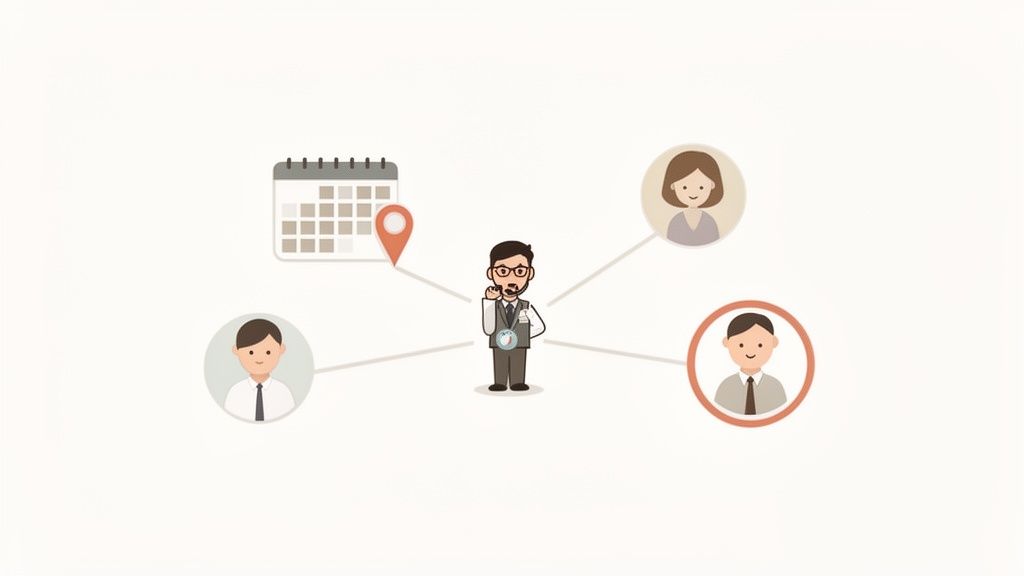
Of course, administrative tasks are part of it, no question. But modern HR is the partner that ensures your company functions as a whole.
Imagine an event agency that organizes a large music festival. Here, themeaning of Human Resourcesbecomes immediately tangible. The HR department not only ensures thatenoughstaff is available, but that they are also therightpeople.
- It recruits security personnel who bring the necessary certifications.
- It finds bar staff who can keep a cool head and a smile even in the biggest hustle.
- It plans shifts so cleverly that all legal breaks are observed and no one burns out.
At its core, HR ensures that the right skills are in the right place at the right time. It is the bridge between your company’s goals and the talents of the people who work for you.
Distinction from traditional personnel management
The big difference from traditional personnel management? The perspective. While traditional personnel management often works purely administratively – drafting contracts, processing salaries, managing absences – modern HR thinks proactively and actively.
It shapes the corporate culture, actively promotes the development of employees, and plans future personnel needs. This mindset makes the difference.
The following table shows you the differences between the modern HR approach and traditional personnel management at a glance.
Human Resources vs. traditional personnel management in comparison
| Feature | Modern Human Resources | Traditional Personnel Management |
|---|---|---|
| Focus | Strategic & active:Employees as the most valuable asset | Administrative & reactive:Management of personnel files |
| Goal | Achieve long-term corporate goals through talent development | Ensure smooth administrative processes |
| Role | Partner of management, culture shaper | Service provider for administrative tasks |
| Tasks | Talent management, culture development, succession planning | Payroll, contract creation, vacation management |
| Perspective | Proactive:Plans future skill needs | Retrospective:Manages the current personnel stock |
As you can see, HR is not just about filling an open position. It’s about finding exactly the person who enriches the team both personally and professionally and wants to grow with the company.
This modern approach ensures that your employees remain motivated and can reach their full potential. That is the key to long-term success.
The core functions of HR that every company needs
Human Resources is much more than just an administrative position. You could call it the operating system for your team that ensures everything runs smoothly. Themeaning of Human Resourcesis not reflected in dry theory, but in the daily tasks that cover the entire employee cycle and contribute directly to the success of the company.
These core functions interlock like gears. Each one is important on its own, but only in combination do they unleash their full power and turn a group of employees into a powerful team.
From hiring to development
The journey of an employee begins long before the first day of work. It all starts with recruitment. Here, it’s about finding the right talents for open positions and convincing them that your company is the best choice.
Imagine you run a hotel and are looking for a new head for the reception. HR defines the exact requirements, places ads on the right channels, and conducts the first interviews to select the suitable candidates.
Once the perfect person is found, onboarding begins. A good onboarding is worth its weight in gold, as it ensures that new team members quickly find their way and are productive from day one. In the hotel example, this means not only explaining the booking software but also conveying the values and service philosophy of the establishment.
Other central tasks here include:
- Training and development:Good HR proactively identifies training needs and organizes training sessions. This keeps your team engaged and developing.
- Performance evaluation:Regular, honest conversations help to fairly assess performance, set goals together, and specifically promote the personal development of your employees.
- Compliance and legal matters:HR is the shield of your company. It ensures that all labor law requirements, such as GDPR, are strictly adhered to, protecting you from costly legal risks.
Administrative tasks that secure operations
In addition to strategic decisions, there are of course also the administrative duties that are essential for daily operations. Personnel deployment planning is a good example here. In the hotel, HR must ensure that the reception is staffed around the clock – even in cases of short-term illness or during holiday periods.
Accurate time tracking, in turn, forms the basis for timely and error-free payroll. Similarly, the design and communication of clear vacation policies, including special regulations such asspecial leave for relocation, are among the core functions.
Accurate administration is not an end in itself. It builds trust among employees and ensures a smooth process so that everyone can focus on their actual tasks.
These tasks show: HR does not just manage; it actively increases the value of your company. The strategic importance of this role is steadily growing, which is also reflected in salaries. In fact, personnel management in Switzerland is among the sectors with the highest salaries for executives. Future competencies such as dealing with AI and data analysis will further enhance this role.
Efficient HR processes are the foundation for a successful team. A well-thought-outHR software solutioncan help you automate many of these tasks and reduce administrative effort to a minimum.
Why strategic HR is crucial for SMEs
You might think that thoughtful Human Resources management is only for large corporations. That is a misconception. On the contrary: especially for small and medium-sized enterprises (SMEs), a strategic HR approach is often the key to growth and stability.
This is particularly evident in industries characterized by high personnel demand and fluctuating workloads – think of event service providers, gastronomy, healthcare, or security services. Here, the ability to react quickly to peak demands or unforeseen events determines success.
Flexibility as a competitive advantage
The biggest lever for SMEs lies in building aflexible workforce.Imagine you run a security service and win the contract to secure a huge music festival. For these three days, you need150 additional security personnelwho all must have very specific qualifications.
- Who is even available?
- Do they all have the necessary certifications, and are they still valid?
- How do you plan and communicate the shifts in compliance with GDPR?
Without a strategic HR approach and the right digital tools, this task quickly becomes an administrative nightmare. A flexible pool gives you the freedom to respond to such demand spikes without having to bear the high fixed costs of a large workforce all year round.
This infographic highlights the central HR functions that interconnect here.
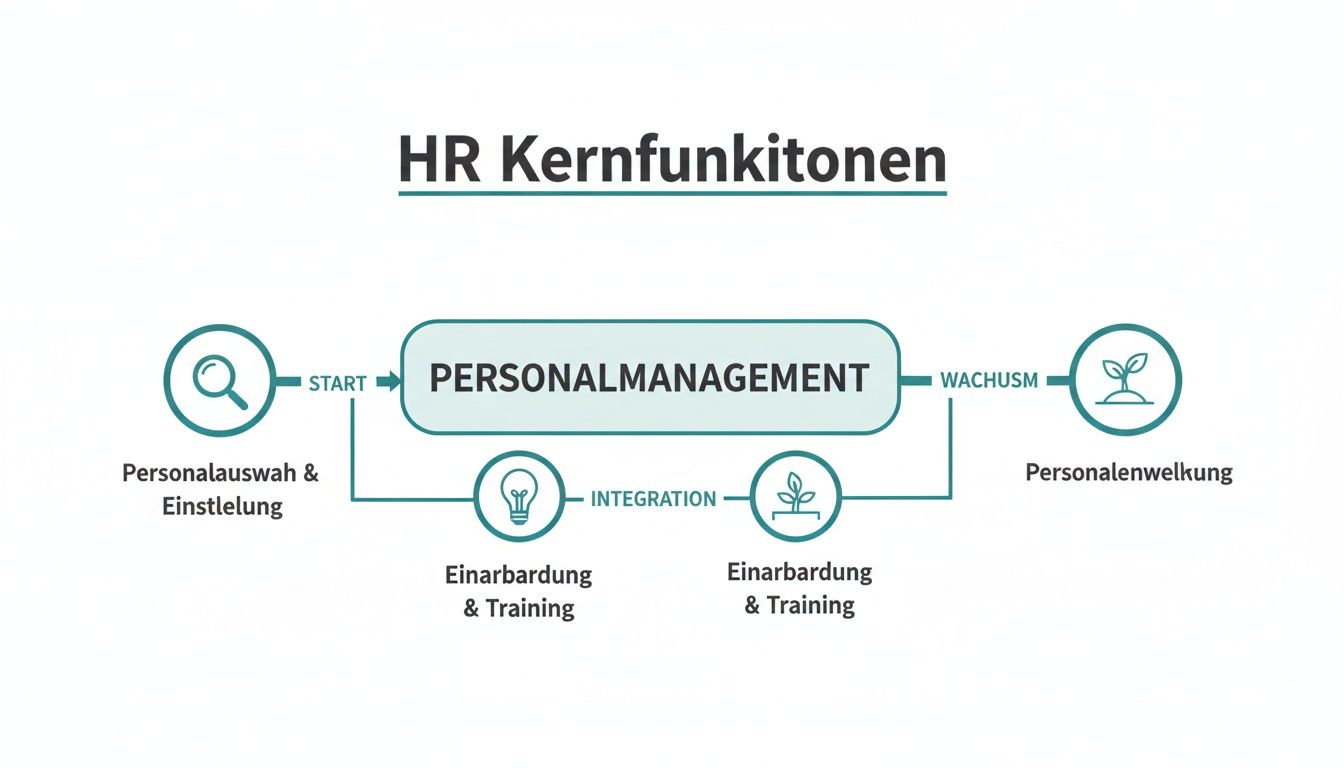
It is immediately clear: personnel selection, onboarding, and development are not isolated tasks. They build on each other to create a pool of qualified and immediately deployable individuals.
More than just administration
Strategic HR in an SME means thinking far beyond mere planning. It’s about designing processes so that they are simple and transparent for you and your employees. This is not a ‘nice-to-have,’ but a hard efficiency factor.
When your team can independently enter their availability via a mobile app, confirm shifts, and track working hours, you not only save massive administrative effort. You also increase the satisfaction and responsibility of your people. They feel valued, have more control over their working hours, and their commitment to your company grows.
A modern HR system is not a luxury for SMEs but a tool that directly contributes to efficiency and employee satisfaction. It creates the necessary space for you to focus on your core business.
Themeaning of Human Resourcesis crystal clear here: It is the strategic lever that enables SMEs to remain agile, competitive, and attractive as employers. If you want to dive deeper into how you candigitize your HR processesyou will find practical tips in our follow-up article.
Current HR trends you should know
The world of work is never static. What was new yesterday is already standard today. Naturally, themeaning of Human Resourcesis constantly evolving and adapting to new realities. To remain competitive, you must know the developments that are shaping the rules of the game today and will be part of everyday life tomorrow.
Two major drivers set the pace: the ongoing digitalization and the shift towards more flexible working models. These are not abstract concepts from a textbook; they have concrete impacts on how you set up and lead your team.
Gig Economy and flexible workforce pools
The rise of theGig Economyhas fundamentally changed our perception of work. More and more people are seeking flexible engagements instead of rigid permanent positions. For you as an entrepreneur, this is a huge opportunity. You can build a flexible pool of qualified individuals to respond quickly to peak demands without letting your fixed costs skyrocket.
This is where the modernmeaning of Human Resourcesis shown in its purest form. It’s no longer just about managing a list of permanent employees. It’s about managing a network of permanent and freelance employees.
Imagine a promotion agency that has to manage a nationwide sampling campaign for a client. At50 locationssimultaneously, perfectly briefed promoters must be deployed for a single day. Without digital support, that would be an administrative chaos.
- Who is available on that day?
- How do you communicate the exact deployment locations and briefings to the right person?
- How do you accurately and GDPR-compliantly track working hours at all locations?
A central system in which promoters can manage their availability themselves and you can schedule shifts with just a few clicks is not a nice extra here, but vital. It is the difference between a smooth operation and an organizational disaster.
Digitalization and Employee Self-Service
Digitalization is the second major trend that is currently transforming HR management. Modern HR tools and mobile apps fundamentally change communication and organization. The term you should remember isEmployee Self-Service (ESS)
Instead of having to call the HR department for every little thing, your employees can take care of many things themselves. This not only relieves you but also strengthens personal responsibility within the team.
Through a simple mobile app, they can update their availability, apply for open shifts, check their hours worked, or even swap shifts with each other. This not only saves you valuable time but also gives your team more autonomy and responsibility.
Such digital tools are essential today to efficiently manage a flexible team. They drastically reduce administrative effort and create space for truly important strategic tasks – like the development of your people. At the same time, they ensure transparency and a fair, comprehensible planning process, which enhances the satisfaction and retention of your team.
How HR responds to new challenges in the labor market
The labor market is anything but static. It is constantly changing, and modern HR must be able to respond agilely. Currently, we are experiencing a kind of normalization after the turbulent past years. However, issues likeskilled labor shortageandturnoverremain high on the agenda, even if the signs are shifting slightly.
For you, this means staying vigilant. In some sectors, there may be a slight easing, but in others, the fight for qualified personnel remains tough.
Skilled labor shortage and the right counter-strategies
Especially in health and technical professions, it is still a huge challenge to find the right people. A strategic HR does not only respond with increased recruiting. It becomes much more important to retain and specifically develop the existing employees in the company.
A proactive approach to employee retention thus becomes a competitive advantage. In dealing with new stresses, such as the rising stress levels in the team, HR departments can also promote concepts likemindfulness in everyday life as a tool against stressto actively improve well-being.
The skilled labor shortage index for Switzerland has recently fallen slightly, indicating a certain calming. Nevertheless, skilled workers in sectors like health and technology remain highly sought after. At the same time, older employees over50often have difficulties finding jobs.
This means for you: Efficient HR processes, supported by self-service apps and flexible personnel planning, are crucial to attract new talents as well as to retain experienced employees.
Practical example: A staffing agency under pressure
Imagine a staffing agency whose core business – the placement of temporary workers – is noticeably declining. Suddenly, many more short-term requests need to be handled with fewer available candidates. This is where theimportance of Human Resourcesas a partner that relies on technological solutions becomes evident.
In a changing market, it is not the one who recruits the most who wins, but the one who utilizes their existing personnel most intelligently. Speed and accuracy become the decisive factors.
The service provider responds to this challenge with clever tools:
- AI-supported planning:An intelligent system scans the requirements of a short-term assignment and automatically matches them with the qualifications and availabilities in the candidate pool.
- Automated notifications:Instead of making dozens of calls, the system sends targeted push notifications to the most suitable candidates. Whoever confirms first gets the job.
This technological approach enables the staffing agency to respond much faster to requests and secure its competitiveness, even as the market becomes tougher. It shows how modern HR responds to new challenges through the smart use of technology and thus ensures business success.
Your path to modern HR management
Okay, you now understand how multifacetedHuman Resourcesreally is and what tasks lie behind it. The next step? To transfer the theory into the practice of your own company. It is now about taking an honest look at your current processes, uncovering weaknesses, and developing a clear roadmap for the future.
The key to success often lies in automating administrative routine tasks. Why? Because this way you regain valuable time that you can invest in strategic topics – like the targeted development of your employees or the advancement of your corporate culture.
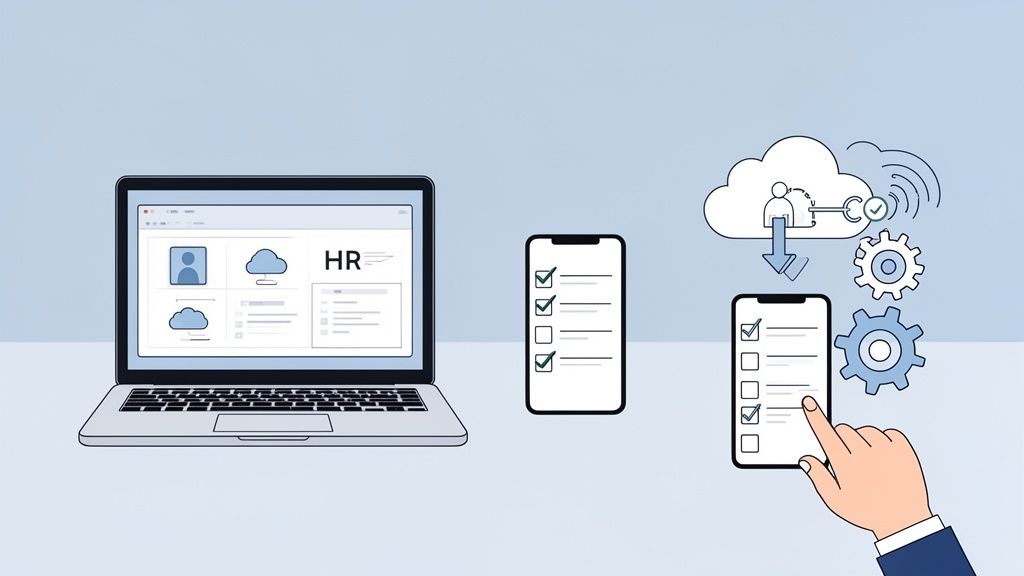
Analysis of your current HR processes
Let’s start with an honest inventory. Ask yourself and your team directly where the most significant bottlenecks are in everyday life:
- Where are the time wasters?Which administrative tasks consume the most time? Is it the manual assembly of shift schedules, the tedious recording of working hours, or the constant follow-up calls regarding availabilities?
- How do your agreements work?How do you communicate shift changes or new assignments? Is it still done through confusing messenger groups, where mistakes and misunderstandings are pre-programmed?
- Where is your data?How do you manage employee data, certificates, and employment contracts? Is this information stored centrally, securely, and GDPR-compliantly in one place, or is it scattered across various drives and file folders?
- What does your team say?Where do your employees see the biggest hurdles themselves? They often provide the best and most honest insights into inefficient processes.
The right software as the centerpiece
A central component for modern HR management is the right software for workforce management. This is much more than just a digital planning tool. It is the command center for all your personnel processes.
In a labor market that is constantly changing, flexibility is the decisive factor. In Switzerland, there were recently5.532 million employees, but the number of open positions has simultaneously decreased. It is also interesting to note that women made up69.4 percentof part-time employees. These figures from the Federal Statistical Office show how important agile personnel planning is to respond quickly to such changes.
Good software not only automates. It provides you with the data you need for smart strategic decisions and allows you to manage your teams more efficiently and fairly.
So when selecting, pay attention to features that really make your life easier: from intuitive shift planning to mobile time tracking via app to a clean connection to your payroll accounting. If you want to dive deeper into howdigitalization in Human Resourcescan specifically advance your company, you can find insights here. This way, you lay the foundation for an HR that not only manages but actively contributes to the success of your company.
Frequently asked questions about Human Resources
Do you have more questions? Perfect. Here are the answers to the most common points that we repeatedly encounter in conversations with entrepreneurs – short, concise, and to the point.
What is the main difference between HR and personnel management?
The biggest difference lies in the mindset. Traditional personnel management often focuses on pure administration: creating contracts, calculating salaries, managing vacations. It works reactively and keeps the operation running.
Modern Human Resources, on the other hand, thinks strategically and looks ahead. It is not just about who is here today, but about who will be needed tomorrow. HR actively shapes the corporate culture, promotes talents, and plans which skills the company will need in the future to achieve its goals.
Simply put: Personnel management manages the status quo, while HR shapes the future of the team.
Why is HR also important for small businesses?
Especially for SMEs, strategic HR is vital. It is the tool that allows you to respond flexibly to peaks in demand without burdening yourself with high fixed costs. A cleverly managed employee pool secures you the advantage, especially in sectors like hospitality, events, or security services.
In an SME, good HR is not an expensive luxury but a lever for efficiency. It secures operations, increases satisfaction within the team, and creates the space for you to fully concentrate on your core business again.
Which HR task is often underestimated?
Clearly:employee retention.Many focus entirely on the hunt for new talents and forget the gold they already have in-house.
Retaining existing employees, securing their knowledge, and specifically developing them is almost always cheaper and more sustainable than constant re-hiring. Good HR ensures that your team feels valued, can develop, and doesn’t even think about going elsewhere.
Do I need to have my own department for good HR?
No, absolutely not. In most smaller companies, the responsibility for HR topics lies directly with management or a dedicated person who handles it on the side.
What matters is not the size of the department, but the attitude and the right tools. Modern digital tools take so many administrative processes off your hands today that you can establish a professional HR management even without a large team.
Ready to transform your personnel processes from mere administration into active shaping?job.rocksis the intuitive platform for workforce management that helps you manage your teams efficiently and GDPR-compliantly.Learn more about how it works here