
Fragst du dich auch manchmal, wie du deine Arbeitsstunden schnell und korrekt in ein prozentuales Pensum umrechnest? Keine Sorge, die grundlegende Formel ist wirklich simpel: Du teilst einfach deine geleisteten Stunden durch die regulären Vollzeitstunden und multiplizierst das Ergebnis mit 100.
Ein praktisches Beispiel: Du arbeitest 21 Stunden pro Woche und die Vollzeitbasis im Unternehmen liegt bei 42 Stunden. Die Rechnung ist dann: (21 ÷ 42) × 100 = 50 %. Ganz einfach, oder?
⏱️ Interaktiver Pensum-Rechner
Warum die Umrechnung deines Arbeitspensums so wichtig ist
Dein Arbeitspensum in Prozent auszudrücken, ist weit mehr als nur eine Zahl im Arbeitsvertrag. Es ist eine Grösse, die ganz direkt viele Bereiche deines Arbeitslebens beeinflusst. Ohne ein klares Verständnis, wie deine Stunden in Prozent umgerechnet werden, schleichen sich schnell Unklarheiten oder sogar Fehler bei wichtigen Themen ein.
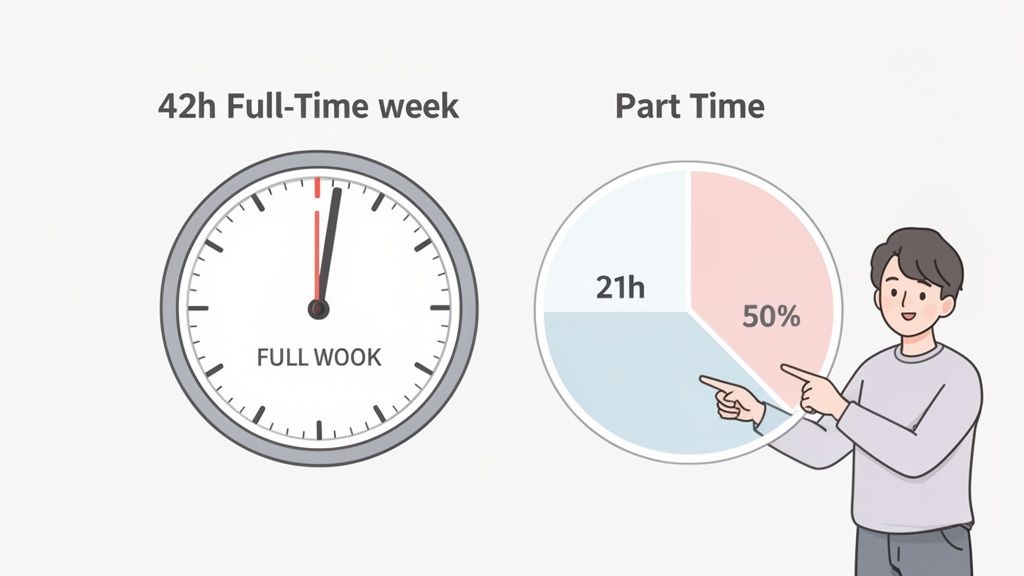
Ein korrekt berechnetes Pensum schafft vor allem Klarheit und Fairness. Es stellt sicher, dass dein Lohn, deine Sozialleistungen und dein Ferienanspruch exakt auf deiner vertraglichen Vereinbarung basieren. Gerade in der Schweiz, wo die wöchentliche Vollzeitarbeitszeit je nach Branche und Kanton variieren kann, ist eine genaue Umrechnung unerlässlich.
Ein typisches Missverständnis ist, dass ein 50-%-Pensum immer 20 Stunden pro Woche bedeutet. Das stimmt nur bei einer 40-Stunden-Woche. In vielen Schweizer Branchen mit einer 42-Stunden-Woche entspricht ein 50-%-Pensum bereits 21 Arbeitsstunden.
Diese Prozentzahl ist die Grundlage für viele administrative Prozesse in deinem Unternehmen. Sie hilft der Personalabteilung, Ressourcen richtig zu planen, und gibt dir die Sicherheit, dass deine Arbeitsleistung fair abgerechnet wird.
Bevor wir uns die komplexeren Fälle anschauen, verschafft dir die folgende Tabelle einen schnellen Überblick über gängige Pensen bei einer in der Schweiz weit verbreiteten 42-Stunden-Woche.
Gängige Teilzeitpensen und ihre Stunden bei einer 42-Stunden-Woche
Diese Tabelle zeigt dir auf einen Blick, wie viele Arbeitsstunden pro Woche gängige Teilzeit-Prozentsätze bei einer typischen Schweizer Vollzeitwoche von 42 Stunden bedeuten.
| Arbeitspensum in Prozent | Wöchentliche Arbeitsstunden | Typische Branchen |
|---|---|---|
| 100 % | 42.0 Stunden | Alle Branchen |
| 90 % | 37.8 Stunden | Büro, Verwaltung |
| 80 % | 33.6 Stunden | Office, IT, Gesundheit |
| 70 % | 29.4 Stunden | Elternteilzeit, Pflegeberufe |
| 60 % | 25.2 Stunden | Verkauf, Beratung |
| 50 % | 21.0 Stunden | Gastro, Einzelhandel |
| 40 % | 16.8 Stunden | Nebenjobs, studentische Arbeit |
| 30 % | 12.6 Stunden | Minijobs, Aushilfen |
| 20 % | 8.4 Stunden | Geringfügige Beschäftigung |
Mit dieser Übersicht hast du schon mal eine solide Basis für die gängigsten Teilzeitmodelle. So kannst du schnell einschätzen, was ein bestimmtes Pensum in der Praxis bedeutet.
Die Formel im Detail: So rechnest du dein Pensum aus (mit Praxisbeispielen)
Die Berechnung deines Arbeitspensums in Prozent ist zum Glück keine Raketenwissenschaft. Im Grunde brauchst du nur zwei Zahlen: deine tatsächlich gearbeiteten Stunden und die Stunden, die in deinem Betrieb als 100 %-Stelle gelten.
Die Formel, die du dafür brauchst, ist denkbar einfach:
(Deine geleisteten Stunden ÷ Stunden einer Vollzeitstelle) × 100 = Dein Arbeitspensum in Prozent
Dieses simple Werkzeug ist flexibel. Du kannst es für einzelne Tage, ganze Wochen oder sogar Monate anwenden – je nachdem, was für dich am relevantesten ist.
Berechnung für einen einzelnen Arbeitstag
Stell dir vor, du arbeitest als Event-Techniker auf einem Festival. Ein normaler Einsatztag dauert dort 10 Stunden. An einem ruhigeren Aufbautag kommst du aber nur auf 6 Stunden.
So sieht deine Rechnung aus:
(6 geleistete Stunden ÷ 10 Vollzeitstunden) × 100 = 60 %
Für diesen Tag hast du also ein Pensum von 60 % erfüllt. Gerade bei projektbezogenen Jobs oder sehr flexiblen Einsätzen ist diese tagesgenaue Betrachtung nützlich.
Berechnung für eine Arbeitswoche
Jetzt nehmen wir ein anderes Szenario: eine Servicekraft in der Gastronomie. Hier sind die Wochenpläne oft unregelmässig. Die betriebliche Vollzeit ist mit 42 Stunden pro Woche festgelegt. In einer etwas ruhigeren Woche leistest du 35 Stunden.
Die Berechnung für diese Woche lautet:
(35 geleistete Stunden ÷ 42 Vollzeitstunden) × 100 ≈ 83,3 %
Dein Arbeitspensum für diese spezifische Woche liegt also bei rund 83,3 %.
Berechnung auf Monatsbasis
Besonders in Branchen mit stark schwankenden Wochenstunden, wie etwa im Sicherheitsdienst, macht erst die Monatsabrechnung wirklich Sinn. Nehmen wir an, die betriebliche Vollzeit für den Monat beträgt 168 Stunden. Du hast in diesem Zeitraum insgesamt 120 Stunden gearbeitet.
Hier greift die Monatsformel:
(120 geleistete Stunden ÷ 168 Vollzeitstunden) × 100 ≈ 71,4 %
Dein Pensum für den Monat beläuft sich damit auf circa 71,4 %. Wie du die korrekten Arbeitsstunden pro Monat für deine Berechnung ermittelst, kann sich von Betrieb zu Betrieb unterscheiden und ist oft im Arbeitsvertrag oder im GAV geregelt.
Mit diesen konkreten Beispielen aus der Praxis hast du das Rüstzeug, um dein eigenes Arbeitspensum schnell und sicher zu ermitteln. Es ist ein einfacher Schritt, um volle Transparenz über deinen Beschäftigungsgrad zu erhalten.
Was tun bei Sonderfällen wie unregelmässigen Arbeitszeiten?
Die Realität im Job ist selten so geradlinig wie eine feste Wochenstundenzahl. Was machst du, wenn deine Arbeitszeiten stark schwanken, wie es im Gastgewerbe oder bei Projektarbeit oft der Fall ist? Genau diese kniffligen Fälle schauen wir uns jetzt genauer an, damit du auch hier dein Pensum korrekt ermitteln kannst.
Ein klassisches Szenario ist die Saisonarbeit, bei der du in einem Monat deutlich mehr arbeitest als im nächsten. Anstatt jede Woche einzeln zu betrachten, ist es hier sinnvoller, einen Durchschnitt über einen längeren Zeitraum zu bilden.
Durchschnittliches Pensum bei schwankenden Stunden berechnen
Wenn deine Arbeitsstunden von Monat zu Monat variieren, liefert die Berechnung eines Durchschnittspensums das fairste und genaueste Bild. Addiere dafür einfach die geleisteten Stunden über einen aussagekräftigen Zeitraum – zum Beispiel ein Quartal – und teile sie durch die entsprechenden Soll-Stunden für denselben Zeitraum.
Ein praktisches Beispiel aus der Event-Branche:
Ein Mitarbeiter arbeitet in drei Monaten unterschiedlich viel. Die Vollzeitbasis im Unternehmen für diesen Zeitraum beträgt 504 Stunden (3 Monate × 168 Stunden).
- Monat 1: 180 Stunden
- Monat 2: 140 Stunden
- Monat 3: 165 Stunden
Zuerst rechnest du die Gesamtstunden zusammen: 180 + 140 + 165 = 485 Stunden.
Danach setzt du diesen Wert in die bekannte Formel ein:
(485 geleistete Stunden ÷ 504 Vollzeitstunden) × 100 ≈ 96,2 %
Sein durchschnittliches Arbeitspensum für dieses Quartal beträgt also rund 96,2 %. Dieser Wert gibt seine tatsächliche Auslastung viel besser wieder als eine einzelne Wochen- oder Monatsbetrachtung es je könnte.
Diese Infografik zeigt dir einen einfachen Entscheidungspfad, wie du bei der Berechnung deines Arbeitspensums am besten vorgehst.
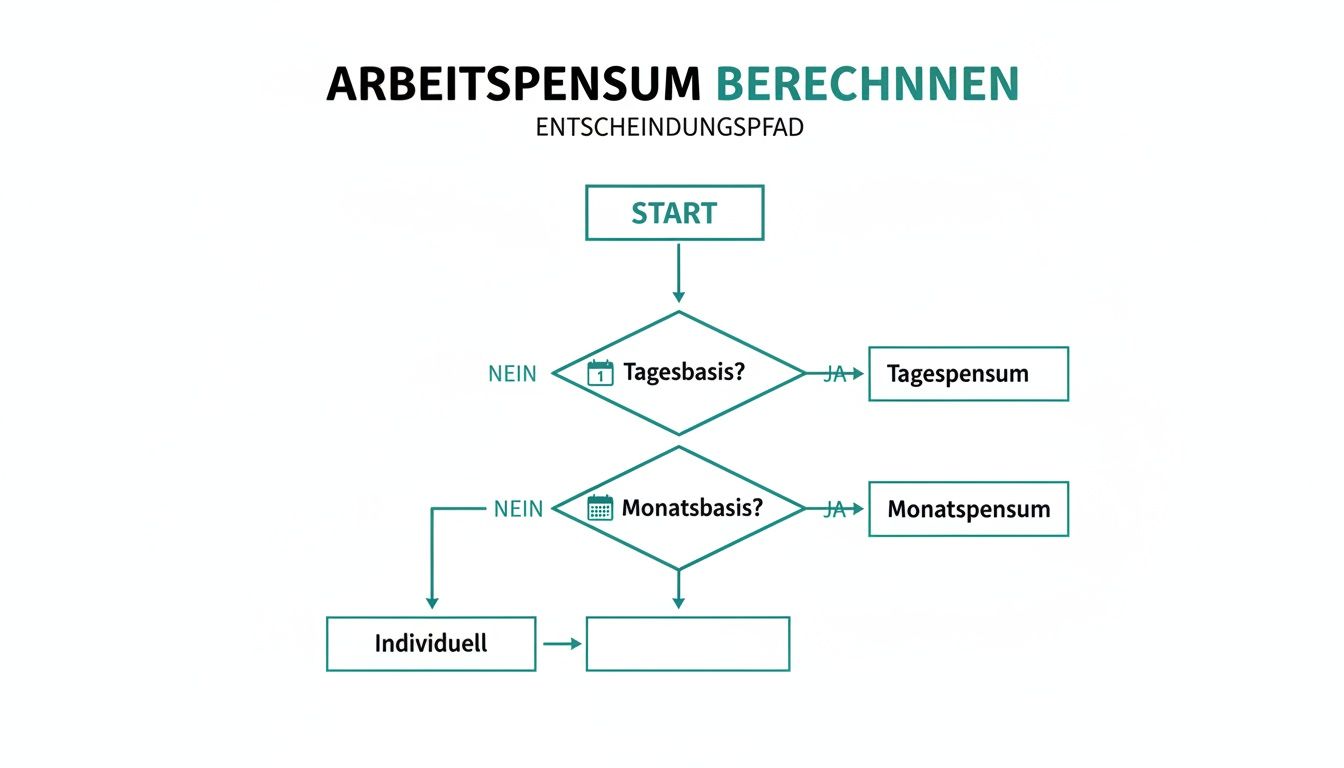
Die Grafik macht klar: Der erste Schritt ist immer die Wahl der korrekten Berechnungsgrundlage, sei es pro Tag, Monat oder über einen individuellen Zeitraum.
Feiertage und die Besonderheiten für Freelancer
Ein weiterer Punkt sind bezahlte Feiertage. Fallen sie auf einen deiner regulären Arbeitstage, zählen die dafür vorgesehenen Stunden ganz normal zu deiner geleisteten Arbeitszeit. Sie werden also einfach in deine Berechnung einbezogen und verfälschen das Ergebnis nicht. In unserem Ratgeber zur Berechnung der täglichen Arbeitszeit findest du weitere Details dazu.
Für Freelancer ist die Sache oft noch flexibler. Hier gibt es selten eine feste Vollzeit-Referenz. Viele Selbstständige definieren daher ihre eigene «Vollzeit», zum Beispiel 40 Stunden pro Woche, um ihre Auslastung zu messen. Arbeitest du in einer Woche 30 Stunden, liegt deine Auslastung bei 75 %.
Diese Prozentzahl hilft dir nicht nur bei der internen Planung, sondern auch dabei, Kunden gegenüber transparent zu machen, wie viel Kapazität du für ihr Projekt aufwendest.
Die Arbeitskultur in der Schweiz ist durch eine hohe Beteiligung am Arbeitsmarkt geprägt. Insgesamt wurden 8,117 Milliarden Arbeitsstunden geleistet, was die Bedeutung einer exakten Erfassung verdeutlicht. Mehr Fakten zum Arbeitsvolumen in der Schweiz findest du auf der Seite des Bundesamtes für Statistik.
Warum die genaue Prozentzahl für dich und dein Team so wichtig ist
Die Umrechnung deiner Arbeitszeit in Prozent ist viel mehr als nur eine trockene Zahl im Arbeitsvertrag. Sie ist das Fundament für ganz entscheidende Bereiche deines Jobs – von der Lohnabrechnung über die Ferienplanung bis hin zu deinen Sozialleistungen. Eine exakte Berechnung schafft Transparenz und vor allem Fairness.
Stell dir vor, dein Arbeitspensum wird mit 71,4 % berechnet, obwohl es eigentlich 75 % sein müssten. Auf den ersten Blick wirkt der Unterschied vielleicht klein. Aber über Monate oder gar Jahre hinweg summiert sich das zu einem spürbaren finanziellen Nachteil. Nur wenn die Prozentzahl stimmt, kann auch der Lohn am Ende des Monats korrekt sein.
Faire Bezahlung und klare Ansprüche
Eine genaue Prozentangabe ist die Voraussetzung für eine gerechte Bezahlung. Sie stellt sicher, dass dein Gehalt exakt dem Arbeitsumfang entspricht, den du vertraglich vereinbart hast. Gleichzeitig ist sie die Basis für die korrekte Berechnung deiner Ferientage.
Ganz einfach: Bei einem 80-%-Pensum stehen dir auch 80 % der Ferientage einer Vollzeitstelle zu. Ist die Prozentzahl falsch, stimmt auch dein Ferienanspruch nicht.
Ausserdem hilft eine saubere Berechnung dabei, Fehler bei der Erfassung und Vergütung von Überstunden zu vermeiden. Dein Pensum definiert deine Soll-Arbeitszeit – alles, was darüber hinausgeht, muss klar als Mehrarbeit erkennbar und abrechenbar sein.
Die Grundlage für eine smarte Personalplanung
Auch für die Einsatzplanung im Team ist das Arbeitspensum in Prozent entscheidend. Es hilft Vorgesetzten, die verfügbaren Ressourcen realistisch einzuschätzen und die Aufgaben fair zu verteilen. So lassen sich personelle Engpässe vermeiden und eine ausgewogene Arbeitslast für alle sicherstellen.
Ein Trend in der Schweiz zeigt übrigens, dass die wöchentliche Arbeitszeit für Vollzeitbeschäftigte leicht sinkt. Zwischen 2019 und 2024 ist die tatsächliche Arbeitszeit im Schnitt um 50 Minuten auf 40 Stunden und 4 Minuten gefallen. Mehr über die Entwicklung der Arbeitszeiten in der Schweiz erfährst du auf nau.ch.
Wenn du die Zusammenhänge kennst, bist du dir deiner Rechte und Pflichten viel bewusster. Ein korrekter Wert, den dir ein Arbeitszeit-in-Prozent-Rechner liefert, gibt dir die Sicherheit, dass alles fair und korrekt abläuft.
Schluss mit Excel-Chaos: Wie Tools die Berechnung deiner Arbeitszeit automatisieren
Kennst du das? Manuelle Berechnungen in Excel sind nicht nur zeitaufwendig, sondern auch eine Quelle für Fehler. Spätestens wenn flexible Arbeitsmodelle, Feiertage oder variable Wochenstunden ins Spiel kommen, wird die manuelle Pflege kompliziert.
Moderne Systeme nehmen dir genau diese Arbeit ab. Statt mühsam Formeln in Tabellen zu tippen, erfasst du oder deine Mitarbeitenden die Arbeitszeiten digital, oft ganz einfach per Smartphone-App. Die Umrechnung in Prozent erledigt die Software dann im Hintergrund – automatisch und in Echtzeit.
Vom manuellen Aufwand zur strategischen Übersicht
Digitale Helfer wie job.rocks sind so konzipiert, dass sie individuelle Vertragsdetails und schwankende Arbeitszeiten von Anfang an berücksichtigen. Für dich als Planungsverantwortlichen bedeutet das: weniger Administrationsaufwand und eine deutlich höhere Genauigkeit bei der Lohnabrechnung.
Dieses Bild verdeutlicht, wie eine moderne Plattform Zeiterfassung und Planung miteinander verbindet.
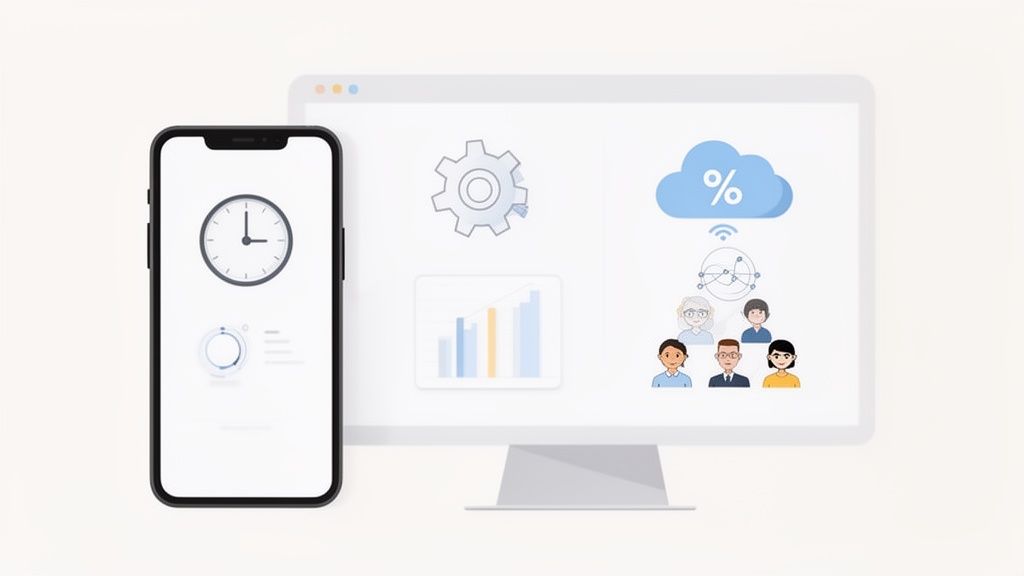
Die Zeiten, in denen Daten mühsam von einem System ins andere übertragen werden mussten, sind vorbei. Alle Informationen fliessen in eine zentrale Datenbank, was nicht nur Zeit spart, sondern auch die typischen Übertragungsfehler beseitigt.
Der eigentliche Vorteil ist aber die Reporting-Funktion. Mit wenigen Klicks erstellst du Berichte, die das Arbeitspensum pro Person oder für ganze Teams übersichtlich in Prozent darstellen. So behältst du jederzeit den Überblick und schaffst eine absolut verlässliche Grundlage für die Abrechnung. Die Automatisierung dieser Routineaufgaben ist ein Baustein für eine effiziente Personalplanung.
Verstehe solche Tools nicht nur als simplen Arbeitszeit-in-Prozent-Rechner. Sie sind vielmehr eine Komplettlösung, die den gesamten Prozess von der Erfassung bis zur Lohnvorbereitung absichert und spürbar vereinfacht.
Häufig gestellte Fragen zur Arbeitszeit in Prozent
❓ Wie berechne ich mein Pensum bei einer 40-Stunden-Woche?
Die Logik bleibt dieselbe, nur die Basis für die Vollzeit ändert sich. Nehmen wir an, du arbeitest 30 Stunden pro Woche in einem Unternehmen mit einer 40-Stunden-Woche.
Die Rechnung ist dann ganz einfach: (30 Stunden ÷ 40 Stunden) × 100 = 75 %.
Dein Pensum beträgt also 75 %. Wichtig ist immer, dass du die korrekte Vollzeitstundenzahl deines Betriebs als Grundlage nimmst – ein kurzer Blick in den Arbeitsvertrag schafft hier Sicherheit.
❓ Was gilt in der Schweiz als Vollzeit?
Hier gibt es eine Besonderheit: In der Schweiz existiert kein landesweit einheitliches Gesetz, das eine feste Stundenzahl für Vollzeit vorschreibt. Die betriebsübliche Wochenarbeitszeit kann je nach Branche und Gesamtarbeitsvertrag (GAV) stark variieren.
In der Praxis bewegen sich die meisten Vollzeitstellen zwischen 40 und 42 Stunden pro Woche. Um den exakten Wert für deine Berechnungen zu haben, sind dein persönlicher Arbeitsvertrag oder der geltende GAV die verlässlichste Quelle.
❓ Zählen Überstunden zu meinem prozentualen Arbeitspensum?
Nein, und das ist ein wichtiger Punkt. Dein prozentuales Arbeitspensum spiegelt immer nur deine vertraglich vereinbarte Soll-Arbeitszeit wider.
Überstunden sind per Definition eine Abweichung von dieser Norm. Sie werden separat erfasst, entweder zusätzlich vergütet oder durch Freizeit kompensiert, aber sie verändern nicht dein vertraglich festgelegtes Grundpensum.
Dein Pensum beschreibt deine vertragliche Verpflichtung. Überstunden sind eine temporäre Überschreitung dieser Verpflichtung und werden gesondert behandelt.
❓ Wie gehe ich mit unbezahltem Urlaub bei der Monatsberechnung um?
Unbezahlter Urlaub ist ein Sonderfall, der eine Anpassung der Berechnungsgrundlage erfordert. Um das Pensum für einen Monat mit unbezahltem Urlaub fair zu berechnen, müssen sowohl die Soll-Stunden als auch die Ist-Stunden angepasst werden.
In den meisten Unternehmen werden die Tage des unbezahlten Urlaubs einfach von der monatlichen Soll-Arbeitszeit abgezogen. So entsteht eine neue, reduzierte Berechnungsgrundlage für diesen spezifischen Monat. Da die genaue Handhabung von den internen Richtlinien abhängt, klärst du das am besten kurz mit der Personalabteilung ab. So vermeidest du Missverständnisse und stellst eine korrekte Abrechnung sicher.
❓ Wie berechne ich mein Pensum bei schwankenden Arbeitszeiten?
Bei stark schwankenden Arbeitszeiten (z.B. Saisonarbeit, Event-Branche) ist die Durchschnittsberechnung über einen längeren Zeitraum am fairsten:
- Addiere alle geleisteten Stunden des Zeitraums (z.B. Quartal)
- Ermittle die Soll-Vollzeitstunden für denselben Zeitraum
- Wende die Formel an: (Gesamtstunden ÷ Soll-Stunden) × 100
Beispiel: 485 Stunden in 3 Monaten bei 504 Soll-Stunden = (485 ÷ 504) × 100 = 96,2%
❓ Welche Rolle spielen Feiertage bei der Berechnung?
Bezahlte Feiertage, die auf deine regulären Arbeitstage fallen, zählen ganz normal zu deiner Arbeitszeit. Du musst sie nicht separat abziehen oder anders behandeln – sie fliessen einfach als reguläre Arbeitsstunden in die Berechnung ein.
❓ Wie hilft mir ein digitaler Arbeitszeit-Rechner konkret?
Moderne Tools wie job.rocks bieten dir mehrere Vorteile:
- Automatische Berechnung in Echtzeit ohne manuelle Formeln
- Fehlerfreie Abrechnung durch zentrale Datenbank
- Übersichtliche Reports auf Knopfdruck für Einzelpersonen oder Teams
- Berücksichtigung von Feiertagen, Urlaub und Sonderfällen
- Mobile Zeiterfassung per Smartphone-App
Das spart nicht nur Zeit, sondern gibt dir auch die Sicherheit, dass alle Berechnungen korrekt und nachvollziehbar sind.
🚀 Schluss mit Excel-Chaos!
job.rocks automatisiert die Erfassung und Umrechnung deiner Arbeitszeiten – fehlerlos, einfach und in Echtzeit.