Software for personnel service providers: The 12 best solutions in comparison 2026
The right software can mean the difference between messy paperwork and efficient business management. As a personnel service provider, you juggle candidates, customers, deployment plans, contracts and invoices every day - and without the right digital support, this quickly becomes a challenge.
In this comprehensive comparison, we introduce you to the 12 leading software solutions for personnel service providers. Regardless of whether you work in temporary employment, job placement or temporary management – you will find the right software for your requirements here.
What makes good software for personnel service providers?
Before we get into the comparison, let's briefly clarify what really matters:
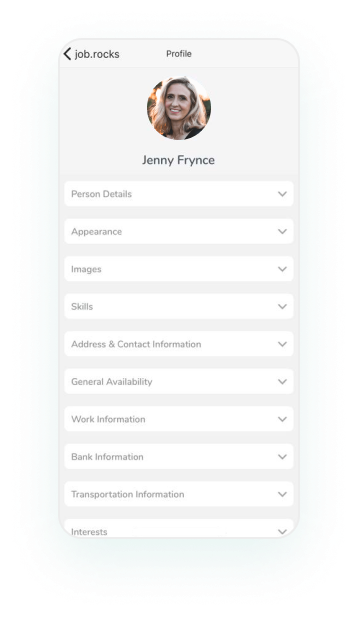
- Applicant management: Central candidate database with qualifications, availability and documents
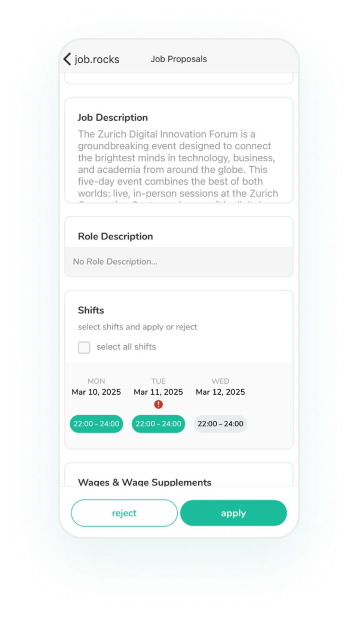
- Operations planning: Quick dispatch of employees to open positions
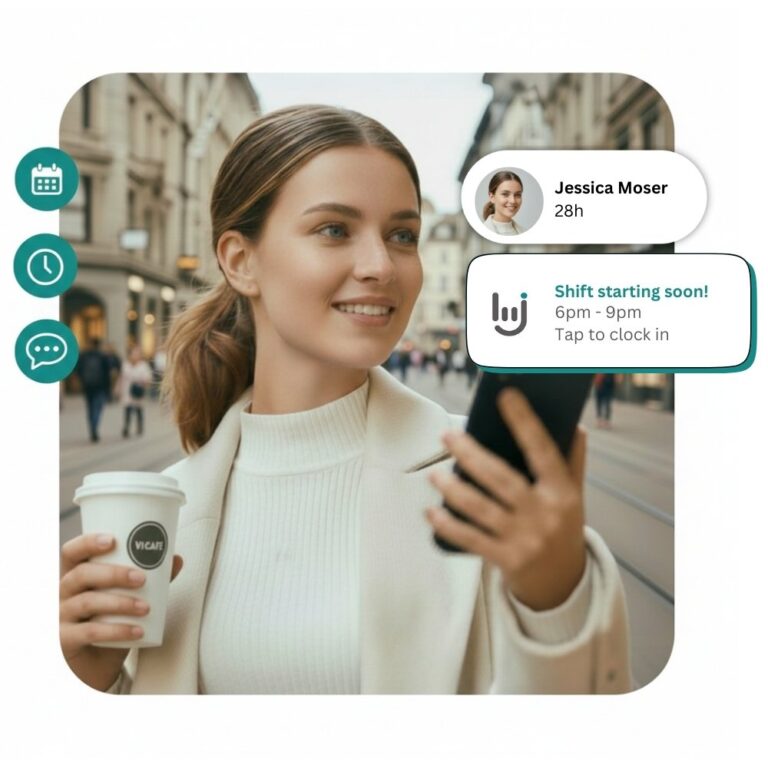
- Time recording: Mobile apps for on-site check-in/check-out
- Invoice: Automated payroll and customer billing
- Compliance: Management of work permits, certificates and legal requirements
- Customer management (CRM): Maintaining customer relationships and orders
- Interfaces: Integration with DATEV, payroll accounting, email and telephony
- Self-service portals: For employees and customers to manage themselves
The 12 best software solutions for personnel service providers in comparison
| software | Best for | Price from | Evaluation |
|---|---|---|---|
| job.rocks | All personnel service providers (temporary work, placement, events) | from 1.20 CHF/stake | ⭐⭐⭐⭐⭐ |
| Job desk | Temporary employment agency (DACH) | Upon request | ⭐⭐⭐⭐ |
| ProSolution | Enterprise company | Upon request | ⭐⭐⭐⭐ |
| Starhunter | HR manager with a CRM focus | From €99/month | ⭐⭐⭐⭐ |
| zvoove (LANDWEHR L1) | Temporary employment agency (Germany) | Upon request | ⭐⭐⭐⭐ |
| Meffert software | Established temporary employment agencies | Upon request | ⭐⭐⭐⭐ |
| TIME JOB | Temporary work with a focus on billing | Upon request | ⭐⭐⭐ |
| iStaff | Cloud native startups | From €89/month | ⭐⭐⭐⭐ |
| Bullhorn | International recruitment | Starting at /month | ⭐⭐⭐⭐ |
| LANDWEHR L1 | Medium-sized temporary work | Upon request | ⭐⭐⭐⭐ |
| Zen job | On-demand staffing (platform) | Commission based | ⭐⭐⭐ |
| Staffcloud | Event Staffing & Temporary | From 199 CHF/month | ⭐⭐⭐⭐ |
Temporary employment software: What you really need
As a temporary employment agency in Switzerland, you face unique challenges: fast scheduling, legally compliant billing (OR/GAV), mobile time recording and complex customer billing. The right one Temporary employment software is not just an admin tool – it is your competitive advantage. For the optimal management and planning of your employees, a specialized one can be used PEP software help you find the right tool for your personnel deployment planning.
The most important functions of temporary employment software
Not every HR service provider software is optimized for temporary work. These core functions are crucial:
| function | Why essential? | Typical problem without software |
|---|---|---|
| Lightning disposition | Qualification matching in seconds instead of hours | Endless phone calls, missed orders |
| Mobile time recording | Check-in/check-out directly at the location via app | Absences, manual timesheets, billing errors |
| GAV compliance | Automatic checking of rest times, overtime, allowances | Fines, legal problems, manual control |
| Customer billing | Automatic invoice creation with surcharges | Days wasted on monthly billing |
| DATEV export | Seamless handover to the payroll office or trustee | Double data entry, sources of errors |
| Document Vault | Central management of contracts, references, certificates | Chaotic folder structures, lost documents |
Temporary employment software vs. classic HR software: The difference
Many HR software solutions advertise “personnel management” – but temporary work needs more:
- Speed over perfection: Speed counts in temporary work. A call from the customer comes at 6:00 a.m. and the jumper has to be on site by 7:00 a.m. Classic HR software is built for long-term planning, not for Ad hoc scheduling.
- Variable locations: Your employees work for customer A today, customer B tomorrow. GPS-supported time tracking, customer locations and deployment history are mandatory.
- Complex billing: Every customer has different rates, surcharges and agreements. Your software must be able to handle multiple hourly rates, expenses, and customer-specific rules.
- Compliance pressure: GAV personnel leasing, OR 319 ff., Labor Law – Swiss temporary employment is highly regulated. Software without built-in compliance checks is a risk.
Practical example: A medium-sized temporary employment company in Zurich with 80 active workers has reduced scheduling time by 65% after introducing job.rocks. Instead of 45 minutes per order (phone calls, Excel, manual checks), a dispatch now takes an average of 12 minutes - from the customer call to confirmation via app.
What you should pay attention to when choosing your temporary employment software
Choosing the right software is a strategic decision. This checklist will help you:
✅ Schweiz-Compliance
- Supports the software Swiss pay slips (AHV, BVG, SUVA)?
- Become GAV personnel leasing Regulations checked automatically?
- Is there DATEV export or interfaces? Swiss trustees?
✅ Mobile-first
- Do your jumpers have one? App for iOS and Android?
- Can the app work offline (important for basements, construction sites, dead spots)?
- Is there GPS based check-in/check-out Features?
✅ Disposition & Matching
- How quickly can you find a suitable jumper for an order? (Benchmark: under 60 seconds)
- Is there automatic matching based on qualifications, availability, and location?
- Can temporary workers be notified via push notification and directly requested?
✅ Scalability
- Is the pricing transparent and does it scale with your growth?
- How many parallel dispositions can the system handle?
- Is there API interfaces for custom integrations?
✅ Support & Onboarding
- Is the software offered in German language?
- Is there personal support via phone/chat?
- How long does the onboarding take? (Realistic expectation: 2-4 weeks)
Temporary employment software pricing models in comparison
Pricing varies greatly between providers. These models are the most common:
| Model | Typical price | Advantages | Disadvantages |
|---|---|---|---|
| Pay-per-use | 1-3 CHF per deployment | No fixed costs, fair scaling, no vendor lock-in | Harder to plan with very high volume |
| Per employee/month | 15-50 CHF per active employee | Predictable costs with a fixed team size | Expensive with many temporary workers with few deployments |
| Flat-rate license | 500-5000 CHF/month | Unlimited use | High fixed costs, often long contract terms |
| One-time purchase + maintenance | 10,000-100,000 CHF + 15-20% annually | Own installation, data control | High initial investment, IT infrastructure required |
Our recommendation for temporary employment agencies: Pay-per-use models (like job.rocks) offer the best flexibility. You only pay for actual deployments, not for 'warm' temporary workers in the database. This makes growth predictable and fair.
Swiss vs. German temporary employment software: What you need to know
Many temporary employment software providers come from Germany. This can work but carries risks:
- Payroll: German systems do not know BVG, AHV, or Swiss tax rates. You need a manual workaround or expensive adjustments.
- GAV: The GAV personnel leasing only applies in Switzerland. German software does not have these rules built-in.
- Language: Many German tools are fixed on the 'Sie' form. In Switzerland, we often use 'Du' – especially in contact with temporary workers.
- Support times: German support often ends at 5:00 PM CET. In Switzerland, dispositions run until 7:00 PM or later.
Best of Both Worlds: Software like job.rocks was specifically designed for Swiss market developed, but also works in Germany/Austria. This way you remain flexible if you want to grow across borders.
The 5 most common mistakes when introducing temporary employment software
- Wanting too much at once: Start with core processes (scheduling, time recording, billing). You can add modules such as recruiting portals or BI dashboards later.
- No change management: Your dispatchers need the new software want. Involve them early, get feedback, and celebrate your first successes.
- Underestimating data chaos: Migrating from Excel/old software is often the most critical point. Schedule time for data cleansing.
- No clear KPIs: Define in advance: What should the software improve? (Scheduling time, error rate, customer satisfaction?)
- Ignore support quality: The best software is useless if problems fail you. Test the support before Conclusion of contract.
Detailed comparison: The 12 best software solutions
1. job.rocks – The all-in-one solution for modern personnel service providers
Website: job.rocks
Short description:
job.rocks is the comprehensive software solution for personnel service providers of all sizes. From candidate management to... Operations planning to automated billing – everything from a single source. The software was developed specifically for the Swiss and German markets and covers temporary employment, placement, event staffing and temporary management.
Strengthen:
- ✅ Intuitive user interface: Modern, clear operation without long training
- ✅ Mobile apps: iOS and Android apps for employees and dispatchers
- ✅ Automated deployment planning: Intelligent matching algorithms for quick scheduling
- ✅ DACH compliance: Swiss and German pay slips, AHV, BVG, DATEV export
- ✅ Self-service portals: Customers and employees can manage availability, timesheets and documents themselves
- ✅ Flexible pricing: Transparent prices with no hidden costs, scalable as you grow
- ✅ Excellent Support: Personal contact and fast response times
Weaken:
- ❌ Focus on the DACH region (less suitable for international companies outside of Europe)
Price:
From 1.20 CHF/use (up to 50 active employees). Scalable pricing plans for larger teams. Try it free for 30 days.
Perfect for:
Personnel service providers who are looking for a modern, cloud-based complete solution - from startup temporary employment agencies to established intermediaries.
💡 Our tip:
job.rocks offers the best price-performance ratio on the market. The combination of modern technology, DACH-specific features and transparent pricing makes the software the first choice for most personnel service providers.
2. Jobdesk – Established solution for temporary employment agencies
Website: Job desk.com
Short description:
Jobdesk is software for temporary employment agencies in the DACH region that has been established for over 20 years. The software covers all core processes – from applicant management to billing.
Strengthen:
- ✅ Many years of experience in the temporary employment market
- ✅ Extensive functions for large temporary employment agencies
- ✅ Good integration with DATEV
- ✅ Strong support in the DACH region
Weaken:
- ❌ Partially outdated user interface
- ❌ High setup costs
- ❌ Complex operation, long training period
- ❌ Non-transparent pricing
Price:
On request (individual calculation depending on company size)
Perfect for:
Established temporary employment agencies with larger teams and budget for extensive implementation.
3. ProSolution – The ERP solution for enterprise companies
Website: ProSolution.com
Short description:
ProSolution is a complete ERP solution for large HR service providers. The software not only offers HR functions, but also financial accounting, controlling and business intelligence.
Strengthen:
- ✅ Complete ERP system (not just HR)
- ✅ Highly customizable for individual business processes
- ✅ Strong reporting and analysis tools
- ✅ Multi-client capable
Weaken:
- ❌ Very complex and expensive to implement
- ❌ Oversized for small and medium-sized businesses
- ❌ Long project durations (6-12 months introduction not uncommon)
- ❌ High maintenance and licensing costs
Price:
On request (typically in the high five to six figure range for the entire project)
Perfect for:
Large staffing companies with multiple offices and complex requirements that require a complete ERP system.
4. Starhunter – CRM-focused recruiting software
Website: Starhunter.de
Short description:
Starhunter is a software that specializes in recruiting and CRM and is particularly strong in candidate and customer management.
Strengthen:
- ✅ Excellent applicant management and CRM
- ✅ Automated candidate sourcing tools
- ✅ Integration with job boards and social media
- ✅ Good multiposting features
Weaken:
- ❌ Weaker in operational planning and time recording
- ❌ Billing only with additional modules
- ❌ Less suitable for classic temporary work
Price:
From €99/month per user
Perfect for:
Recruiters and headhunters who focus on recruiting and less on operational temporary work.
5. zvoove (LANDWEHR L1) – temporary employment software from Germany
Website: zvoove.com
Short description:
zvoove (formerly LANDWEHR L1) is an established one Software for temporary employment agencies with a focus on the German market.
Strengthen:
- ✅ Specialized in German temporary employment and compliance
- ✅ Good integration with German payroll systems
- ✅ Extensive scheduling functions
- ✅ Strong support for BAP certified companies
Weaken:
- ❌ Mainly optimized for the German market
- ❌ Less modern in the user interface
- ❌ Higher implementation costs
Price:
Upon request
Perfect for:
German temporary employment agencies that value local compliance and established processes.
6. Meffert Software – The personnel service provider software
Website: meffert.de
Short description:
Meffert has been offering software specifically for personnel service providers for over 30 years and has made a name for itself especially in Germany.
Strengthen:
- ✅ Decades of experience in the market
- ✅ Very extensive range of functions
- ✅ Good workflows for temporary work and placement
- ✅ Established support
Weaken:
- ❌ Desktop based (not a true cloud solution)
- ❌ Outdated user interface
- ❌ Mobile functions limited
- ❌ Higher license costs
Price:
Upon request
Perfect for:
Established personnel service providers who prefer a proven desktop solution and do not necessarily have to work cloud-native.
7. TIME JOB – Software for temporary work with a billing focus
Website: timejob.de
Short description:
TIME JOB is one Software for temporary offices and temporary employment agencies with a strong focus on billing and scheduling.
Strengthen:
- ✅ Specialized in temporary employment processes
- ✅ Good billing features
- ✅ Integration with German social security institutions
Weaken:
- ❌ Less modern in design and operation
- ❌ Limited mobile features
- ❌ Smaller provider with limited resources
Price:
Upon request
Perfect for:
Small to medium-sized temporary employment agencies in Germany with a focus on billing.
8. iStaff – Cloud-based HR software
Website: iStaff.ai
Short description:
iStaff is a modern, cloud-based HR software for staffing agencies with a focus on user-friendliness and automation.
Strengthen:
- ✅ Modern, intuitive cloud solution
- ✅ Good mobile apps
- ✅ AI-powered candidate suggestions
- ✅ Transparent pricing
Weaken:
- ❌ Even younger provider with less market presence
- ❌ The range of functions is not yet as extensive as established players
- ❌ Weaker in complex billing scenarios
Price:
From €89/month per user
Perfect for:
Startups and smaller personnel service providers who are looking for a modern cloud solution at affordable prices.
9. Bullhorn – International Staffing Software
Website: Bullhorn.com
Short description:
Bullhorn is a world-leading software for recruitment and staffing with a strong international focus.
Strengthen:
- ✅ Market leader in international staffing
- ✅ Excellent CRM and ATS features
- ✅ Great marketplace with integrations
- ✅ Strong automation and workflows
Weaken:
- ❌ Focus on US/UK market (DACH specifics less pronounced)
- ❌ Higher costs
- ❌ More complex for small teams
- ❌ Swiss/German payroll only with partner solutions
Price:
Starting at /month per user (higher plans for Enterprise)
Perfect for:
International recruiters and staffing agencies with a focus on English-speaking markets.
10. LANDWEHR L1 – medium-sized temporary employment solution
Website: landwehr-software.de
Short description:
LANDWEHR L1 is an established software for medium-sized temporary employment agencies in Germany (partly sold under zvoove).
Strengthen:
- ✅ Specialized in German temporary work
- ✅ Extensive scheduling functions
- ✅ Good DATEV integration
Weaken:
- ❌ Older technology base
- ❌ Fewer mobile features
- ❌ Higher implementation costs
Price:
Upon request
Perfect for:
Medium-sized German temporary employment agencies with established processes.
11. Zenjob – On-demand staffing platform
Website: Zen job.com
Short description:
Zenjob is not classic software, but a platform for short-term, on-demand staffing - ideal for flexible, on-call staff.
Strengthen:
- ✅ Very quick occupation (within hours)
- ✅ Large pool of flexible employees
- ✅ Completely digital and mobile
- ✅ No upfront costs
Weaken:
- ❌ No own software solution (only platform use)
- ❌ You have no control over your own candidate pool
- ❌ Commission-based (higher cost per hour)
- ❌ Only suitable for short-term use
Price:
Commission-based (surcharge on hourly rate)
Perfect for:
Companies that need short-term staff without operating their own temporary employment agency.
12. Staffcloud – Event Staffing & Temporary
Website: Staffcloud.ch
Short description:
Staffcloud is a Swiss platform for event staffing, temporary work and flexible staff deployment.
Strengthen:
- ✅ Specialized in event and catering staff
- ✅ Fast scheduling via app
- ✅ Large talent pool in Switzerland
- ✅ Mobile-first design
Weaken:
- ❌ Focus on Switzerland (less international)
- ❌ Fewer functions for classic temporary employment and placement
- ❌ Higher costs for smaller teams
Price:
From 199 CHF/month
Perfect for:
Event agencies and catering establishments in Switzerland that need to schedule staff at short notice.
Buying advice: Which software is right for your company?
For startups and small temporary employment agencies (1-10 employees)
Recommendation: job.rocks or iStaff
As a young company, you need a quick-to-use, affordable solution without a long implementation period. job.rocks offers you all the essential functions at transparent prices, while iStaff is a good alternative with a modern user interface.
For medium-sized personnel service providers (10-100 employees)
Recommendation: job.rocks, Starhunter or zvoove
In this phase you need more extensive functions, but also scalability. job.rocks grows with you, while Starhunter is ideal if you focus on recruiting. zvoove is the right choice if you are strongly focused on the German temporary employment market.
For large temporary employment companies (100+ employees)
Recommendation: ProSolution, Jobdesk or Bullhorn
At this size, you need enterprise features, multi-tenancy, and high customizability. ProSolution offers you a complete ERP solution, while Bullhorn is ideal for international expansion.
For recruiters and headhunters
Recommendation: Starhunter or Bullhorn
If your focus is on recruiting and less on operational temporary work, specialized CRM/ATS solutions are the better choice. Starhunter for DACH, Bullhorn for international markets.
For event staffing and catering
Recommendation: job.rocks or Staffcloud
Short-term planning and mobile apps are crucial here. job.rocks offers full flexibility for various industries, while Staffcloud is specifically optimized for event staff.
Frequently asked questions about temporary employment software
How much does good temporary employment software cost in Switzerland?
The costs vary greatly depending on the model: Pay-per-use is 1-3 CHF per use (ideal for variable volumes), Per-employee models at 15-50 CHF/month per active jumper, Blanket licenses at 500-5000 CHF/month. For smaller temporary employment agencies (10-50 employees) we recommend pay-per-use, as you only pay for actual assignments. Larger companies (100+ employees) often benefit from flat rate models.
Which temporary employment software is the best for Switzerland?
We recommend for Swiss temporary employment agencies job.rocks as an all-in-one solution with built-in GAV personnel leasing compliance, DATEV export and mobile check-in/check-out. Alternatives are Job desk (established, but more expensive) or Staffcloud (good for event staffing). What is crucial is that Swiss payroll accounting (AHV/BVG), mobile apps and quick scheduling must work out of the box.
Can I connect temporary employment software with my trustee?
Yes, most modern temporary employment systems offer this DATEV export or direct interfaces to Swiss trust software (Abacus, Sage, run my accounts). job.rocks automatically generates DATEV-compliant CSV files that your trustee can import directly. This saves you double data entry and reduces errors in payroll accounting.
How long does it take to introduce temporary employment software?
Do the math 2-4 weeks for cloud-based solutions (job.rocks, Staffcloud). The phases: 1. Data migration (1 week), 2. Configuration & training (1 week), 3. Pilot operation (1-2 weeks). On-premise systems (Jobdesk, ProSolution) take significantly longer (3-6 months). Our tip: start with one Pilot team (5-10 jumpers) before migrating all employees.
Do I need a separate app for my jumpers?
Absolutely yes! Mobile time recording is a must for modern temporary work. Your jumpers work on different construction sites, in warehouses, at events - they need an app for check-in/check-out, deployment details, vacation requests and timesheets. GPS-based check-in prevents time fraud and helps with billing. job.rocks offers iOS/Android apps with offline mode (also works without internet).
What is the difference between temporary employment software and scheduling software?
Operations planning software (How job.rocks deployment planning) focuses on shift schedules and availability – ideal for permanent employees. Temporary employment software goes further: it needs matching algorithms for quick scheduling, customer billing with variable tariffs, GAV compliance and Springer portals. In practice, the systems overlap a lot - the best solution handles both.
Is temporary employment software GDPR and Swiss data protection compliant?
Make sure that the software Swiss or EU data centers uses (not USA, because of Privacy Shield). job.rocks hosts all data in Switzerland (ISO certified) and is GDPR + DSG compliant. Important: You need one AV contract (order processing contract) with the provider. Avoid providers that store data in third countries without an adequacy decision.
Can I manage multiple branches with one temporary employment software?
Yes, modern cloud systems are multi-client capable. You can manage branches in Zurich, Bern and Basel with separate rights, customer bases and springer pools - but evaluate them centrally. Make sure that the software Branch reporting and Role rights supported per location. job.rocks offers this starting with the Standard plan.
Frequently Asked Questions (FAQ)
How much does software for personnel service providers cost?
Prices vary greatly depending on the provider and company size. Modern cloud solutions like job.rocks start at CHF 1.20/use, while enterprise systems like ProSolution can cost five to six figures for overall projects. Per-user prices are typically between €89 and €150/month per user. Many providers offer tiered pricing based on the number of active employees or users.
Which software do HR service providers use most often?
In the DACH region, job.rocks, Jobdesk, zvoove (LANDWEHR L1) and ProSolution are the most widespread solutions. Bullhorn is the international market leader. The choice depends largely on company size, budget and specific requirements. Modern startups are increasingly relying on cloud-based solutions such as job.rocks or iStaff.
Do I need special software or is Excel enough?
Excel quickly reaches its limits as soon as you manage more than 5-10 active employees. Dedicated software offers you automation in billing, legally compliant documentation, mobile time recording, self-service portals and compliance management. If you have around 10 employees, a professional solution definitely pays off thanks to time savings and reduced error rates.
How long does it take to implement HR software?
Cloud solutions like job.rocks or iStaff are ready for use within 1-2 weeks. Established systems such as Jobdesk or zvoove require 4-8 weeks for implementation and training. Enterprise solutions like ProSolution can have a project duration of 6-12 months as they include extensive customization and process optimization.
Which interfaces should the software have?
Important interfaces are: DATEV export (for accounting), email integration (for candidate communication), job board multiposting (StepStone, Indeed etc.), payroll systems (DATEV, Sage etc.), telephony integration (for CTI), and possibly CRM systems. Cloud solutions usually offer open APIs for individual integrations.
Is there software specifically for Switzerland?
Yes, job.rocks was developed specifically for the Swiss market and supports all local requirements: AHV, BVG, withholding tax, Swiss wage types and multilingual operation (German, French, Italian). Staffcloud is also Switzerland-focused, but primarily for event staffing. International solutions like Bullhorn often require partner solutions for Swiss compliance.
Can I test the software before purchasing?
Most providers offer free demos or trial periods. job.rocks offers a 30-day free trial, and iStaff also offers a trial period. For enterprise solutions like ProSolution or Jobdesk, individual demo appointments are common, but no self-service tests. We recommend testing at least 2-3 systems practically before making a decision.
What is the difference between cloud and desktop software?
Cloud software runs in the browser and is accessible from anywhere – ideal for mobile work and home office. Updates are automatic, and there are no installation or maintenance efforts. Desktop software is installed locally and often offers more customization options, but is less flexible and requires manual updates. Modern companies increasingly rely on cloud solutions due to flexibility and lower IT requirements.
Conclusion: The best software for personnel service providers 2026
The choice of the right software depends heavily on your specific requirements, company size, and budget. For most personnel service providers in the DACH region, we recommend job.rocks as the overall winner: The combination of modern technology, comprehensive functionality, DACH-specific features, and transparent pricing makes it the best choice for temporary work, placement, and temporary management.
Our top recommendations by category:
- 🥇 Best value for money: job.rocks
- 🚀 Best for startups: job.rocks or iStaff
- 🏢 Best for enterprise: ProSolution or Bullhorn
- 👔 Best for recruiting focus: Starhunter or Bullhorn
- 🎉 Best for event staffing: job.rocks or Staffcloud
- 🇩🇪 Best for German temporary work: job.rocks or zvoove
- 🇨🇭 Best for the Swiss market: job.rocks
It is important: Test several solutions practically before deciding. Most providers offer free demos or trial periods – take this opportunity to try the software with your team.
🚀 Ready to modernize your personnel management?
job.rocks offers you a 30-day free trial – no credit card, no hidden costs. Experience for yourself how easy deployment planning, time tracking, and billing can be.
Last updated: March 2026