
Schichtpläne, die sich fast wie von selbst erstellen? Das ist keine Zukunftsmusik mehr. Stell dir vor, ein System plant deine Einsätze und berücksichtigt dabei nicht nur, wer wann Zeit hat und was er kann, sondern auch gleich noch alle gesetzlichen Vorgaben und die zu erwartende Auftragslage. Das ist KI-basierte Einsatzplanung: kein simpler Digitalkalender, sondern ein kluges Werkzeug, das vorausschauend denkt und Engpässe erkennt, bevor sie überhaupt entstehen.
Was KI-basierte Einsatzplanung wirklich bedeutet
Jeder, der schon mal Personal geplant hat, kennt dieses zähe Puzzle: Du jonglierst mit Verfügbarkeiten, Qualifikationen und den Wünschen der Mitarbeitenden, musst gleichzeitig gesetzliche Ruhezeiten einhalten und den tatsächlichen Bedarf des Geschäfts decken. Ein kleiner Fehler, eine kurzfristige Krankmeldung – und das ganze fragile Kartenhaus bricht zusammen.
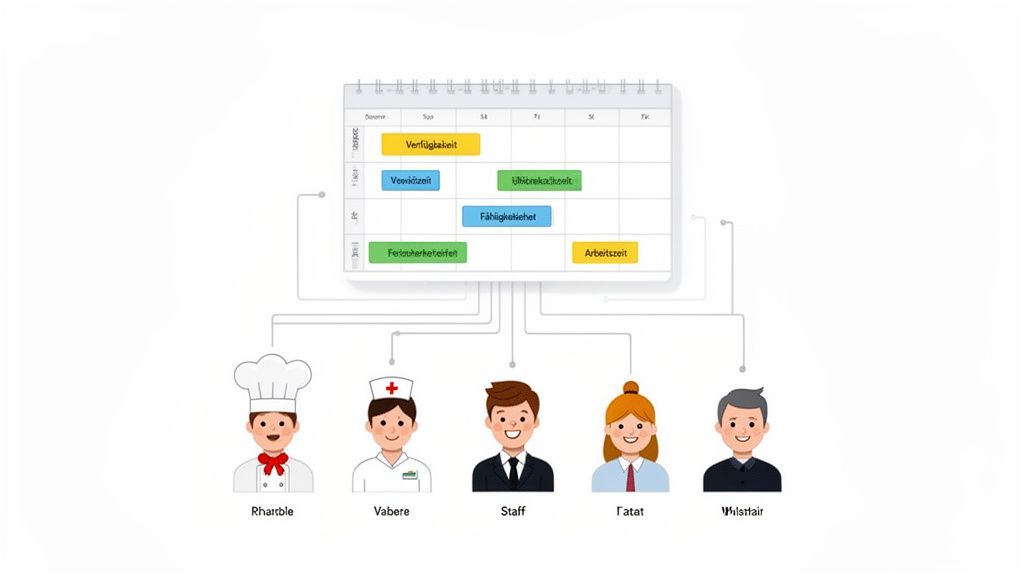
Genau hier setzt die KI-basierte Einsatzplanung an. Anstatt dass du mühsam jede einzelne Schicht manuell besetzt, übernimmt ein Algorithmus diese undankbare Aufgabe. Er lernt aus den Daten der Vergangenheit und erstellt Planvorschläge, die all diese komplexen Anforderungen auf einmal im Blick haben.
Stell dir die KI wie einen extrem erfahrenen Planer vor, der nie müde wird und jede erdenkliche Möglichkeit durchrechnet. Sie findet in Sekunden die beste Lösung, für die ein Mensch Stunden oder gar Tage bräuchte.
So funktioniert der Prozess im Kern
Eine KI-gestützte Plattform analysiert Unmengen an Informationen, um den perfekten Plan zu entwerfen. Das System zieht sich dafür Daten aus ganz unterschiedlichen Quellen und verknüpft sie klug miteinander.
Die wichtigsten Datenpunkte sind dabei:
- Mitarbeiterdaten: Wer besitzt welche Fähigkeiten? Wer arbeitet Vollzeit, Teilzeit oder als Aushilfe? Welche Präferenzen wurden geäussert?
- Historische Auftragsdaten: Wie war die Auslastung an vergangenen Feiertagen, bei grossen Events oder an bestimmten Wochentagen?
- Echtzeit-Informationen: Welche Mitarbeitenden sind gerade verfügbar? Gibt es kurzfristige Ausfälle wie Krankmeldungen?
- Regelwerke: Arbeitsgesetze, maximale Arbeitszeiten und Pausenregelungen sind als feste Leitplanken im System hinterlegt.
Aus diesem Wust an Informationen lernt die KI, Muster zu erkennen. Sie weiss, dass du an einem sonnigen Samstag im Sommer mehr Personal für die Restaurantterrasse brauchst oder dass bei einer grossen Messe am Freitagabend die erfahrensten Logistiker ranmüssen.
Ein praktisches Beispiel aus der Eventbranche
Nehmen wir an, du organisierst ein Musikfestival. Für den Hauptabend musst du 150 Sicherheitskräfte, 80 Thekenmitarbeitende und 30 Techniker einplanen – ein logistischer Albtraum.
- Die manuelle Planung: Du würdest wochenlang telefonieren, E-Mails verschicken und dich durch Excel-Tabellen kämpfen. Dabei müsstest du sicherstellen, dass jeder die richtige Qualifikation hat, niemand seine Arbeitszeit überschreitet und die Teams an den verschiedenen Bühnen harmonieren.
- Die KI-basierte Einsatzplanung: Du gibst den Bedarf ins System ein. Die KI scannt sofort die Verfügbarkeit und die Skills deines gesamten Personalpools. Sie schlägt dir einen fertigen Einsatzplan vor, der erfahrene Teamleiter mit neuen Kräften mischt, Anfahrtswege berücksichtigt und sogar passendes Ersatzpersonal für den Notfall bereithält. Meldet sich jemand krank, findet das System automatisch den besten Ersatz und benachrichtigt die Person direkt per App.
Dieser Ansatz spart nicht nur unglaublich viel Zeit. Er hebt auch die Qualität deiner Planung auf ein ganz neues Level. Deine Mitarbeitenden bekommen fairere und passendere Schichten, was ihre Zufriedenheit spürbar erhöht, und du kannst dich darauf verlassen, dass dein Event reibungslos über die Bühne geht.
Der spürbare Nutzen für dein Unternehmen
Eine kluge Personalplanung ist viel mehr als nur ein gut gefüllter Schichtplan. Sie ist der entscheidende Hebel dafür, ob dein Betrieb reibungslos läuft, die Kosten im Griff bleiben und dein Team motiviert zur Arbeit kommt. Eine KI-basierte Einsatzplanung ist das Werkzeug, das dir hilft, genau diese drei zentralen Bereiche in eine perfekte Balance zu bringen.
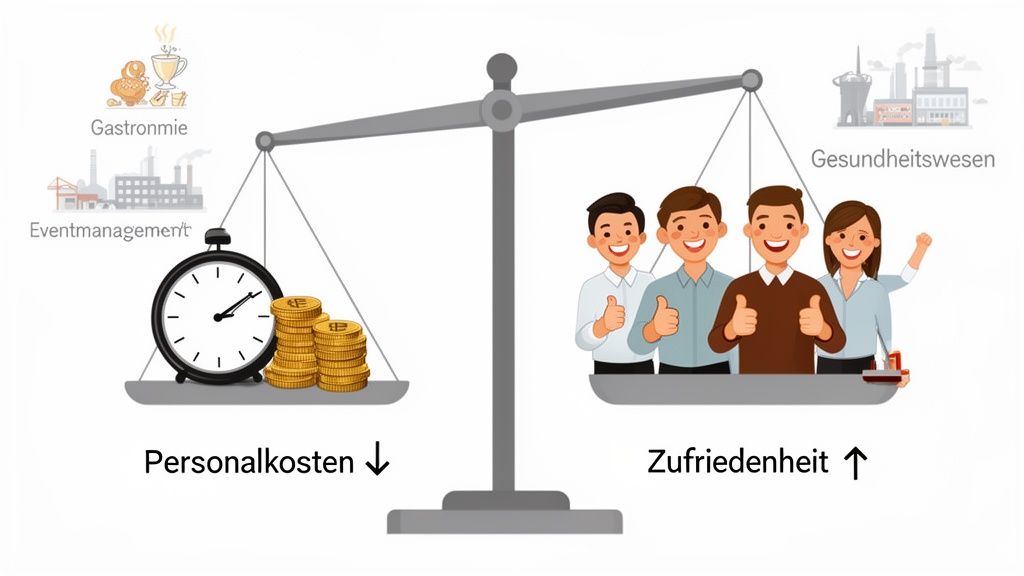
Der Wechsel von manuellen Listen und Excel-Tabellen zu einem smarten System fühlt sich oft wie ein Quantensprung an. Statt Stunden damit zu verbringen, Namen in einer Tabelle hin und her zu schieben, erhältst du auf Knopfdruck einen Vorschlag, der nicht nur funktioniert, sondern auch wirtschaftlich clever und für alle fair ist.
Personalkosten klug steuern
Einer der grössten Hebel, den du mit KI-basierter Einsatzplanung in Bewegung setzt, ist die genaue Steuerung deiner Personalkosten. Das System hilft dir, teure Fehler zu vermeiden, die bei einer manuellen Planung fast unvermeidlich sind.
So sparst du ganz konkret Geld:
- Vermeidung von Überstunden: Die KI erkennt drohende Überstunden frühzeitig und schlägt dir clevere Alternativen vor, bevor die Kosten überhaupt entstehen.
- Reduktion von Leerlauf: Dank genauer Bedarfsprognosen planst du nur so viele Mitarbeitende ein, wie du auch wirklich brauchst. Das Ergebnis? Deutlich weniger unproduktive Stunden.
- Gute Auslastung: Mitarbeitende mit Teilzeitverträgen werden exakt nach ihren vertraglich vereinbarten Stunden verplant, was eine faire und kostengerechte Planung sicherstellt.
Ein typisches Beispiel aus der Gastronomie macht das greifbar: Du siehst als Restaurantleiter die Schönwetterprognose für das Wochenende. Anstatt pauschal mehr Personal zu bestellen, analysiert die KI die Daten vergangener Sonnentage und berechnet den exakten Mehrbedarf für Service und Küche. So wird der Umsatz maximiert, ohne die Lohnkosten unnötig in die Höhe zu treiben.
Die Zufriedenheit im Team spürbar steigern
Zufriedene Mitarbeitende sind das Fundament jedes erfolgreichen Unternehmens. Eine faire und transparente Planung ist dabei ein oft unterschätzter, aber absolut entscheidender Faktor. Genau hier spielt eine KI-basierte Einsatzplanung ihre ganze Stärke aus.
Ein fairer Plan ist kein Zufallsprodukt. Er entsteht, wenn ein System objektiv und ohne persönliche Vorlieben die Wünsche der Mitarbeitenden, die betrieblichen Notwendigkeiten und gesetzliche Regeln berücksichtigt.
Das System stellt sicher, dass unbeliebte Schichten gerecht verteilt werden und individuelle Wünsche, sofern betrieblich möglich, automatisch Berücksichtigung finden. Diese Nachvollziehbarkeit schafft Vertrauen und reduziert Konflikte im Team spürbar. Wenn sich Mitarbeitende fair behandelt fühlen, sinkt die Fluktuation – und du sparst dir die hohen Kosten und den Aufwand für die ständige Suche nach neuem Personal.
Die Schweizer Hospitality-Branche befindet sich hier an einem Wendepunkt. Eine Analyse zeigt, dass bereits rund 34 % der Hotel- und Gastronomiebetriebe in der Schweiz künstliche Intelligenz für ihre Personaleinsatzplanung nutzen. Diese Entwicklung wird durch den Fachkräftemangel und die Digitalisierung beschleunigt, da KI-Tools den Planungsaufwand massiv verringern und eine gute Personaldeckung garantieren. Mehr zu den KI-Trends im Schweizer Gastgewerbe findest du auf personal-schweiz.ch.
In Echtzeit auf Veränderungen reagieren
Dein Geschäft ist dynamisch – deine Planung sollte es auch sein. Die wahre Kraft einer KI-gestützten Plattform wie job.rocks zeigt sich, wenn das Unerwartete passiert.
Stell dir dein Hotel vor, das durch eine kurzfristige Messebuchung plötzlich eine Welle an neuen Gästen erwartet.
- Manuelle Reaktion: Du telefonierst als Manager panisch Mitarbeiterlisten durch, um irgendwie zusätzliche Kräfte für die Rezeption und das Housekeeping aufzutreiben. Stress pur.
- KI-gestützte Reaktion: Das Buchungssystem meldet die höhere Auslastung direkt an die Planungssoftware. Die KI prüft sofort, welche qualifizierten Mitarbeitenden verfügbar sind, und sendet automatisch Anfragen über die App. Innerhalb von Minuten ist der Plan angepasst und der zusätzliche Bedarf gedeckt.
Diese Fähigkeit, blitzschnell und datengestützt zu handeln, gibt dir eine enorme Sicherheit und Flexibilität im Betriebsalltag. Du reagierst nicht mehr nur auf Probleme, sondern gestaltest deine Einsätze proaktiv und souverän.
Wie die Technik hinter den Kulissen arbeitet
Du musst kein Tech-Profi sein, um zu verstehen, was eine KI-basierte Einsatzplanung so stark macht. Stell es dir wie ein gutes Rezept vor: Nur mit den richtigen Zutaten wird das Gericht am Ende auch schmecken. Bei einer KI ist es ganz ähnlich – die Zutaten sind hier einfach nur Daten.
Das System läuft zur Höchstform auf, wenn es auf einem breiten und qualitativ guten Datensatz arbeiten kann. Je mehr passende Informationen du der KI gibst, desto treffsicherer und nützlicher werden die Planungsvorschläge, die sie für dich ausarbeitet.
Womit die KI gefüttert wird
Eine kluge Planungssoftware ist hungrig nach Informationen. Sie knüpft Verbindungen zwischen unzähligen Datenpunkten, um ein vollständiges Bild deines Betriebs zu malen und Muster zu finden, die ein Mensch niemals erkennen würde.
Die wichtigsten "Zutaten" für eine erfolgreiche KI-basierte Einsatzplanung sind:
- Stammdaten der Mitarbeitenden: Name, Kontaktdaten, Vertragsart (Vollzeit, Teilzeit, Freelancer) und natürlich der aktuelle Arbeitszeitsaldo.
- Qualifikationen und Fähigkeiten: Wer darf welche Maschine bedienen? Wer hat den nötigen Führerschein? Wer spricht welche Sprachen?
- Verfügbarkeiten und Wünsche: Wann können und wollen deine Mitarbeitenden arbeiten? Gibt es Urlaubsanträge oder bereits geblockte Zeiten?
- Historische Auftrags- und Einsatzdaten: Wie liefen frühere Einsätze? Wie viel Personal war bei ähnlichen Events oder an bestimmten Wochentagen nötig?
- Gesetzliche und betriebliche Regeln: Arbeitszeitgesetze, Pausenregelungen, Tarifverträge und eure internen Spielregeln.
Du kannst dir die KI wie einen Detektiv vorstellen. Sie durchkämmt all diese Hinweise und deckt Zusammenhänge auf. So merkt sie, dass du an Regentagen 20 % weniger Personal für den Aussenbereich deines Cafés brauchst oder dass ein bestimmter Kunde immer die gleichen drei Teammitglieder anfordert.
Wie die KI Muster erkennt und dazulernt
Das Herzstück der ganzen Magie sind sogenannte Machine-Learning-Modelle. Diese Algorithmen sind darauf trainiert, in den Daten nach wiederkehrenden Mustern zu fahnden. Sie lernen aus jedem einzelnen Einsatz der Vergangenheit und werden mit der Zeit immer schlauer.
Nehmen wir dein Hotel, das mit saisonalen Schwankungen kämpft. Im Sommer boomt das Geschäft, im Winter ist es ruhiger. Die KI analysiert die Buchungsdaten der letzten Jahre und spuckt eine erstaunlich genaue Bedarfsprognose für die kommende Saison aus. Sie weiss genau, wann du mehr Personal an der Rezeption oder im Housekeeping einplanen solltest.
Dieser Lernprozess hört nie auf. Wenn du einen neuen Auftrag planst, vergleicht das System ihn blitzschnell mit tausenden ähnlichen Einsätzen aus der Vergangenheit. Es schlägt dir dann nicht nur die richtige Anzahl an Mitarbeitenden vor, sondern auch die besten Kandidaten – basierend auf deren Fähigkeiten und bisheriger Leistung. Das Resultat ist ein Planungsprozess, der von Monat zu Monat genauer und zuverlässiger wird.
Warum Schnittstellen das A und O sind
Eine KI-Planungssoftware entfaltet ihr volles Potenzial aber erst dann, wenn sie nicht als isolierte Insel arbeitet. Entscheidend ist eine nahtlose Anbindung an die anderen Systeme in deinem Unternehmen. Nur so können Daten frei fliessen und bleiben immer aktuell.
Stell dir einfach vor, deine Einsatzplanung ist direkt mit deiner Zeiterfassungs-App und der Lohnbuchhaltung gekoppelt.
- Ein Mitarbeiter stempelt sich ganz normal über die App ein und aus.
- Die erfassten Stunden fliessen automatisch in die Einsatzplanung und aktualisieren den Arbeitszeitsaldo in Echtzeit.
- Am Monatsende werden die validierten Stunden direkt und ohne Umwege an die Lohnbuchhaltung übermittelt.
Dieser geschlossene Kreislauf sorgt dafür, dass deine Planung immer auf korrekten, aktuellen Daten fusst. Manuelle Übertragungsfehler? Gehören der Vergangenheit an. Dein administrativer Aufwand sinkt spürbar. Ein gut vernetztes System ist schlicht die Grundlage für eine wirklich smarte Personalsteuerung. Wenn du tiefer einsteigen willst, lies mehr über die Wichtigkeit von Schnittstellen für eine reibungslose Einsatzplanung in unserem weiterführenden Artikel.
Dein Fahrplan zur Einführung in sechs Schritten
Die Einführung einer KI-basierten Einsatzplanung muss kein unübersichtliches Grossprojekt sein. Mit einem klaren Plan stellst du sicher, dass die Lösung am Ende genau das leistet, was du dir erhoffst. Betrachte die folgenden sechs Schritte als deinen persönlichen Fahrplan – er navigiert dich sicher von der ersten Idee bis zum erfolgreichen Start im gesamten Unternehmen.
Dieser Prozess zeigt den Kern der KI-Einsatzplanung auf einen Blick: von der Dateneingabe über die Analyse bis zum fertigen Plan.
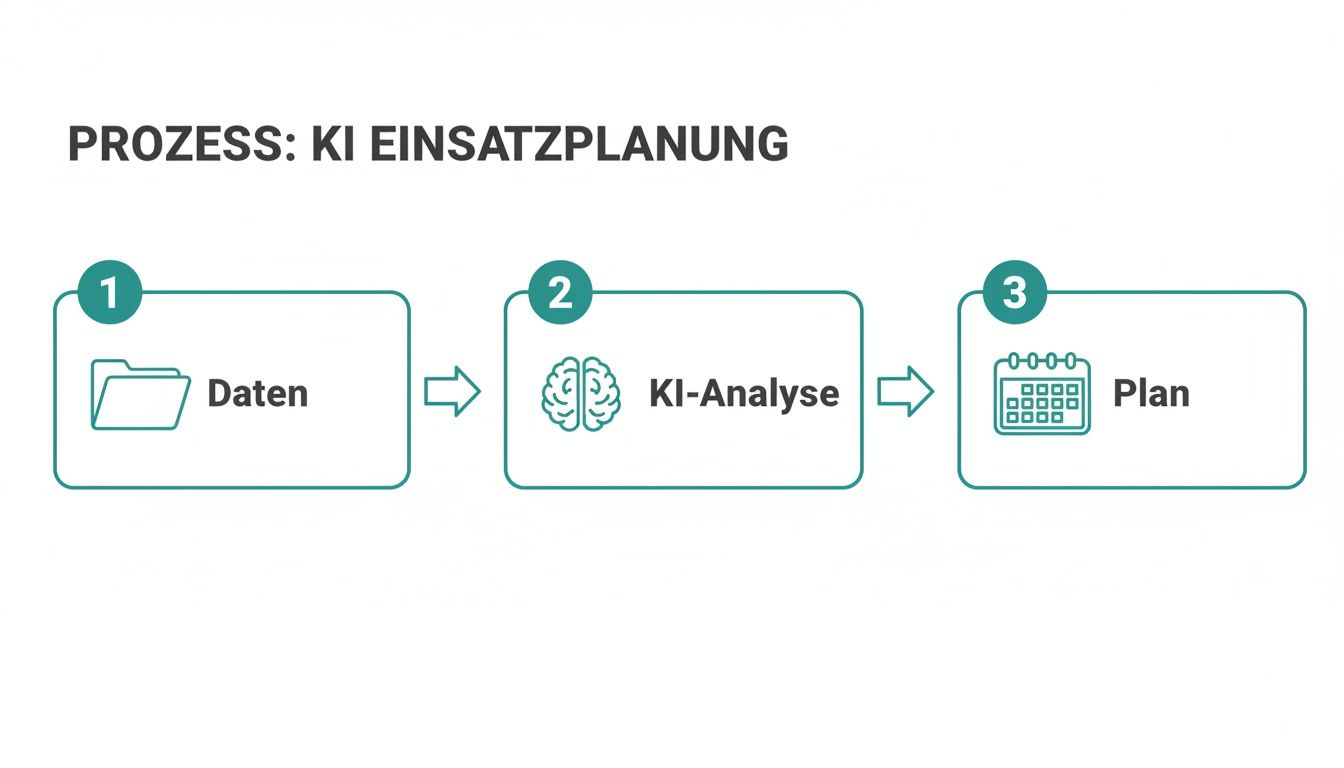
Die Grafik macht deutlich: Ohne hochwertige Daten kann die KI keine kluge Analyse liefern, und ohne diese Analyse gibt es keinen guten Einsatzplan. Alles hängt an der Qualität des Inputs.
Schritt 1: Ziele klar definieren
Bevor du dich überhaupt auf die Suche nach einer Software machst, frag dich ganz ehrlich: Was soll sich konkret verbessern? Willst du in erster Linie den administrativen Aufwand reduzieren und den Planungszyklus von Tagen auf Minuten drücken? Oder liegt dein Fokus darauf, die Personalkosten durch die Vermeidung teurer Überstunden zu senken?
Definiere messbare Ziele. Ein Ziel könnte sein: "Wir wollen die Zeit für die wöchentliche Schichtplanung um 80 % reduzieren" oder "Wir möchten die unbesetzten Schichten innerhalb von 24 Stunden um 90 % verringern". Nur mit solchen klaren Kennzahlen kannst du später den Erfolg wirklich messen.
Schritt 2: Den richtigen Partner auswählen
Der Markt für Softwarelösungen ist riesig und unübersichtlich. Achte bei der Auswahl nicht nur auf schicke Oberflächen, sondern auf die Funktionen, die für deine definierten Ziele wirklich entscheidend sind. Prüfe, ob die Software branchenspezifische Anforderungen abbilden kann – die Planung für ein Spital unterscheidet sich stark von der eines Event-Dienstleisters.
Bestehe auf einer Live-Demonstration und lass dir zeigen, wie ein typischer Anwendungsfall aus deinem Alltag abgebildet wird. Ein guter Partner nimmt sich Zeit, deine Prozesse zu verstehen, und bietet einen verlässlichen Support, der auch nach dem Kauf für dich da ist.
Schritt 3: Das Team von Anfang an einbinden
Die beste Software nützt rein gar nichts, wenn sie nicht akzeptiert wird. Die grösste Hürde ist oft nicht die Technik, sondern der Mensch. Viele Mitarbeitende haben Vorbehalte oder sogar Ängste, wenn sie das Wort "KI" hören.
Kommuniziere offen und ehrlich die Vorteile, die das neue System für jeden Einzelnen bringt. Das können fairere Pläne, eine einfachere Urlaubsbeantragung über eine App oder schlicht mehr Transparenz sein. Beziehe Schlüsselpersonen aus dem Team, zum Beispiel erfahrene Schichtleiter, ganz früh in den Auswahl- und Testprozess ein. So machst du Betroffene zu Beteiligten und baust Widerstände proaktiv ab.
Eine erfolgreiche Einführung steht und fällt mit der Akzeptanz im Team. Wenn deine Mitarbeitenden den Nutzen für sich selbst erkennen, wird das Projekt zum Selbstläufer.
Gerade in der Schweiz herrscht bei diesem Thema noch eine gewisse Zurückhaltung. Eine Umfrage unter Schweizer KMU zeigte, dass über die Hälfte noch keine KI-Anwendungen einsetzt und eine Mehrheit skeptisch ist. Als Haupthindernisse gelten fehlendes internes Wissen und die Sorge vor Widerständen bei den Mitarbeitenden. Erfahre mehr über die Haltung von KMU gegenüber KI auf statista.com.
Schritt 4: Daten vorbereiten und das System einrichten
Jetzt wird es praktisch. Gemeinsam mit deinem Softwareanbieter werden deine Daten in das neue System übertragen. Das umfasst Mitarbeiterstammdaten, Qualifikationen, Arbeitszeitmodelle und bestehende Regelwerke. Dies ist der perfekte Zeitpunkt, um alte Daten aufzuräumen und verstaubte Prozesse kritisch zu hinterfragen.
Anschliessend wird die Software konfiguriert. Das System lernt deine betrieblichen Regeln, damit die KI-basierte Einsatzplanung später auch wirklich passgenaue Vorschläge machen kann.
Schritt 5: In einer Pilotphase testen
Starte auf keinen Fall gleich im ganzen Unternehmen. Wähle eine Abteilung oder ein Team als Pilotgruppe aus, um die Software im echten Arbeitsalltag auf Herz und Nieren zu testen. Diese Testphase ist Gold wert.
Hier sammelst du unbezahlbares Feedback, identifizierst mögliche Kinderkrankheiten und kannst die Konfiguration feinjustieren, bevor es ernst wird. Deine Pilotgruppe wird später zu wichtigen Fürsprechern, wenn es an den unternehmensweiten Start geht.
Schritt 6: Unternehmensweiter Start und Erfolgskontrolle
Nach einer erfolgreichen Testphase ist es Zeit für den grossen Start. Plane Schulungen für alle Anwender, um sicherzustellen, dass jeder die neuen Funktionen kennt und sich im System zurechtfindet.
Begleite den Start eng und biete eine zentrale Anlaufstelle für Fragen an. Nach einigen Wochen überprüfst du dann, ob du die in Schritt 1 definierten Ziele erreicht hast. Feiere die Erfolge mit deinem Team und nutze das gewonnene Wissen, um die Prozesse kontinuierlich weiter zu verbessern.
Compliance und Datenschutz, aber bitte verständlich
Wenn du eine KI-basierte Einsatzplanung in deinem Unternehmen verankerst, jonglierst du zwangsläufig mit sensiblen Personaldaten. Genau deshalb muss die Software deiner Wahl die strengen Datenschutzregeln lückenlos erfüllen. Das ist keine Kür, sondern Pflicht. In der Schweiz gibt das neue Datenschutzgesetz (DSG) den Ton an, und für viele ist auch die europäische Datenschutz-Grundverordnung (DSGVO) relevant.
Diese Gesetze sind keine Schikane, sondern das Fundament für ein faires Miteinander. Sie schützen die Grundrechte deiner Mitarbeitenden und schaffen klare Spielregeln für den Umgang mit Informationen wie Namen, Qualifikationen oder Arbeitszeiten. Ein Verstoss kann nicht nur das Vertrauen deines Teams nachhaltig erschüttern, sondern auch empfindliche Bussen nach sich ziehen.
Die Grundpfeiler des Datenschutzes
Zwei Prinzipien sind im Umgang mit Mitarbeiterdaten das A und O: Datenminimierung und Zweckbindung. Sie sind die Basis für einen vertrauensvollen und gesetzeskonformen Prozess.
- Datenminimierung: Das System darf nur das wissen, was es für die Einsatzplanung wirklich wissen muss. Private Informationen, die für die Schichtzuteilung keine Rolle spielen, haben in der Software schlicht nichts verloren.
- Zweckbindung: Die gesammelten Daten sind ausschliesslich für den vereinbarten Zweck da – also die Personalplanung und direkt damit verbundene Prozesse wie die Lohnabrechnung. Eine Weitergabe oder Nutzung für andere Zwecke ist tabu.
Eine durchdachte Software wie job.rocks ist von Grund auf so gebaut, dass sie diese Prinzipien lebt. Sie fragt nur passende Informationen ab und stellt sicher, dass diese sicher und ausschliesslich für die Personalsteuerung genutzt werden.
Transparenz und Fairness bei KI-Entscheidungen
Wenn ein Algorithmus entscheidet, wer welche Schicht bekommt, muss dieser Prozess für deine Mitarbeitenden glasklar nachvollziehbar sein. Intransparente "Blackbox"-Systeme, bei denen niemand versteht, warum eine Entscheidung so und nicht anders gefallen ist, säen Misstrauen.
Deine Mitarbeitenden haben ein Recht darauf zu wissen, nach welchen Kriterien die KI ihre Vorschläge macht. Eine gute Plattform erklärt, warum eine bestimmte Person für eine Schicht ausgewählt wurde – aufgrund ihrer Qualifikation, Verfügbarkeit oder der fairen Verteilung von Arbeitslast.
Es liegt in deiner Verantwortung, für diese Transparenz zu sorgen. Kommuniziere offen, wie das System funktioniert und welche Vorteile es für alle bringt. Stelle sicher, dass die automatisierten Entscheidungen fair sind und niemanden diskriminieren. Nur dann wird die KI als das wahrgenommen, was sie sein sollte: ein unterstützendes Werkzeug, das objektive und nachvollziehbare Pläne erstellt.
Sichere Datenspeicherung und die Rechte deiner Mitarbeitenden
Wo die Daten deiner Mitarbeitenden liegen, ist ebenfalls entscheidend. Für Schweizer Unternehmen ist ein Serverstandort in der Schweiz ein klares Qualitätsmerkmal. Das garantiert, dass die Daten unter dem Schutz der strengen schweizerischen Gesetzgebung stehen und nicht unkontrolliert ins Ausland abfliessen.
Zudem haben deine Mitarbeitenden klar definierte Rechte, die du jederzeit gewährleisten musst:
- Auskunftsrecht: Jede Person kann verlangen zu wissen, welche Daten über sie gespeichert sind.
- Recht auf Berichtigung: Fehlerhafte Daten müssen umgehend korrigiert werden.
- Recht auf Löschung: Nach Austritt müssen die Daten nach Ablauf der gesetzlichen Aufbewahrungsfristen gelöscht werden.
Eine professionelle Software nimmt dir hier Arbeit ab und hilft dir, diese Anfragen einfach und schnell zu bearbeiten. Mehr Details dazu, wie job.rocks diese Anforderungen umsetzt, findest du in unserer Erklärung zum Datenschutz und zur Datensicherheit.
Wie job.rocks dich konkret unterstützt
Du hast jetzt gesehen, was eine KI-basierte Einsatzplanung in der Theorie alles kann und wie sie die Spielregeln in der Personalsteuerung neu mischt. Aber wie fühlt sich das im Alltag an? Bei job.rocks haben wir diese Konzepte in eine klare, intuitive Plattform gegossen, die dir Arbeit abnimmt, statt neue zu schaffen.
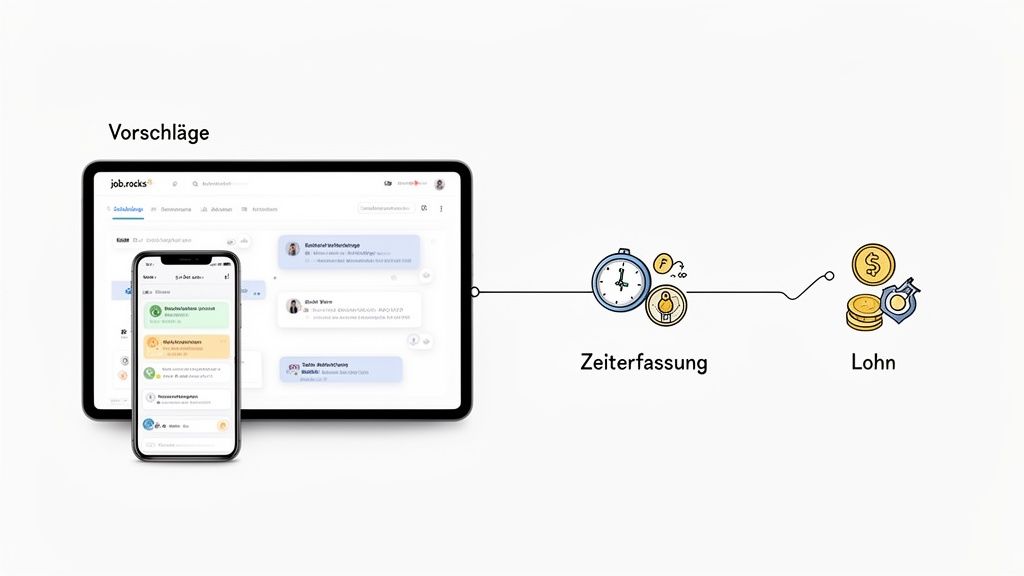
Unser Ziel war es, ein Werkzeug zu entwickeln, das sich nahtlos in deinen Arbeitsablauf einfügt. Eines, das dir den Freiraum gibt, dich auf das Wesentliche zu konzentrieren: dein Team und deine Kunden. Lass uns gemeinsam anschauen, wie das in der Praxis funktioniert.
Kluge Vorschläge statt endloser Suche
Stell dir vor, du hast eine offene Schicht für einen Grossevent und brauchst dringend jemanden mit einer spezifischen Sicherheitszertifizierung. Statt jetzt manuell Excel-Listen zu durchforsten oder Dutzende Anrufe zu tätigen, erledigt job.rocks das für dich.
Die Plattform schlägt dir automatisch eine Liste der am besten geeigneten und verfügbaren Mitarbeitenden vor. Dabei berücksichtigt die KI nicht nur die formale Qualifikation, sondern auch Faktoren wie den aktuellen Arbeitszeitsaldo oder die bisherige Einsatzhistorie. Mit einem Klick sendest du eine Anfrage an die Top-Kandidaten – fertig.
Automatisierte Schichtpläne, die einfach passen
Die Erstellung eines kompletten Wochen- oder Monatsplans ist oft die zeitaufwendigste Aufgabe. Mit job.rocks definierst du nur noch den Bedarf, und das System erstellt einen klugen Planentwurf.
Der Algorithmus sorgt für eine faire Verteilung der Schichten und achtet penibel auf die Einhaltung aller gesetzlichen Vorgaben. Diesen Entwurf nutzt du als Grundlage, nimmst bei Bedarf manuelle Anpassungen vor und gibst den fertigen Plan direkt an dein Team frei. Mehr darüber, wie unser KI-Schichtplaner deine Planung vereinfacht, findest du in unserem speziellen Beitrag dazu.
Alles an einem Ort: Von der Planung bis zur Lohnabrechnung
Eine gute Planung ist nur die halbe Miete. Der echte Wert entsteht erst, wenn der gesamte Prozess von Anfang bis Ende reibungslos läuft. Genau hier setzt unser Ansatz an.
- Planung: Du erstellst und veröffentlichst die Einsätze mit wenigen Klicks.
- Kommunikation: Dein Team erhält alle Infos direkt über die mobile App, kann Verfügbarkeiten melden und sich auf Schichten bewerben.
- Zeiterfassung: Die Mitarbeitenden stempeln sich präzise per App ein und aus – auf die Minute genau.
- Abrechnung: Du prüfst und validierst die erfassten Stunden, und die Daten fliessen sauber aufbereitet in deine Lohnbuchhaltung.
Dieser geschlossene Kreislauf eliminiert manuelle Übertragungsfehler und reduziert deinen administrativen Aufwand auf ein Minimum. Du hast jederzeit die volle Kontrolle und Transparenz über den gesamten Personalprozess.
job.rocks ist mehr als nur eine Planungssoftware. Es ist dein zentrales Cockpit für die gesamte Personalsteuerung, das dir hilft, schneller, fairer und wirtschaftlicher zu agieren.
Die Nutzung solcher Werkzeuge ist nicht nur eine Frage der Bequemlichkeit, sondern längst ein entscheidender wirtschaftlicher Faktor. Eine Analyse von PwC zeigt, dass durch den verstärkten KI-Einsatz in der Schweiz ein Wertschöpfungspotenzial von rund 28 Milliarden Schweizer Franken gehoben werden kann. Da etwa 20 % aller Arbeitsplätze ein grosses Potenzial für KI-gestützte Verbesserungen aufweisen, spielen smarte Planungstools eine zentrale Rolle für die zukünftige Wettbewerbsfähigkeit. Die ganze Analyse zum KI-Standort Schweiz kannst du bei PwC nachlesen.
Die häufigsten Fragen zur KI in der Einsatzplanung
Wenn du über die Einführung einer KI-gestützten Einsatzplanung nachdenkst, tauchen natürlich Fragen auf. Das ist völlig normal. Hier geben wir dir klare und direkte Antworten auf die häufigsten Bedenken, damit du eine fundierte Entscheidung für dein Unternehmen treffen kannst.
Ersetzt die KI meine Disponenten?
Nein, ganz im Gegenteil. Eine KI ist kein Ersatz für menschliche Erfahrung, sondern ein extrem leistungsfähiges Werkzeug für deine Planer. Sie nimmt ihnen die mühsame Routinearbeit ab – das manuelle Durchforsten von Listen oder das ständige Abgleichen von Verfügbarkeiten gehört der Vergangenheit an.
Deine Disponenten gewinnen dadurch wertvolle Zeit. Zeit, die sie nutzen können, um sich um komplexe Aufgaben zu kümmern, persönliche Gespräche mit Mitarbeitenden zu führen oder auf unerwartete Kundenwünsche einzugehen. Die KI liefert die Daten und Vorschläge, aber der Mensch trifft die finale, strategische Entscheidung.
Wie schnell rechnet sich die Investition?
Die Anschaffung einer spezialisierten Software ist eine Investition, die sich oft schneller bezahlt macht, als du denkst. Die Einsparungen entstehen auf mehreren Ebenen:
- Weniger Planungsaufwand: Die Zeit für die Erstellung von Schichtplänen reduziert sich drastisch. Oft von mehreren Stunden pro Woche auf wenige Minuten.
- Geringere Personalkosten: Durch genaue Bedarfsprognosen vermeidest du teure Überstunden und kostspieligen Leerlauf.
- Niedrigere Fluktuation: Faire und transparente Pläne steigern die Mitarbeiterzufriedenheit, was die Kosten für die Rekrutierung von neuem Personal spürbar senkt.
Viele Unternehmen berichten, dass sich die Kosten bereits innerhalb der ersten Monate durch diese direkten und indirekten Einsparungen amortisieren.
Ist die Einführung kompliziert und langwierig?
Die Sorge vor einem endlosen IT-Projekt ist verständlich, aber bei modernen Lösungen meist unbegründet. Heutige Software wie job.rocks ist so konzipiert, dass die Einführung so reibungslos wie möglich verläuft. Mit einem klaren Fahrplan, wie wir ihn zuvor beschrieben haben, gehst du Schritt für Schritt vor.
Ein guter Anbieter begleitet dich während des gesamten Prozesses – von der Datenübernahme bis zur Schulung deines Teams. Eine Pilotphase mit einer ausgewählten Abteilung hilft zusätzlich, Kinderkrankheiten frühzeitig zu erkennen und das System optimal auf deine Bedürfnisse anzupassen, bevor der unternehmensweite Start erfolgt. In der Praxis ist der gesamte Prozess oft schon in wenigen Wochen abgeschlossen.
Was ist, wenn meine Mitarbeitenden die Technik ablehnen?
Das ist eine der häufigsten Sorgen, aber auch eine, die du aktiv steuern kannst. Der Schlüssel liegt in offener Kommunikation. Erkläre deinem Team von Anfang an die Vorteile, die das neue System für sie persönlich bringt.
Eine KI-basierte Einsatzplanung bedeutet für deine Mitarbeitenden fairere Schichten, eine einfachere Urlaubsplanung per App und mehr Transparenz. Sie ist kein Kontrollinstrument, sondern ein Werkzeug für einen besseren Arbeitsalltag.
Beziehe dein Team frühzeitig mit ein, nimm Bedenken ernst und zeige, wie die Software den Alltag erleichtert. Wenn Mitarbeitende den Nutzen selbst erfahren, weicht die anfängliche Skepsis schnell der Akzeptanz.
Bereit, deine Einsatzplanung auf das nächste Level zu heben? Entdecke, wie job.rocks dir hilft, schneller, fairer und wirtschaftlicher zu planen. Fordern Sie jetzt Ihre persönliche Demo an.