
Eine durchdachte Einsatzplanung für Azubis ist so viel mehr als nur ein Kalendereintrag – sie ist der entscheidende Hebel für eine Ausbildung, die diesen Namen auch verdient. Genau hier stellst du sicher, dass deine Lernenden wirklich alle relevanten Abteilungen durchlaufen, praktische Fähigkeiten aufbauen und sich zu den wertvollen Fachkräften entwickeln, die du später so dringend brauchst.
Warum eine gute Einsatzplanung für Azubis dein Unternehmen wirklich voranbringt
Mal ehrlich: Stell dir vor, dein neuer Lernender verbringt die ersten sechs Monate nur im Lager und sortiert Schrauben. Was lernt er oder sie über dein Unternehmen, deine kaufmännischen Prozesse oder den Kundenkontakt? So gut wie nichts. Eine strategische Einsatzplanung für Lernende verhindert genau das. Sie ist dein Fahrplan, der sicherstellt, dass die Ausbildung nicht dem Zufall überlassen wird, sondern gezielt und nach einem klaren Plan verläuft.
Eine sauber strukturierte Planung bringt dir und deinen Lernenden handfeste Vorteile. Du vermeidest Leerlauf und stumpfe Unterforderung, aber genauso auch Überlastung durch zu komplexe Aufgaben, für die die Grundlagen fehlen. Jeder Einsatz in einer neuen Abteilung wird so zu einer gezielten Lerneinheit mit klaren Zielen. Das Ergebnis? Motivierte junge Menschen, die sich als Teil des Teams fühlen und von Anfang an einen echten Beitrag leisten wollen.
Mehr als nur ein Zeitplan
Die Planung ist das Fundament, auf dem der gesamte Ausbildungserfolg aufbaut. Sie hilft dir ganz konkret, die folgenden Ziele zu erreichen:
- Kompetenzen systematisch aufbauen: Anstatt zufälliger Aufgaben lernen deine Azubis gezielt genau die Fähigkeiten, die im Bildungsplan (BiPla) für die berufliche Grundbildung in der Schweiz vorgeschrieben sind. Ein Kaufmann EFZ lernt so beispielsweise zuerst die Grundlagen im Posteingang, bevor er später im Verkauf selbstständig Angebote erstellt.
- Motivation und Bindung steigern: Lernende, die einen klaren Plan vor sich sehen und verstehen, warum sie bestimmte Aufgaben erledigen, sind deutlich engagierter. Sie erkennen den Wert ihrer Arbeit und entwickeln eine viel stärkere Bindung an dein Unternehmen – oft über die Lehrzeit hinaus.
- Ressourcen besser einsetzen: Du siehst frühzeitig, welche Abteilung wann einen Lernenden sinnvoll betreuen kann. So vermeidest du Engpässe und stellst sicher, dass immer ein kompetenter Berufsbildner als Ansprechperson zur Verfügung steht.
Eine gute Einsatzplanung verwandelt die gesetzliche Pflicht zur Ausbildung in eine strategische Investition. Du formst nicht nur Arbeitskräfte, sondern zukünftige Fachspezialisten, die dein Unternehmen von der Pike auf kennen und verstehen.
Am Ende des Tages schaffst du mit einer vorausschauenden Planung eine echte Win-win-Situation. Deine Lernenden erhalten eine erstklassige Ausbildung, die sie optimal auf ihre Abschlussprüfung und ihre weitere Karriere vorbereitet. Dein Unternehmen profitiert im Gegenzug von fähigen, loyalen Mitarbeitenden, die schnell produktiv werden und oft die frischesten Ideen einbringen.
Die rechtlichen und betrieblichen Grundlagen deiner Planung
Bevor du auch nur den ersten Plan für deine Lernenden aufsetzt, brauchst du ein solides Fundament. Die Einsatzplanung für Azubis beginnt nämlich nicht mit einem leeren Kalender, sondern mit den knallharten rechtlichen und betrieblichen Rahmenbedingungen. Ohne dieses Wissen ist jeder Plan nur ein gut gemeinter Versuch, der in der Praxis schnell an seine Grenzen stösst.
Das Herzstück der rechtlichen Vorgaben in der Schweiz sind die Bildungsverordnung (BiVo) und der dazugehörige Bildungsplan (BiPla) für das jeweilige Berufsfeld. Das sind keine trockenen Theorie-Dokumente – sie sind dein konkretes Pflichtenheft. Hier steht schwarz auf weiss, welche Fähigkeiten und Kenntnisse deine Lernenden bis zum Ende ihrer Ausbildung erworben haben müssen.
Deine Aufgabe ist es, diese abstrakten Lernziele in greifbare, praktische Einsätze zu übersetzen. Ein kurzes Beispiel: Wenn im Bildungsplan für einen Logistiker EFZ das Ziel "Waren annehmen und kontrollieren" steht, muss dein Plan ganz klar einen Einsatz im Wareneingang vorsehen, wo genau diese Tätigkeit im Zentrum steht.
Die betriebliche Realität einbeziehen
Neben den rechtlichen Vorgaben spielt die interne Realität eine mindestens genauso grosse Rolle. Nicht jede Abteilung ist zu jeder Zeit in der Lage, einen Lernenden auch wirklich sinnvoll zu betreuen. Stell dir deshalb folgende Fragen, bevor du in die Detailplanung einsteigst:
- Wer sind die Berufsbildner? Welche Personen in den Abteilungen haben nicht nur die nötige Qualifikation, sondern vor allem die zeitlichen Ressourcen, um sich wirklich um den Lernenden zu kümmern?
- Welche Kapazitäten gibt es? Gibt es saisonale Spitzen, in denen eine Abteilung komplett überlastet ist? In solchen Phasen ist eine gute Betreuung schlicht unmöglich.
- Ist die nötige Infrastruktur vorhanden? Hat der Lernende einen eigenen Arbeitsplatz, die passende Schutzausrüstung oder Zugang zu allen relevanten Systemen?
Ein Plan, der die betriebliche Realität ignoriert, ist von Anfang an zum Scheitern verurteilt. Die beste theoretische Rotation nützt nichts, wenn der zuständige Berufsbildner drei Wochen im Urlaub ist oder schlicht der Arbeitsplatz fehlt.
Eine sorgfältige Abwägung dieser Punkte hilft dir, realistische und vor allem umsetzbare Pläne zu schmieden. Eine hilfreiche Vorlage für einen Schichtplan kann dir dabei als gute Ausgangsbasis dienen, um Verfügbarkeiten und Ressourcen schon mal grob zu visualisieren.
Auch die finanzielle Seite ist ein nicht zu unterschätzender Faktor. Eine Studie zur beruflichen Grundbildung hat gezeigt, dass der durchschnittliche Nettonutzen pro Lehrverhältnis bei rund 4’500 Schweizer Franken pro Jahr liegt. Dieses Wissen gibt dir eine Vorstellung davon, welche Spielräume für zusätzliche Betreuung oder spezielle Schulungen eventuell bestehen. Die gleiche Erhebung ergab, dass 82 % der Betriebe die Inhalte der Bildungspläne als relevant ansehen – ein klares Signal, die darin geforderten Tätigkeiten konsequent in deiner Einsatzplanung abzubilden.
Wie du einen Rotationsplan erstellst, der wirklich funktioniert
Ein guter Rotationsplan ist das Herzstück deiner Einsatzplanung für Lernende. Er sorgt für Struktur, stellt den Lernerfolg sicher und macht die Ausbildung für alle Beteiligten transparent. Aber wie baust du einen solchen Plan systematisch auf, damit er nicht nur auf dem Papier existiert, sondern im Alltag auch wirklich gelebt wird?
Der Prozess beginnt ganz pragmatisch mit einer Bestandsaufnahme. Erfasse zuerst alle Abteilungen, die für die Ausbildung relevant sind. Danach definierst du für jeden Einsatz klare Lernziele, die sich am offiziellen Bildungsplan orientieren. So weiss jeder – vom Lernenden bis zum Abteilungsleiter – was genau erwartet wird.
Der folgende Prozess zeigt die zentralen Bausteine einer guten Planung – von den rechtlichen Grundlagen über die betrieblichen Gegebenheiten bis zum fertigen Einsatzplan.
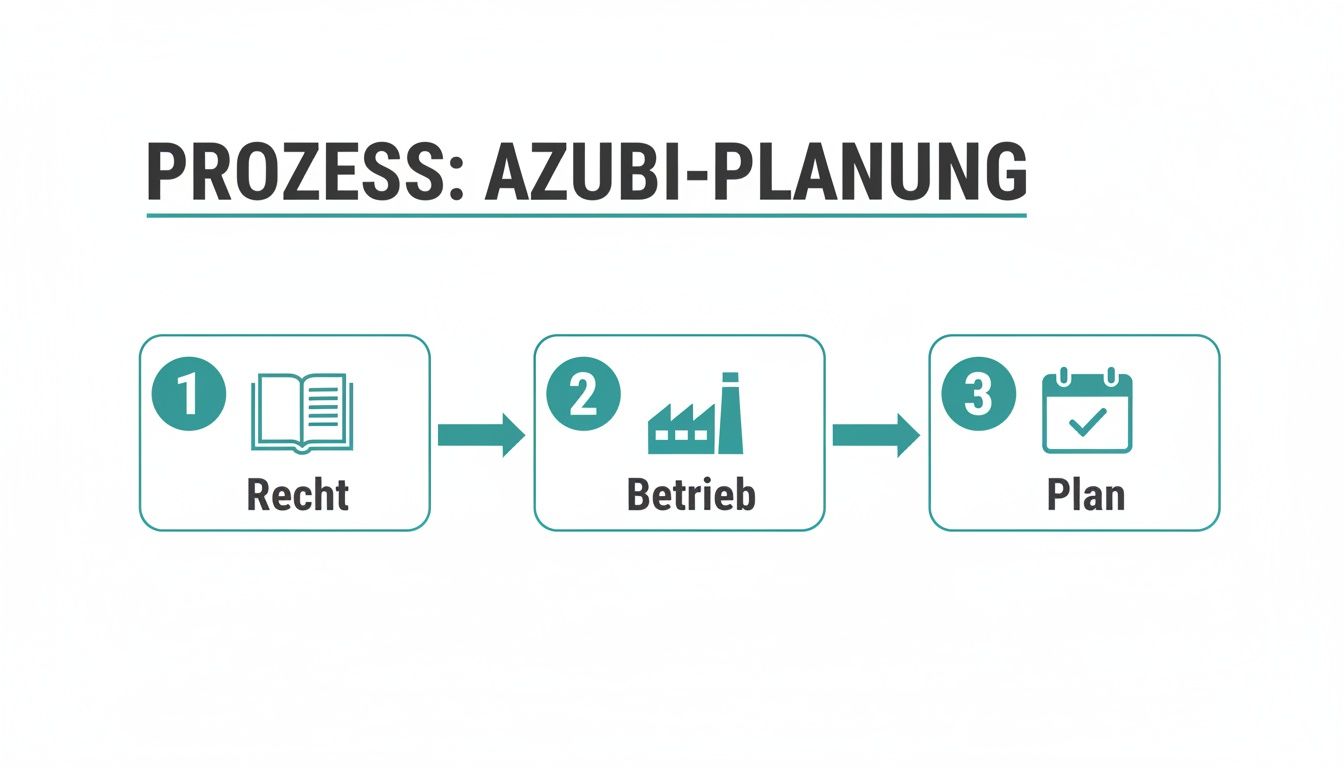
Die Visualisierung macht eines ganz deutlich: Eine erfolgreiche Einsatzplanung baut immer auf den rechtlichen Vorgaben auf, berücksichtigt die betriebliche Realität und mündet erst dann in einen konkreten, umsetzbaren Plan.
Von der Skizze zum fertigen Plan
Stell dir vor, du planst den Einsatz für einen angehenden Kaufmann EFZ im ersten Lehrjahr. Ein durchdachter Plan könnte so aussehen, dass du mit grundlegenden administrativen Abteilungen startest, bevor es in komplexere Bereiche wie den Verkauf oder das Marketing geht.
- Monate 1–3: Poststelle & Empfang
Hier lernt der oder die Lernende die grundlegenden Kommunikationswege und die Struktur des Unternehmens kennen. Lernziele könnten sein: Posteingang und -ausgang bearbeiten, Telefongespräche korrekt annehmen und weiterleiten. - Monate 4–6: Buchhaltung (Kreditoren)
Der nächste Schritt führt direkt in die Finanzen. Der Fokus liegt hier auf dem Verständnis für den Rechnungseingang. Lernziel: Eingangsrechnungen prüfen, kontieren und für die Zahlung vorbereiten. - Monate 7–9: Einkauf
Hier erfährt der Lernende, wie das Unternehmen seine Ressourcen beschafft. Er unterstützt bei einfachen Bestellvorgängen und lernt erste Lieferanten kennen.
Diese schrittweise Steigerung verhindert Überforderung und sorgt dafür, dass Wissen logisch aufeinander aufbaut.
Diese Tabelle zeigt eine mögliche Abteilungsrotation für das erste Ausbildungsjahr, um die grundlegenden betrieblichen Abläufe kennenzulernen.
| Zeitraum | Abteilung | Haupt-Lernziele gemäss Bildungsplan | Zuständiger Praxisbildner |
|---|---|---|---|
| Monat 1–3 | Empfang / Zentrale Dienste | Kunden empfangen, Telefongespräche führen, Post bearbeiten | Herr Meier |
| Monat 4–6 | Buchhaltung (Kreditoren) | Rechnungen prüfen und kontieren, Zahlungsabläufe verstehen | Frau Keller |
| Monat 7–9 | Einkauf | Bestellungen auslösen, Lieferantenkontakt pflegen | Herr Huber |
| Monat 10–12 | Personaladministration | Einfache administrative Aufgaben (z. B. Feriensaldi prüfen) | Frau Graf |
Ein solcher Plan dient als roter Faden und gibt allen Beteiligten die nötige Orientierung für ein erfolgreiches Lehrjahr.
Ein guter Rotationsplan ist immer auch flexibel. Plane bewusst Pufferzeiten ein. Das gibt dir die Möglichkeit, auf unerwartete Ausfälle zu reagieren oder einen Einsatz zu verlängern, wenn ein Lernender in einem Bereich besondere Stärken zeigt oder mehr Unterstützung benötigt.
Die Dauer der Einsätze richtig takten
Die Länge der einzelnen Stationen ist entscheidend. Zu kurze Einsätze führen nur zu oberflächlichem Wissen, während zu lange Phasen schnell langweilig werden können und die Motivation sinkt. Eine gute Mischung macht hier den Unterschied.
- Schnupperphasen (2–4 Wochen): Ideal für kleinere Abteilungen oder um einen ersten Überblick über einen neuen Bereich zu bekommen.
- Grundlagen-Einsätze (2–3 Monate): Perfekt, um Kernprozesse wirklich zu verstehen und erste Routineaufgaben selbstständig zu erledigen.
- Vertiefungs-Einsätze (4–6 Monate): Absolut sinnvoll in den späteren Lehrjahren, wenn Lernende an eigenen kleinen Projekten arbeiten und Verantwortung übernehmen sollen.
Die Verwaltung solcher Pläne kann schnell komplex werden, vor allem wenn du mehrere Lernende betreust. Während viele Betriebe anfangs auf Tabellenkalkulationen setzen, stossen diese bei mehreren Lernenden und Abteilungen schnell an ihre Grenzen. Du kannst zum Beispiel in unserem Ratgeber nachlesen, wie du einen Excel Schichtplan erstellen kannst, um eine erste Basis zu schaffen.
Für eine dynamische und fehlerfreie Einsatzplanung von Lernenden sind spezialisierte Werkzeuge aber oft die bessere und langfristig auch zeitsparendere Wahl.
Frühzeitig planen als Schlüssel zum Erfolg
Die beste Einsatzplanung für Lernende nützt nichts, wenn sie zu spät kommt. Der Planungsprozess startet nämlich nicht erst am ersten Arbeitstag, sondern idealerweise schon viele Monate früher, mitten im Auswahlverfahren. Wer hier den Anschluss verpasst, kämpft am Ende nicht nur um die besten Talente, sondern auch gegen die Zeit.
Wer zu lange zögert, findet vielleicht nicht mehr die passenden Kandidatinnen und Kandidaten oder hat schlichtweg keine Zeit mehr, die ersten wichtigen Monate sinnvoll vorzubereiten. Eine frühe Planung gibt dir den nötigen Freiraum, um Rotationen, Betreuer und Lernziele ohne Hektik und Stress festzulegen. Nur so wird der Start in die Lehre für beide Seiten ein echter Erfolg.
Der Lehrstellenmarkt diktiert den Zeitplan
In der Schweiz ist der Wettbewerb um qualifizierte Lernende gross. Daten aus dem Frühjahr 2025 zeigen ein klares Bild: Bereits im März und April waren 67 % aller angebotenen Lehrstellen vergeben. Was heisst das für dich als Ausbildungsbetrieb? Ganz einfach: Der Lehrvertrag muss frühzeitig unterzeichnet sein, damit du genügend Vorlauf für die eigentliche Einsatzplanung hast. Detaillierte Informationen zu diesen Trends findest du übrigens im Nahtstellenbarometer 2025.
Diese Dynamik hat direkte Auswirkungen auf deine internen Abläufe. Wenn du den Vertrag erst im Juli unterschreibst, bleiben dir nur wenige Wochen bis zum Lehrbeginn im August oder September. Das ist oft viel zu knapp, um Abteilungen vorzubereiten, Berufsbildner zu instruieren und einen sauberen Plan für die ersten Monate zu erstellen.
Ein früher Vertragsabschluss ist mehr als nur ein administrativer Akt. Er ist der Startschuss für eine qualitativ hochwertige Einsatzplanung und sichert dir die besten Talente, bevor sie sich für einen anderen Betrieb entscheiden.
Schnupperlehren als Teil deiner Planung
Eine weitere wichtige Erkenntnis ist, dass 96 % der lernenden Interessierten vor ihrer Entscheidung eine Schnupperlehre absolvieren. Das macht die Schnupperphase zu einem unverzichtbaren Werkzeug – nicht nur für die Rekrutierung, sondern auch für deine frühe Planung.
Nutze diese Zeit, um potenzielle Kandidaten und ihre Fähigkeiten besser kennenzulernen. Du siehst direkt, wo ihre Stärken liegen und in welchen Abteilungen sie besonders gut aufgehoben wären. Diese Beobachtungen sind Gold wert für den späteren Rotationsplan.
- Beobachte genau: Zeigt ein Jugendlicher grosses Interesse an technischen Details? Notiere das für einen möglichen Einsatz in der Produktion oder im Engineering.
- Sammle Feedback: Frag die betreuenden Mitarbeitenden nach ihrer Einschätzung. Passt die Person ins Team? Zeigt sie Eigeninitiative?
- Prüfe die Eignung: Eine Schnupperlehre ist der ultimative Praxistest. Hier zeigt sich, ob die Erwartungen auf beiden Seiten wirklich übereinstimmen.
Wenn du die Schnupperlehre als festen Bestandteil deiner Vorausplanung begreifst, gewinnst du wertvolle Einblicke, die weit über das hinausgehen, was ein Bewerbungsgespräch leisten kann. So stellst du sicher, dass die Einsatzplanung für deine Lernenden von Anfang an auf einem soliden Fundament aus echten Beobachtungen und nicht nur auf Annahmen basiert.
Digitale Werkzeuge und klare Kommunikation im Alltag
Ein perfekt ausgearbeiteter Rotationsplan ist nur die halbe Miete. Wenn niemand davon weiss oder die Informationen hoffnungslos veraltet sind, stiftet er mehr Verwirrung als Nutzen. Die erfolgreiche Einsatzplanung für Azubis lebt von einer klaren, kontinuierlichen Kommunikation und den richtigen Werkzeugen, die dir den administrativen Kram vom Hals halten.
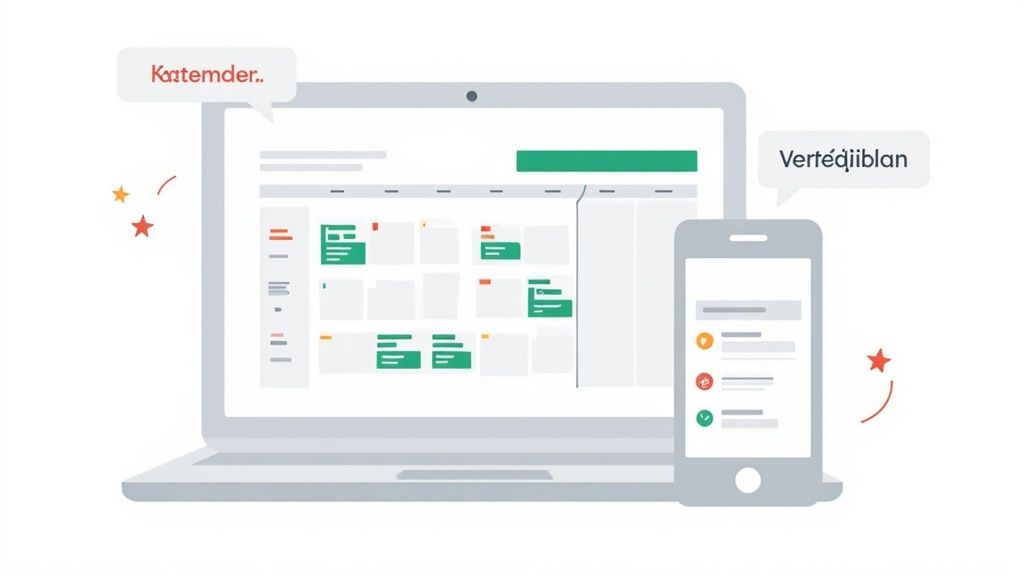
Der Schlüssel liegt darin, den Plan für alle Beteiligten – Lernende, Praxisbildner und Abteilungsleiter – zugänglich und verständlich zu machen. Ein Kick-off-Gespräch zu Beginn jedes neuen Einsatzes ist dafür absolut unerlässlich. Hier klärst du Erwartungen, besprichst die Lernziele und stellst sicher, dass wirklich alle auf dem gleichen Stand sind.
Die richtigen Werkzeuge für deine Planung
Papierpläne und unübersichtliche Excel-Listen? Die gehören endgültig der Vergangenheit an. Digitale Helfer machen deine Einsatzplanung für Lernende nicht nur einfacher, sondern auch deutlich dynamischer. Je nach Grösse deines Betriebs und der Anzahl deiner Lernenden kommen natürlich unterschiedliche Lösungen infrage.
- Gemeinsame Kalender (z. B. Google Calendar, Outlook): Das ist die einfachste und kostengünstigste Methode. Du kannst für jeden Lernenden einen eigenen Kalender erstellen und die Einsätze als Termine eintragen. Praxisbildner und Lernende abonnieren den Kalender und sehen so alle Änderungen in Echtzeit. Simpel, aber effektiv.
- Projektmanagement-Tools (z. B. Trello, Asana): Hier kannst du für jeden Lernenden ein eigenes Board anlegen. Die einzelnen Abteilungseinsätze werden zu Karten, denen du Checklisten für Lernziele, zuständige Personen und Fristen zuweisen kannst. Das bringt Struktur rein.
- Spezialisierte Einsatzplanungssoftware: Das ist die Profilösung. Solche Systeme sind darauf ausgelegt, Verfügbarkeiten, Qualifikationen und gesetzliche Vorgaben automatisch zu berücksichtigen. Sie erleichtern die Koordination enorm, besonders wenn du mehrere Lernende gleichzeitig managen musst.
Die Wahl des richtigen Werkzeugs hängt stark von deinen Bedürfnissen ab. Für einen einzelnen Lernenden reicht ein geteilter Kalender oft völlig aus. Sobald du aber drei oder mehr Lernende koordinierst, deren Schulzeiten, Ferien und Abteilungswechsel sich ständig überlappen, wird eine professionelle Software schnell unverzichtbar. Wenn du tiefer in dieses Thema einsteigen möchtest, findest du hier einen umfassenden Überblick über verschiedene Anbieter für Einsatzplanungssoftware.
Ein gutes digitales Werkzeug ist wie ein zentraler Kompass für deine Ausbildung. Es stellt sicher, dass alle Beteiligten immer in die gleiche Richtung navigieren und niemand den Anschluss verliert.
Kommunikation als Erfolgsfaktor
Digitale Werkzeuge sind aber nur eine Seite der Medaille. Eine offene und regelmässige Kommunikation ist das, was den Plan überhaupt erst zum Leben erweckt. Regelmässige Check-ins, zum Beispiel alle zwei Wochen, sind hier absolut entscheidend.
In diesen kurzen Gesprächen fragst du den Lernenden, wie es ihm geht, ob die Aufgaben den Lernzielen entsprechen und wo es vielleicht hakt. Das gibt dir die Chance, frühzeitig gegenzusteuern, falls ein Einsatz mal nicht so läuft wie geplant.
Neben digitalen Werkzeugen ist auch eine effektive Kommunikation im Team wichtig für eine reibungslose Einsatzplanung und Betreuung der Azubis. Gute Anregungen, wie du die Kommunikation im Team verbessern kannst, findest du in weiterführenden Ratgebern. Am Ende sorgt die Kombination aus cleveren digitalen Helfern und einer transparenten Gesprächskultur dafür, dass deine Einsatzplanung im Alltag auch wirklich funktioniert und deine Lernenden bestmöglich gefördert werden.
Regionale und branchenspezifische Unterschiede – hier liegt der Schlüssel
Klar, eine Vorlage für die Einsatzplanung von Lernenden ist ein super Ausgangspunkt. Aber mal ehrlich: Was in einem Zürcher IT-Startup funktioniert, lässt sich kaum eins zu eins auf einen Produktionsbetrieb auf dem Land übertragen. Damit deine Planung wirklich greift, muss sie auf die Gegebenheiten vor Ort zugeschnitten sein – sowohl regional als auch branchenspezifisch.
Der Ausbildungsmarkt und die Interessen junger Menschen ticken in jedem Kanton ein bisschen anders. Diese lokalen Trends beeinflussen direkt, wie du deine Ausbildung und die Rotationen in den Abteilungen am besten aufbaust.
Kantonale Eigenheiten in der Planung abbilden
Ein genauer Blick auf die gewählten Ausbildungsarten und deren Dauer ist Gold wert. Nehmen wir als Beispiel Daten aus dem Kanton Solothurn: Im Schuljahr 2023/2024 starteten 54,2 % der Schulabgänger eine berufliche Grundbildung. Davon entfielen stabile 14–15 % auf die zweijährige, sehr praxisnahe EBA-Lehre, während die EFZ-Ausbildungen den Löwenanteil ausmachten. Ein tieferer Einblick in die Lernendenstatistik im Kanton Solothurn zeigt, wie wichtig es ist, solche lokalen Muster zu kennen.
Was bedeutet das jetzt konkret für deine Planung? Ganz einfach:
- Für EBA-Lernende: Plane kürzere, dafür aber intensivere Einsätze mit enger Betreuung. Hier geht es darum, schnell praktische Fähigkeiten zu erlernen.
- Für EFZ-Lernende: Hier machen längerfristige Rotationen über mehrere Monate Sinn. So können die Lernenden wirklich tief in komplexe Abläufe eintauchen und nach und nach mehr Verantwortung übernehmen.
Eine gute Einsatzplanung ist kein starres Korsett. Sie atmet mit der Ausbildungsform und den lokalen Gegebenheiten. Nur so stellst du sicher, dass jeder Lernende genau die Förderung bekommt, die er für seinen Weg braucht.
Branchenspezifische Trends frühzeitig erkennen
Nicht nur die Region, auch die Branchen selbst sind ständig in Bewegung. Behalte im Auge, welche Berufsfelder bei jungen Leuten gerade im Kommen sind – und welche an Attraktivität verlieren. Derselbe Solothurner Bericht zeigt zum Beispiel einen satten Zuwachs von +19,3 % bei Ausbildungen im sozialen Bereich.
Was heisst das für dich, selbst wenn du nicht in dieser Branche bist? Es ist ein klares Signal, dass sich die Erwartungen der nächsten Generation verschieben. Themen wie Teamarbeit, soziale Verantwortung oder eine sinnstiftende Tätigkeit rücken stärker in den Fokus.
Darauf kannst du mit kleinen Anpassungen in deinen Einsatzplänen reagieren:
- Fördere Teamprojekte: Schaffe abteilungsübergreifende Aufgaben, bei denen Lernende gemeinsam auf ein Ziel hinarbeiten.
- Zeige den "Sinn" der Arbeit: Mach bei jedem Einsatz klar, welchen wichtigen Beitrag die Abteilung – und damit auch der Lernende – zum grossen Ganzen leistet.
- Stärke soziale Kompetenzen: Bau gezielt Aufgaben mit Kundenkontakt oder interner Kommunikation ein, um diese entscheidenden Fähigkeiten zu trainieren.
Indem du solche regionalen und branchenspezifischen Entwicklungen in deiner Einsatzplanung für Lernende berücksichtigst, bleibt deine Ausbildung nicht nur attraktiv. Du bereitest deine Nachwuchskräfte damit auch optimal auf die Arbeitswelt von morgen vor.
Die häufigsten Fragen zur Einsatzplanung von Lernenden
In der Praxis tauchen immer wieder dieselben Fragen auf, wenn es um die Einsatzplanung von Lernenden geht. Hier sind die Antworten auf die häufigsten Knackpunkte, damit du typische Unsicherheiten schnell aus dem Weg räumen und deine Planung auf das nächste Level heben kannst.
Wie flexibel sollte ein Einsatzplan sein?
Ein Einsatzplan ist kein starres Gesetz, sondern vielmehr ein Kompass. Ich empfehle dir, immer einen Puffer von etwa 10–15 % einzuplanen. Das Leben passiert eben – Krankheit, unerwartete Projekte in einer Abteilung oder eine spontane Gelegenheit für ein spannendes Zusatzprojekt.
Diese Flexibilität gibt dir den nötigen Spielraum, um schnell zu reagieren. Du kannst einen Einsatz spontan verlängern, wenn ein Lernender in einem Bereich richtig aufblüht oder umgekehrt gezielt mehr Unterstützung braucht.
Was mache ich, wenn ein Praxisbildner ausfällt?
Das ist der Klassiker und genau der Grund, warum ein guter Plan B Gold wert ist. Sorge dafür, dass für jede Abteilung ein Stellvertreter definiert ist, der zumindest die grundlegende Betreuung sicherstellen kann. Beispielsweise kann ein erfahrener Mitarbeiter für ein paar Tage die wichtigsten Aufgaben erklären.
Moderne Planungstools sind hier eine enorme Hilfe. Du siehst Ausfälle auf einen Blick und kannst sofort prüfen, wo es freie Kapazitäten für einen alternativen Einsatz gibt. So vermeidest du Leerlauf und Frust beim Lernenden.
Ein guter Plan rechnet nicht nur mit dem Idealfall. Er hat bereits Antworten auf die typischen «Was-wäre-wenn»-Fragen des Alltags parat. Das gibt nicht nur dir, sondern auch deinen Lernenden Sicherheit.
Dürfen Lernende Überstunden machen?
Ganz klares Jein. Bei minderjährigen Lernenden sind Überstunden gesetzlich stark eingeschränkt und sollten die absolute Ausnahme bleiben. Zum Beispiel, wenn ein wichtiges Event vorbereitet wird und alle Hände gebraucht werden.
Wenn Überstunden anfallen, müssen sie entweder durch Freizeit von gleicher Dauer kompensiert oder mit einem Lohnzuschlag von 25 % vergütet werden.
Achte hier unbedingt auf kantonale Bestimmungen und die Regelungen in deinem Gesamtarbeitsvertrag (GAV). Eine lückenlose Zeiterfassung ist hier kein «Nice-to-have», sondern Pflicht, um rechtlich auf der sicheren Seite zu sein.
Wie oft sollte ich den Plan überprüfen und anpassen?
Ein Einsatzplan ist ein lebendiges Dokument, kein in Stein gemeisseltes Werk. Setz dich mindestens einmal pro Quartal mit dem Lernenden zusammen und geht den Plan durch. Ein Beispiel: Nach dem Einsatz in der Buchhaltung besprecht ihr, ob die Lernziele erreicht wurden und was im nächsten Einsatz im Einkauf wichtig wird.
Diese Gespräche sind unbezahlbar. Du holst dir direktes Feedback, erkennst frühzeitig, ob die Richtung noch stimmt, und kannst den Plan bei Bedarf justieren. So stellst du sicher, dass die Planung immer zur aktuellen Entwicklung des Lernenden passt und die Motivation hoch bleibt.
Bist du bereit, deine Einsatzplanung für Lernende und Mitarbeitende zu professionalisieren und den administrativen Aufwand endlich zu minimieren? job.rocks gibt dir die digitalen Werkzeuge an die Hand, um Pläne dynamisch zu erstellen, Verfügbarkeiten zu managen und die Kommunikation zu vereinfachen.
Entdecke jetzt, wie du wertvolle Zeit sparst und für mehr Transparenz für alle Beteiligten sorgst: https://job.rocks