
Eine durchdachte Einsatzplanung für die Spitex ist mehr als nur ein Kalender – sie ist das Herzstück, das dein Team steuert und eine hohe Pflegequalität überhaupt erst möglich macht. Sie ist das Werkzeug, das dir hilft, Verfügbarkeiten, Qualifikationen und optimale Routen so zu jonglieren, dass am Ende mehr Zeit für die Menschen bleibt und weniger für die Verwaltung draufgeht.
Warum eine gute Einsatzplanung in der Spitex so entscheidend ist
Stell dir den Alltag vor: Ein Klient braucht morgens eine spezialisierte Wundversorgung, ein anderer nur Hilfe beim Anziehen und eine dritte Person wartet auf Unterstützung im Haushalt. Jede dieser Aufgaben verlangt nach Mitarbeitenden mit ganz unterschiedlichen Fähigkeiten. Gleichzeitig musst du sicherstellen, dass die Fahrtwege zwischen den Einsätzen kurz bleiben, damit keine wertvolle Zeit auf der Strasse verloren geht.
Genau hier beginnt die eigentliche Kunst der Planung.
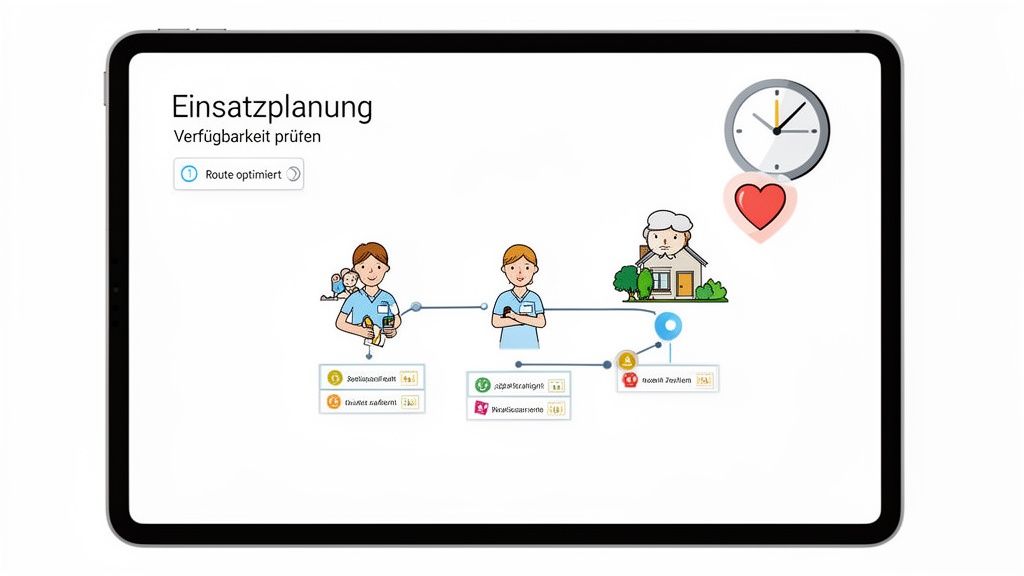
Wenn Excel-Listen an ihre Grenzen stossen
Viele Spitex-Organisationen fangen klein an, oft mit Excel-Tabellen oder simplen Kalendern. Das mag eine Zeit lang gutgehen, solange dein Team überschaubar und die Zahl deiner Klienten gering ist. Doch mit jedem neuen Mitarbeitenden und jeder zusätzlichen Anfrage wird dieses System unhandlicher und fehleranfälliger.
Ein Klassiker, den du aus der Praxis kennst: Eine Mitarbeiterin meldet sich kurzfristig krank. Sofort beginnt das grosse Puzzlespiel. Du musst nicht nur irgendeinen Ersatz finden, sondern jemanden, der die richtige Ausbildung für die anstehenden Aufgaben mitbringt, heute verfügbar ist und dessen Route sich irgendwie sinnvoll in den bestehenden Plan einfügen lässt. In einer Excel-Liste artet das schnell in puren Stress aus.
Eine gute Einsatzplanung ist mehr als nur das Füllen von Lücken im Dienstplan. Sie ist das Fundament für die Zufriedenheit deiner Mitarbeitenden, die Qualität der Pflege und die Wirtschaftlichkeit deiner Organisation.
Der demografische Wandel erhöht den Druck
Die Notwendigkeit einer klugen Planung wird durch die demografische Entwicklung noch verschärft. Unsere Gesellschaft wird älter, und damit wächst auch der Bedarf an ambulanter Pflege massiv. Die Zahlen des Bundesamtes für Statistik (BFS) sprechen eine deutliche Sprache: Inzwischen nehmen rund 405’000 Personen in der Schweiz Spitex-Leistungen in Anspruch. Das sind bereits 5 % der Bevölkerung – vor zehn Jahren lag dieser Wert noch bei 3 %. Besonders bei den über 80-Jährigen ist die Nachfrage enorm.
Für dich als planungsverantwortliche Person bedeutet dieser Trend ganz konkret:
- Mehr Klienten: Die Anzahl der Menschen, die auf deine Hilfe angewiesen sind, steigt kontinuierlich.
- Komplexere Pflege: Die Anforderungen werden immer vielfältiger und anspruchsvoller.
- Grössere Teams: Du musst mehr Mitarbeitende koordinieren und ihre Einsätze sinnvoll planen.
Eine moderne Einsatzplanung für die Spitex geht deshalb weit über die reine Schichtzuteilung hinaus. Sie ist ein strategisches Instrument, das dir hilft, alle Fäden in der Hand zu behalten, den administrativen Aufwand zu verringern und sicherzustellen, dass deine Klienten die bestmögliche Versorgung erhalten. Sie ist der zentrale Baustein für den langfristigen Erfolg deiner Organisation.
Tiefergehende Informationen zur Planung in der ambulanten Pflege findest du übrigens in unserem umfassenden Leitfaden zur Einsatzplanung in der ambulanten Pflege.
Typische Hürden in der Spitex Einsatzplanung
Die tägliche Einsatzplanung in der Spitex gleicht oft einem komplexen Puzzle mit vielen beweglichen Teilen. Du kennst das sicher: Ein einziger Anruf genügt, und der sorgfältig erstellte Tagesplan gerät ins Wanken. Doch welche Hürden sind es genau, die deine Arbeit so anspruchsvoll machen?
Es geht hier um weit mehr als das blosse Zuweisen von Schichten. Jede deiner Entscheidungen hat direkte Auswirkungen auf die Pflegequalität, die Zufriedenheit deines Teams und nicht zuletzt auf die Wirtschaftlichkeit deiner Organisation. Schauen wir uns die Knackpunkte genauer an, die du jeden Tag meisterst.
Die richtige Qualifikation zur richtigen Zeit am richtigen Ort
Eine der grössten Herausforderungen ist die fachliche Komponente. Nicht jede Pflegekraft darf jede Aufgabe übernehmen. Du musst tagtäglich sicherstellen, dass für einen komplexen Verbandswechsel eine diplomierte Pflegefachperson vor Ort ist, während für die Hilfe im Haushalt eine andere Qualifikation ausreicht.
Dieser manuelle Abgleich von Anforderungsprofilen und Mitarbeiterkompetenzen ist nicht nur mühsam, sondern auch extrem fehleranfällig.
- Spezialisierte Pflege: Benötigt dein Klient eine komplexe Wundversorgung oder parenterale Ernährung?
- Grundpflege: Wer darf bei der Körperpflege oder der Mobilisation unterstützen?
- Hauswirtschaft: Welche Mitarbeitenden sind für Einkäufe oder die Wohnungsreinigung zuständig?
Stell dir nur mal vor, du planst versehentlich eine Fachperson Gesundheit (FaGe) für eine Aufgabe ein, die zwingend eine Pflegefachperson HF erfordert. Das ist nicht nur fachlich ein Problem, sondern kann im schlimmsten Fall sogar rechtliche Konsequenzen nach sich ziehen.
Das Dilemma der Tourenplanung
Eine ineffiziente Tourenplanung ist ein echter Kosten- und Zeitfresser. Lange Fahrzeiten zwischen den Klienten bedeuten unweigerlich weniger Zeit für die eigentliche Pflege am Menschen. Leerlaufzeiten, weil der nächste Termin erst in einer Stunde beginnt, frustrieren deine Mitarbeitenden und sind schlicht unwirtschaftlich.
Stell dir ein ganz einfaches Beispiel vor:
Ein Mitarbeiter startet seinen Tag im Norden der Stadt, fährt für den zweiten Klienten quer durch den Feierabendverkehr in den Süden, nur um für den dritten Einsatz wieder zurück in den Norden zu müssen. Allein durch diese unlogische Route gehen schnell mal 45 Minuten reine Fahrtzeit verloren. Diese Zeit fehlt am Ende des Tages für die Betreuung oder führt zu unnötigen Überstunden.
Eine intelligente Einsatzplanung für Spitex bündelt Termine geografisch und spart so wertvolle Ressourcen. Wenn du deine Routen weiter optimieren möchtest, findest du in unserem Beitrag über die Tourenplanung im Pflegedienst noch mehr Praxistipps.
Pflegekontinuität gegen Flexibilität abwägen
Deine Klienten wünschen sich verständlicherweise vertraute Gesichter. Eine feste Bezugsperson schafft Vertrauen und kennt die individuellen Bedürfnisse und Gewohnheiten am besten. Dieser absolut nachvollziehbare Wunsch nach Kontinuität macht eine flexible Planung aber ungleich schwerer.
Die grösste Kunst der Einsatzplanung besteht darin, die individuellen Wünsche der Klienten nach festen Bezugspersonen mit den betrieblichen Notwendigkeiten wie Ausfällen und optimierten Routen in Einklang zu bringen.
Fällt die zuständige Bezugspflegeperson krankheitsbedingt aus, stehst du vor einer schwierigen Wahl: Schickst du eine Vertretung, die der Klient nicht kennt, oder planst du den gesamten Tag für mehrere Mitarbeitende um? Beides ist mit Aufwand und potenzieller Unzufriedenheit verbunden.
Kurzfristige Ausfälle und rechtliche Rahmenbedingungen
Krankmeldungen, unvorhergesehene Notfälle bei Klienten oder kurzfristige Änderungen im Pflegebedarf gehören zum Alltag. Du musst in der Lage sein, blitzschnell und flexibel zu reagieren, ohne dass die Versorgungsqualität darunter leidet.
Gleichzeitig musst du stets die arbeitsrechtlichen Vorgaben wie maximale Arbeitszeiten und vorgeschriebene Ruhepausen im Blick behalten. Der Druck auf eine professionelle Planung wird durch die schiere Menge an Akteuren und Klienten verdeutlicht.
Ein Blick auf die Zahlen zeigt die Dimension: Im Kanton Zürich beispielsweise waren Ende 2022 über 520 ambulante Leistungserbringer für die Betreuung von fast 66’000 Klienten zuständig. Allein in Luzern stieg die Anzahl der geleisteten Spitex-Stunden um 5,0 % auf rund 1,25 Millionen. Diese Zahlen unterstreichen, wie entscheidend eine strukturierte und fehlerfreie Koordination heute ist.
Was eine gute Software für die Spitex-Einsatzplanung können muss
Wenn du über eine digitale Lösung für deine Einsatzplanung in der Spitex nachdenkst, stehst du vor einer wichtigen Entscheidung. Die richtige Software ist weit mehr als nur ein administratives Helferlein – sie wird zum zentralen Nervensystem für dein gesamtes Team. Doch welche Funktionen machen wirklich den Unterschied?
Es geht darum, ein Werkzeug zu finden, das die täglichen Hürden der ambulanten Pflege nicht nur kennt, sondern aktiv löst. Eine gute Software ist wie ein digitaler Assistent, der mitdenkt, lästige Routinen automatisiert und dir den Rücken freihält für das, was wirklich zählt: die Betreuung deiner Klienten und die Führung deines Teams.
Verfügbarkeit auf einen Blick erkennen
Die Basis jeder vernünftigen Planung ist zu wissen, wer wann überhaupt arbeiten kann. Manuelle Abfragen per Telefon, WhatsApp oder E-Mail-Pingpong sind ein reiner Zeitfresser und führen schnell zum Chaos. Eine moderne Planungssoftware erstickt dieses Problem im Keim mit einer automatisierten Verfügbarkeitsabfrage.
Deine Mitarbeitenden tragen ihre verfügbaren Zeiten und Abwesenheiten einfach selbst in einer App ein. Du siehst sofort und in Echtzeit, auf wen du zählen kannst. So besetzt du offene Dienste, ohne stundenlang am Telefon zu hängen.
Qualifikationen intelligent filtern
Eine der grössten Stolperfallen in der Spitex-Planung ist die korrekte Zuordnung von Fachkräften. Du musst für jede Aufgabe garantieren, dass eine Person mit der passenden Qualifikation vor Ort ist. Ein intelligenter Qualifikationsfilter ist hier kein Luxus, sondern schlichtweg unverzichtbar.
Stell dir vor, du brauchst dringend eine Pflegefachperson HF für eine komplexe Wundversorgung.
- Die Software schlägt dir automatisch nur Mitarbeitende vor, bei denen diese Qualifikation hinterlegt ist.
- Typische Fehlplanungen, bei denen eine FaGe für eine HF-Aufgabe eingeteilt wird, verhindert das System von vornherein.
- Du kannst sogar spezifische Weiterbildungen oder Sprachkenntnisse als feste Kriterien hinterlegen.
Dieser automatisierte Abgleich sichert nicht nur die fachlichen Standards, sondern gibt dir auch die nötige rechtliche Sicherheit.
Die folgende Mindmap fasst die drei grössten Hürden in der Spitex-Planung zusammen, die eine gute Software meistern muss.
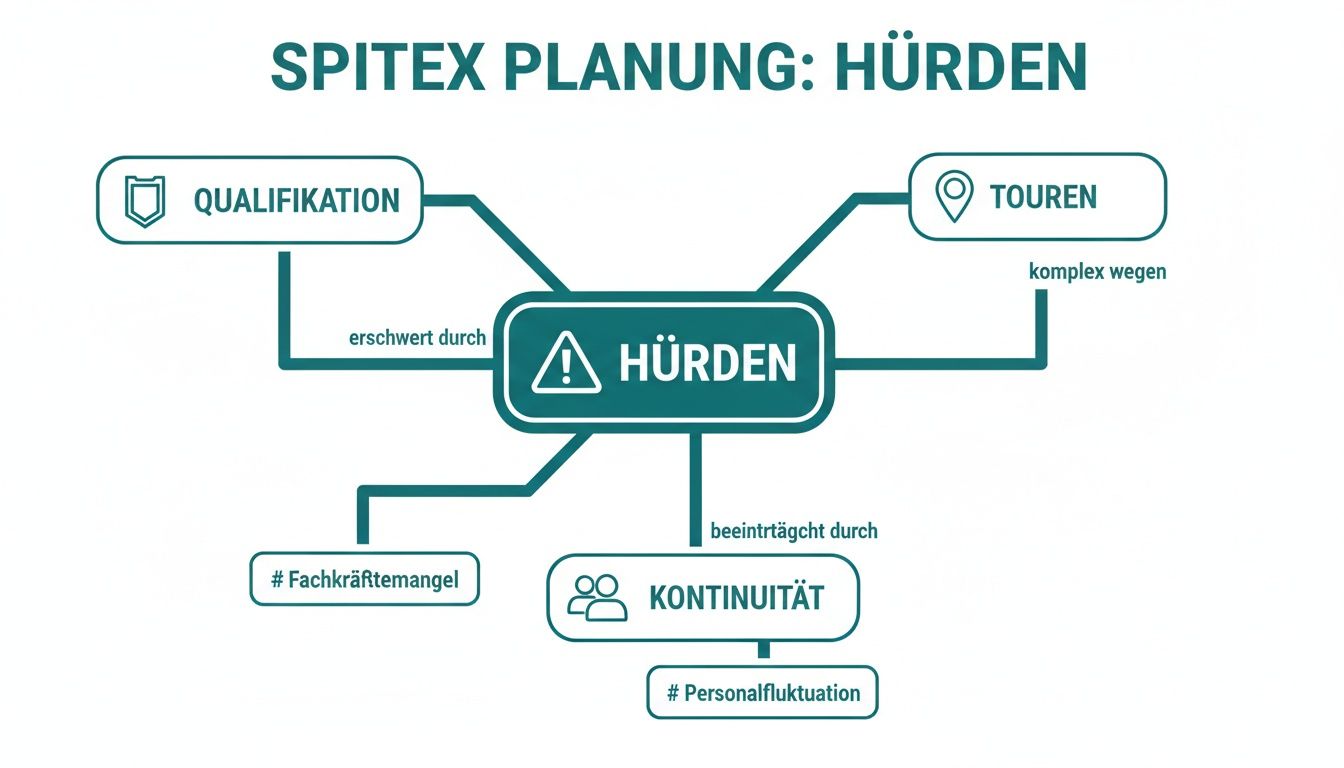
Wie die Grafik zeigt, sind die richtige Qualifikation, effiziente Touren und die Wahrung der Pflegekontinuität die Knackpunkte, bei denen digitale Helfer ihre Stärken ausspielen.
Touren automatisch optimieren
Ineffiziente Routen sind ein teurer Zeit- und Nervenfresser. Jeder unnötige Kilometer kostet nicht nur Treibstoff, sondern vor allem wertvolle Pflegezeit bei den Klienten. Eine der mächtigsten Funktionen einer guten Einsatzplanung-Software für die Spitex ist deshalb die automatische Routenoptimierung.
Das System berechnet auf Basis der Klientenadressen und der geplanten Einsatzzeiten die logischste und kürzeste Reihenfolge der Besuche. Gute Tools berücksichtigen sogar aktuelle Verkehrsmeldungen, um Staus zu umfahren. Das Ergebnis? Spürbar kürzere Fahrtzeiten und weniger Stress für dein Team.
Allein 15 Minuten weniger Fahrzeit pro Tag und pro Mitarbeiterin summieren sich über ein Jahr zu einer gewaltigen Zeitersparnis. Diese Zeit kannst du direkt in die Pflegequalität oder in die Entlastung deines Teams investieren.
Mobile App für mehr Flexibilität
Eine mobile App ist heute keine nette Spielerei mehr, sondern eine betriebliche Notwendigkeit. Sie ist die zentrale Kommunikations- und Organisationsplattform direkt in der Hosentasche deiner Mitarbeitenden.
Über die App kann dein Team:
- Dienstpläne einsehen: Jeder hat seinen aktuellen Plan immer und überall dabei.
- Verfügbarkeiten melden: Änderungen sind schnell und unkompliziert übermittelt.
- Arbeitszeiten erfassen: Das Ein- und Ausstempeln erfolgt direkt beim Klienten vor Ort – manipulationssicher und präzise.
- Wichtige Informationen abrufen: Klientendaten oder besondere Hinweise sind sofort griffbereit.
Diese direkte Anbindung macht deine gesamten Prozesse agiler und reduziert den administrativen Aufwand in der Zentrale auf ein Minimum.
Lückenlose Stundenerfassung und Lohnabrechnung
Die manuelle Erfassung und Übertragung von Arbeitsstunden ist nicht nur mühsam, sondern auch eine klassische Fehlerquelle. Eine gute Software automatisiert diesen Prozess komplett. Durch die mobile Zeiterfassung wird jede geleistete Minute präzise und lückenlos dokumentiert.
Am Monatsende exportierst du die geprüften Daten mit wenigen Klicks. Im Idealfall sorgt eine Schnittstelle zur Lohnbuchhaltung dafür, dass alle Informationen direkt an das richtige System übermittelt werden. Das spart dir stundenlange Tipparbeit und garantiert eine korrekte und pünktliche Abrechnung. Eine grosse Auswahl an modernen Werkzeugen findest du in unserem Überblick über leistungsstarke Einsatzplanungssoftware.
Praktische Tipps für deine Ressourcen- und Schichtplanung
Eine gute Software legt das Fundament für deine Einsatzplanung in der Spitex, klar. Aber erst die richtigen Strategien im Alltag machen den Unterschied. Hier bekommst du ganz konkrete Tipps, mit denen du deine tägliche Planungsarbeit spürbar verbesserst.
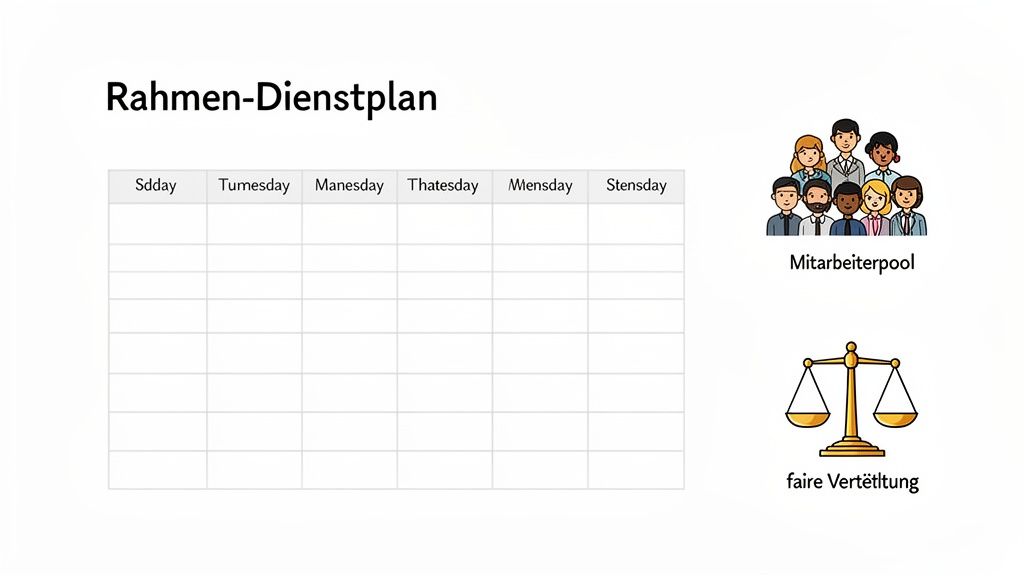
Letztlich geht es darum, Routinen zu schaffen, die dir Sicherheit geben, aber gleichzeitig genug Luft für das Unvorhergesehene lassen.
Erstelle einen Rahmen-Dienstplan als Grundgerüst
Ein Rahmen-Dienstplan ist wie das Fundament eines Hauses: Er gibt die Grundstruktur vor, ohne jedes Detail starr festzulegen. Anstatt jede Woche bei null anzufangen, definierst du einfach wiederkehrende Schichtmuster und feste Zuordnungen, die sich bewährt haben.
Dieser Rahmenplan berücksichtigt feste Termine bei Klienten, wiederkehrende Team-Meetings und die Arbeitszeitmodelle deiner Mitarbeitenden. Damit schaffst du eine verlässliche Basis, auf der du flexibel aufbauen kannst, wenn es mal wieder schnell gehen muss.
Baue einen flexiblen Mitarbeiterpool auf
Was machst du, wenn jemand krank wird oder eine unerwartete Anfrage für eine intensive Betreuung reinkommt? Ein Pool an flexiblen Aushilfskräften, Teilzeitmitarbeitenden oder Studierenden ist hier Gold wert.
Diese Leute kannst du gezielt ansprechen, um Lücken zu füllen. So musst du nicht dein Stammpersonal ständig mit Zusatzdiensten belasten.
- Schnelle Reaktion: Du kannst auf Auftragsspitzen oder Ausfälle reagieren, ohne den gesamten Dienstplan umwerfen zu müssen.
- Entlastung des Teams: Dein Kernteam wird vor übermässigen Überstunden geschützt. Das hält die Zufriedenheit und die Moral hoch.
- Gezielte Qualifikationen: Du kannst im Pool gezielt nach Leuten mit bestimmten Fähigkeiten suchen, etwa für spezialisierte Pflege oder hauswirtschaftliche Unterstützung.
Ein solcher Pool gibt dir die nötige Agilität, die der Spitex-Alltag nun mal erfordert.
Verteile unbeliebte Dienste fair und transparent
Wochenend- oder Spätdienste – die reisst sich kaum jemand vom Haken. Eine unfaire Verteilung dieser Schichten ist einer der häufigsten Gründe für Frust im Team. Genau deshalb brauchst du hier maximale Transparenz und Gerechtigkeit.
Ein einfaches Rotationsprinzip wirkt da oft Wunder. Jedes Teammitglied übernimmt diese Dienste in einem regelmässigen, nachvollziehbaren Rhythmus. Eine gute Planungssoftware kann dich dabei unterstützen. Sie zeigt dir auf einen Blick, wer wann den letzten ungeliebten Dienst hatte und wer als Nächstes dran wäre.
Eine faire und transparente Planung ist ein klares Zeichen der Wertschätzung. Sie zeigt deinem Team, dass du die Belastung gleichmässig verteilst und niemanden bevorzugst oder benachteiligst.
Nutze Daten zur stetigen Verbesserung
Deine Planungssoftware sammelt wertvolle Daten – nutze sie! Schau dir regelmässig Kennzahlen wie die durchschnittliche Fahrtzeit pro Einsatz, die Auslastung deiner Mitarbeitenden oder die Häufigkeit von kurzfristigen Planänderungen an.
Stell dir vor: Du bemerkst, dass eine Mitarbeiterin regelmässig extrem hohe Fahrzeiten hat. Bei genauerer Betrachtung siehst du, dass ihre Einsätze geografisch weit gestreut sind. Schon eine kleine Anpassung ihrer Tour, bei der du ihre Klienten auf ein kleineres Gebiet konzentrierst, kann ihre tägliche Fahrzeit um 30 Minuten reduzieren.
Solche datengestützten Entscheidungen helfen dir, Ineffizienzen aufzudecken und deine Einsatzplanung in der Spitex laufend zu verfeinern. Entscheidend für eine optimierte Ressourcen- und Schichtplanung sind auch effiziente Arbeitsstrategien in der Pflege. Oft sind es die kleinen, gezielten Anpassungen, die eine grosse Wirkung erzielen – sowohl bei den Kosten als auch bei der Mitarbeiterbindung.
So gelingt dein Weg zur digitalen Einsatzplanung
Die Umstellung auf eine digitale Lösung für die Einsatzplanung in der Spitex wirkt oft wie ein Mammutprojekt. Aber keine Sorge: Mit einem klaren Fahrplan verliert der Wechsel schnell seinen Schrecken. Es geht nicht darum, von heute auf morgen alles über den Haufen zu werfen, sondern sich Schritt für Schritt dem Ziel zu nähern.
Wir zeigen dir einen einfachen Weg in vier Phasen, der dich sicher von deiner jetzigen Planung – sei es mit Excel oder Papier – zu einem modernen, digitalen System führt.
Schritt 1: Die ehrliche Analyse deiner Prozesse
Bevor du auch nur einen Gedanken an Software verschwendest, musst du deine eigenen Abläufe schonungslos unter die Lupe nehmen. Nimm dir einen Moment Zeit und beantworte diese Fragen ganz ehrlich:
- Wo verlierst du am meisten Zeit? Ist es die endlose Telefoniererei, um Verfügbarkeiten abzufragen, oder das mühsame Puzzeln der Tourenpläne?
- Welche Aufgaben sind am fehleranfälligsten? Passieren ständig Fehler bei der Übertragung von Arbeitsstunden in die Lohnabrechnung?
- Was frustriert dein Team am meisten? Sind es unklare Dienstpläne, gefühlt ungerechte Schichtverteilungen oder die ständigen Planänderungen per SMS?
Schreib diese Schmerzpunkte auf. Das ist dein Kompass für die Auswahl der richtigen Lösung. Du kaufst keine Software – du löst ganz konkrete Probleme.
Schritt 2: Die passende Lösung auswählen
Mit deiner Problemliste im Gepäck kannst du jetzt gezielt auf die Suche gehen. Lass dich nicht von unzähligen Funktionen blenden, die du nie brauchen wirst. Konzentriere dich auf das Wesentliche.
Diese Checkliste hilft dir dabei, verschiedene Anbieter fair zu vergleichen:
- Verfügbarkeitsabfrage: Bietet die Software eine simple Möglichkeit für Mitarbeitende, ihre Wunscheinsatzzeiten selbst zu melden?
- Qualifikationsfilter: Kannst du mit wenigen Klicks sicherstellen, dass nur Personal mit den richtigen Fähigkeiten für bestimmte Aufgaben eingeplant wird?
- Routenoptimierung: Hilft dir das System aktiv dabei, Fahrtzeiten und damit auch Kosten zu senken?
- Mobile App: Ist die App für dein Team intuitiv bedienbar und deckt sie alles Wichtige ab (Zeiten erfassen, Plan einsehen, mit der Zentrale kommunizieren)?
- Schnittstellen: Lässt sich die Software unkompliziert an deine Lohnbuchhaltung anbinden, um Doppelarbeit zu vermeiden?
Nimm dir unbedingt Zeit für eine Live-Demo. Stelle dort genau die Fragen, die sich aus deiner Analyse in Schritt 1 ergeben haben.
Schritt 3: Das Team von Anfang an einbeziehen
Die beste Software ist nutzlos, wenn dein Team sie nicht akzeptiert. Deshalb ist es entscheidend, deine Mitarbeitenden so früh wie möglich in den Prozess einzubeziehen.
Eine neue Software ist immer auch eine Veränderung der Arbeitskultur. Wenn du dein Team mit ins Boot holst, machst du aus Betroffenen Beteiligte und schaffst eine breite Akzeptanz.
Kommuniziere die Vorteile klar und verständlich: weniger administrativer Aufwand für dich als Planer, fairere und transparentere Pläne für alle. Führe gezielte Schulungen durch und benenne ein oder zwei "Champions" im Team. Das sind die Kollegen, die als erste Ansprechpartner für Fragen zur Verfügung stehen und die positive Stimmung weitertragen.
Schritt 4: Den Erfolg sichtbar machen
Nach der Einführung ist es wichtig, den Nutzen der neuen Einsatzplanung für die Spitex auch zu belegen. Definiere dafür klare Kennzahlen (KPIs), die den Erfolg messbar machen – sowohl für die Geschäftsleitung als auch für dein Team.
Hier ein paar Beispiele für griffige KPIs:
- Reduktion der durchschnittlichen Fahrtzeit pro Einsatz: Miss die Fahrzeit vor und nach der Einführung der Tourenoptimierung.
- Senkung des administrativen Aufwands: Wie viele Stunden sparst du oder deine Planung pro Woche bei der Dienstplanerstellung und der Lohnvorbereitung?
- Verringerung der kurzfristigen Planänderungen: Analysiere, ob die Pläne durch die bessere Übersicht stabiler und verlässlicher werden.
Zahlen lügen nicht. Sie zeigen dir schwarz auf weiss, wie sich die Investition auszahlt. Die Bedeutung einer klugen Planung wächst in der Schweiz stetig. Landesweit wurden 476’413 Personen durch Spitex-Organisationen betreut. Bei einem Umsatzvolumen von rund 2,6 Milliarden CHF kann schon eine kleine Effizienzsteigerung von 2–3 % durch digitale Planung enorme Einsparungen bedeuten und gleichzeitig dein wertvolles Pflegeteam entlasten. Mehr dazu erfährst du in den aktuellen Zahlen und Fakten von Spitex Schweiz.
Häufige Fragen zur Einsatzplanung in der Spitex
Hier klären wir ein paar Fragen, die uns in der Praxis immer wieder begegnen. Kurz und auf den Punkt gebracht, damit du schnell die passenden Antworten findest.
Was ist der grösste Fehler bei der manuellen Einsatzplanung?
Der grösste und teuerste Fehler ist die pure Unterschätzung des Aufwands und die damit verbundene Fehleranfälligkeit. Wenn du mit Excel-Listen oder Papierplänen hantierst, merkst du schnell: Es ist praktisch unmöglich, alle Puzzleteile – Qualifikationen, Verfügbarkeiten, Klientenwünsche, optimale Routen und Arbeitszeitgesetze – gleichzeitig im Kopf zu behalten.
Das Resultat sind oft unlogische Touren, die dein Team unnötig stressen, eine unfaire Auslastung und Lücken in der Pflegedokumentation. Eine einzige kurzfristige Änderung, wie eine Krankmeldung, wirft dann deinen mühsam erstellten Plan für Stunden über den Haufen.
Wie kann eine Software die Pflegekontinuität verbessern?
Gute Software ist hier ein echter Helfer. Anstatt auf dein Gedächtnis angewiesen zu sein, kannst du feste Teams für bestimmte Klienten hinterlegen oder Präferenzen direkt im System speichern. Bei der Planung schlägt die Software dir dann ganz automatisch die richtigen Mitarbeitenden für die passenden Einsätze vor.
Fällt die primäre Bezugsperson aus, ist das kein Drama mehr. Das System analysiert die hinterlegten Daten und findet sofort die am besten geeignete Vertretung aus dem bekannten Team. So stellst du sicher, dass deine Klienten auch in unvorhergesehenen Situationen von vertrauten Gesichtern betreut werden.
Ein digitales System vergisst keine Präferenz. Es hilft dir aktiv dabei, das wertvolle Vertrauensverhältnis zwischen Klient und Pflegekraft zu schützen, selbst wenn der Alltag mal wieder Kopf steht.
Ist eine Planungssoftware auch für eine kleine Spitex-Organisation sinnvoll?
Ja, absolut. Gerade für kleinere Organisationen ist der Nutzen oft am grössten, weil sie meist mit schlankeren administrativen Teams arbeiten. Eine clevere Software nimmt dir die zeitraubenden Routineaufgaben ab – von der Verfügbarkeitsabfrage über die Stundenerfassung bis hin zur Vorbereitung der Lohnabrechnung.
Das entlastet deine Leitung spürbar und schafft Freiräume für das, was wirklich zählt: die Betreuung von Klienten und die Führung deines Teams. Moderne Cloud-Lösungen sind heute flexibel skalierbar und auch für kleine Budgets erschwinglich, sodass sich die Investition meist schon nach kurzer Zeit rechnet.
- Weniger Administration: Du sparst wertvolle Stunden bei der Erstellung von Dienstplänen und der Lohnvorbereitung.
- Mehr Professionalität: Auch kleine Teams sichern sich so eine lückenlose und fehlerfreie Dokumentation.
- Fokus auf das Wesentliche: Die gewonnene Zeit fliesst direkt in die Pflegequalität und die Mitarbeiterführung.
Eine durchdachte Einsatzplanung für die Spitex hängt also nicht von der Grösse deiner Organisation ab, sondern vom Willen, Abläufe zu vereinfachen und die Versorgungsqualität auf ein neues Level zu heben.
Möchtest du sehen, wie eine moderne Lösung deine Spitex-Planung spürbar vereinfachen kann? Entdecke job.rocks und finde heraus, wie du deine Ressourcen optimal steuerst und dein Team entlastest. Besuche uns auf https://job.rocks.