
Der L-GAV Gastronomie, der Landes-Gesamtarbeitsvertrag für das Gastgewerbe, ist die Grundlage für faire Arbeitsbedingungen in der Schweizer Gastro-Szene. Stell ihn dir nicht als trockenen Gesetzestext vor, sondern als ein gemeinsames Regelwerk, das Klarheit bei Löhnen, Arbeitszeiten und Ferien schafft. Für fast jeden Gastronomiebetrieb in der Schweiz ist er nicht nur eine Empfehlung, sondern Pflicht.
Meta-Beschreibung: Fragst du dich, was der L-GAV Gastronomie für dich bedeutet? Entdecke in diesem Leitfaden mit praktischen Beispielen, wie du Mindestlohn, Arbeitszeit und Ferien korrekt umsetzt und so deinen Betrieb rechtssicher führst.
Was der L-GAV Gastronomie für deinen Alltag bedeutet
Stell dir eine typische Situation vor: Du organisierst ein Event-Catering für eine grosse Hochzeit am Samstag. Dein Team ist von mittags bis tief in die Nacht im Einsatz. Genau hier kommt der L-GAV ins Spiel und gibt dir klare Antworten: Wie lange darf eine Schicht maximal gehen? Welche Pausen sind ein Muss? Und wie genau müssen die Überstunden vergütet werden, die an so einem langen Tag anfallen?
Der L-GAV ist also viel mehr als nur Bürokratie. Er ist dein praktischer Leitfaden, der dir bei der Personalplanung und der Lohnabrechnung den Rücken freihält. Seine Regeln zu kennen, ist keine Kür, sondern eine betriebliche Notwendigkeit.
Wer unter den L-GAV fällt
Die kurze Antwort: so gut wie jeder. Der Geltungsbereich des L-GAV ist breit gefasst und deckt die allermeisten gastgewerblichen Betriebe in der Schweiz ab.
- Hotels, Pensionen und Kurbetriebe: Vom kleinen Familienbetrieb bis zur grossen Hotelkette.
- Restaurants und Cafés: Egal, ob Gourmetlokal oder die Quartierbeiz um die Ecke.
- Catering-Unternehmen und Event-Dienstleister: Sobald du Speisen und Getränke für Anlässe lieferst.
- Bars, Tanzlokale und Nachtclubs: Auch das Nachtleben unterliegt klaren Regeln.
Auf Mitarbeiterseite sieht es ähnlich aus. Ob Festangestellte in Voll- oder Teilzeit oder Aushilfen im Stundenlohn – sie alle fallen unter den L-GAV. Die wenigen Ausnahmen bestätigen die Regel und betreffen meist nur engste Familienangehörige oder Lernende, für die eigene Vorschriften gelten.
Der L-GAV ist mehr als nur eine gesetzliche Pflicht. Er ist ein klares Qualitätsmerkmal für dich als Arbeitgeber. Betriebe, die den L-GAV sauber umsetzen, zeigen Fairness und Professionalität. In Zeiten des Fachkräftemangels ist das ein unschätzbarer Vorteil, um gute Leute zu finden und auch zu halten.
Warum die korrekte Umsetzung so wichtig ist
Ganz einfach: Die Einhaltung des L-GAV schützt dich vor teuren und nervenaufreibenden Konsequenzen. Dazu gehören zum Beispiel Lohnnachforderungen von Mitarbeitenden, die bis zu fünf Jahre rückwirkend geltend gemacht werden können. Gleichzeitig führen Kontrollstellen regelmässig Prüfungen durch – bei Verstössen drohen empfindliche Bussen.
Noch wichtiger ist aber der positive Effekt. Ein fair geführter Betrieb hat zufriedenere, loyalere und motiviertere Mitarbeitende. Das spürst du direkt bei der Qualität deines Service und natürlich bei der Zufriedenheit deiner Gäste. Gerade in der dynamischen Eventgastronomie, wo Flexibilität und Teamgeist alles sind, legt eine L-GAV-konforme Planung die Grundlage für deinen Erfolg. Wie du das konkret angehst, erfährst du in unserem Artikel über den perfekten Dienstplan für die Eventgastronomie.
Mit diesem Grundwissen bist du bestens gerüstet, um die folgenden, praxisnahen Abschnitte zu meistern und den L-GAV sicher in deinem Betrieb zu verankern.
Die zentralen L-GAV Regelungen, die du kennen musst
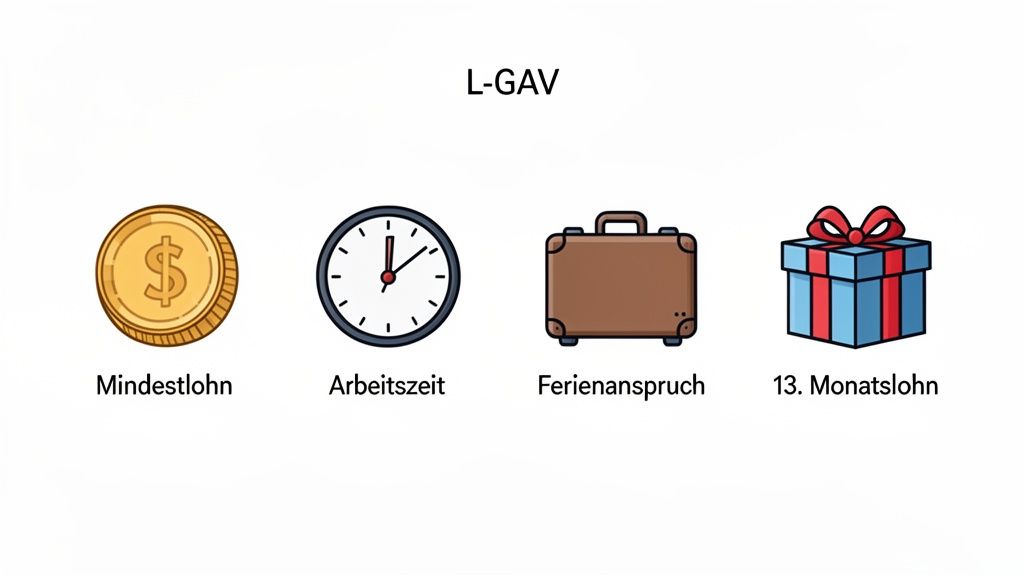
So, jetzt geht’s ans Eingemachte. Wir schauen uns das Herzstück des L-GAV an – die vier grossen Themen, die deinen Betriebsalltag direkt prägen und die meisten Fragen aufwerfen.
Wenn du diese Regeln im Griff hast, hast du die wichtigsten Hürden schon gemeistert. Wir schauen uns die Mindestlöhne, Arbeitszeiten, den Ferienanspruch und den 13. Monatslohn ganz genau an. Immer mit konkreten Beispielen, die du direkt in deinem Betrieb umsetzen kannst.
Sieh diesen Abschnitt als dein praktisches Nachschlagewerk. Kehr einfach hierher zurück, wenn du bei einer Abrechnung oder der Dienstplanung mal unsicher bist.
Übersicht der zentralen L-GAV Bestimmungen
Bevor wir in die Details gehen, gibt dir diese Tabelle einen schnellen Überblick. Sie fasst die wichtigsten Regelungen zu Arbeitszeit, Lohn und Ferien zusammen und gibt dir schnelle Antworten auf die häufigsten Fragen.
| Themenbereich | Regelung im L-GAV | Praxisbeispiel |
|---|---|---|
| Mindestlöhne | Obligatorische Lohnuntergrenzen, gestaffelt nach Qualifikation (ohne Lehre, EBA, EFZ, Berufsprüfung). Nicht verhandelbar. | Ein Koch mit EFZ muss zwingend nach einer höheren Lohnstufe bezahlt werden als eine Serviceaushilfe ohne gastgewerbliche Ausbildung. |
| Arbeitszeit | Normalarbeitszeit von 42 Stunden pro Woche. Klare Pausenregelungen (z.B. 60 Minuten bei > 9 Stunden Arbeit). | Eine Mitarbeiterin mit einer 10-Stunden-Schicht muss eine Pause von mindestens 60 Minuten nehmen. Diese muss erfasst werden. |
| Ferienanspruch | Grundsätzlich fünf Wochen bezahlte Ferien pro Jahr für alle Mitarbeitenden. Anteilige Berechnung bei Teilzeit oder unterjährigem Eintritt. | Eine Aushilfe im Stundenlohn hat ebenfalls Anspruch auf Ferien. Der Lohnzuschlag von 10.64 % muss separat ausgewiesen werden. |
| 13. Monatslohn | Obligatorischer Lohnbestandteil, kein freiwilliger Bonus. Anspruch besteht anteilig (pro rata temporis) ab dem ersten Arbeitstag. | Ein Mitarbeiter, der am 1. Juli beginnt, erhält Ende Jahr einen halben 13. Monatslohn. Im Stundenlohn wird dies über einen Zuschlag von 8.33 % abgerechnet. |
Diese vier Pfeiler bilden die Grundlage für eine faire und rechtskonforme Zusammenarbeit in der Gastronomie. Schauen wir sie uns nun im Detail an.
Mindestlöhne korrekt anwenden
Im Gastgewerbe sind die Mindestlöhne im L-GAV klar definiert. Sie richten sich nach der Qualifikation und Erfahrung deines Teams und sind die absolute, nicht verhandelbare Lohnuntergrenze.
Die Einteilung ist eigentlich ganz logisch:
- Mitarbeitende ohne Berufslehre: Hier gilt der Basisansatz.
- Mitarbeitende mit eidgenössischem Berufsattest (EBA): Wer eine zweijährige Lehre in der Tasche hat, startet bereits in einer höheren Lohnstufe.
- Mitarbeitende mit eidgenössischem Fähigkeitszeugnis (EFZ): Nach einer dreijährigen Lehre ist der Mindestlohn natürlich nochmals höher.
- Mitarbeitende mit Berufsprüfung: Eine weiterführende Qualifikation schlägt sich auch im Lohn nieder.
Ein Beispiel aus der Praxis: Du stellst eine neue Servicekraft ohne abgeschlossene gastgewerbliche Lehre ein. Sie startet mit dem Mindestlohn der Stufe Ia. Zur gleichen Zeit fängt ein Koch an, der gerade sein EFZ bestanden hat. Er wird logischerweise gemäss der höheren Lohnstufe eingestuft, sein Mindestlohn liegt also deutlich darüber. Deine Aufgabe ist es, schon beim Einstellungsgespräch die korrekte Kategorie zu ermitteln und diese im Arbeitsvertrag sauber festzuhalten.
Arbeits- und Ruhezeiten im Griff behalten
Eines der heissesten Eisen im Gastro-Alltag sind die Arbeits- und Ruhezeiten. Der L-GAV schafft hier einen klaren Rahmen, der dein Team vor Überlastung schützt und eine faire Planung sicherstellt. Die wöchentliche Normalarbeitszeit liegt bei 42 Stunden, verteilt auf eine Fünftagewoche.
Die genaue Erfassung jeder Arbeitsminute ist keine Schikane, sondern die Grundlage für eine faire und gesetzeskonforme Abrechnung. Sie schützt sowohl dich als Arbeitgeber vor ungerechtfertigten Forderungen als auch deine Mitarbeitenden vor unbezahlter Mehrarbeit.
Ein zentraler Punkt, der oft falsch gemacht wird, sind die Pausen. Die Regelung ist simpel:
- Bei über 5.5 Stunden Arbeitszeit sind 15 Minuten Pause Pflicht.
- Bei über 7 Stunden sind es 30 Minuten.
- Und bei über 9 Stunden sind es 60 Minuten.
Ein Praxisbeispiel: Deine Köchin hat eine lange Schicht von 12:00 bis 22:30 Uhr. Ihre reine Arbeitszeit beträgt also 10.5 Stunden. Damit steht ihr laut L-GAV eine Pause von mindestens 60 Minuten zu. Du musst nicht nur sicherstellen, dass sie diese Pause auch wirklich nimmt, sondern auch, dass sie in der Zeiterfassung korrekt verbucht wird – entweder am Stück oder aufgeteilt in zum Beispiel zweimal 30 Minuten.
Überstunden sind das nächste grosse Thema. Jede einzelne Minute, die über die vertragliche Arbeitszeit hinausgeht, muss erfasst werden. Grundsätzlich sind Überstunden mit einem Zuschlag von 25 % zu entlöhnen oder durch Freizeit von gleicher Dauer zu kompensieren. Eine saubere, am besten digitale Zeiterfassung ist hier kein Luxus, sondern eine Notwendigkeit. Mehr Details dazu findest du in unserem Leitfaden zur Arbeitszeiterfassung gemäss L-GAV.
Ferienanspruch richtig berechnen
Jeder Mitarbeitende hat gemäss L-GAV Anspruch auf fünf Wochen bezahlte Ferien pro Jahr. Das gilt auch für Mitarbeitende bis zum vollendeten 20. Lebensjahr. Wichtig ist: Der Anspruch entsteht anteilig ab dem allerersten Arbeitstag.
Gerade bei Teilzeit oder wenn jemand mitten im Jahr anfängt, kann die Berechnung schnell knifflig werden.
Ein Beispiel: Du stellst zum 1. September eine Aushilfe im Stundenlohn ein, die immer am Wochenende aushilft. Auch sie hat Anspruch auf fünf Wochen Ferien pro Jahr – allerdings nur anteilig für die vier Monate, die sie im laufenden Jahr bei dir arbeitet. Ihr Ferienanspruch wird deshalb prozentual auf ihren Stundenlohn aufgeschlagen und auf jeder Lohnabrechnung separat ausgewiesen. Dieser Zuschlag beträgt 10.64 % für fünf Wochen Ferien. Es ist entscheidend, dass du diesen Betrag transparent ausweist und ihn nicht einfach im Stundenlohn "versteckst".
Der 13. Monatslohn als fester Bestandteil
Der 13. Monatslohn ist im L-GAV fest verankert und damit für alle unterstellten Mitarbeitenden obligatorisch. Es handelt sich hierbei um einen festen Lohnbestandteil und auf keinen Fall um eine freiwillige Gratifikation.
Dein Team hat ab dem ersten Arbeitstag Anspruch darauf, allerdings pro rata temporis, also anteilig zur Anstellungsdauer im jeweiligen Jahr.
Ein letztes Praxisbeispiel: Ein neuer Mitarbeiter fängt am 1. Juli in deinem Restaurant an. Am Jahresende hat er somit Anspruch auf einen halben 13. Monatslohn (weil er 6 von 12 Monaten da war). Bei Angestellten im Stundenlohn wird der Anspruch meist direkt mit der monatlichen Lohnabrechnung ausbezahlt. Dafür rechnest du einen prozentualen Zuschlag von 8.33 % auf den Bruttolohn und weist diesen separat aus. Das schafft Transparenz und beugt späteren Diskussionen bei der Abrechnung vor.
Typische Stolperfallen und wie du sie vermeidest
Den L-GAV für die Gastronomie zu kennen, ist die eine Sache. Ihn im hektischen Alltag fehlerfrei umzusetzen, eine ganz andere. Oft sind es kleine Unachtsamkeiten, die sich über die Zeit zu grossen und teuren Problemen auswachsen. Hier schauen wir uns die häufigsten Fehlerquellen ganz genau an und zeigen dir, wie du sie von Anfang an umschiffst.
Ein ehrlicher Blick auf deine internen Abläufe ist der beste Schutz vor bösen Überraschungen. Es geht darum, potenzielle Risiken zu erkennen, bevor sie zu echten Schwierigkeiten werden.
Die Zeiterfassung als grösste Fehlerquelle
Die korrekte Zeiterfassung ist das A und O, doch genau hier lauern die meisten Tücken. Ein Klassiker ist die ungenaue oder komplett fehlende Erfassung von Pausen. Stell dir vor, ein Mitarbeiter hat eine 10-Stunden-Schicht, macht aber wegen hohem Gästeaufkommen nur 30 statt der vorgeschriebenen 60 Minuten Pause. Wird das nicht korrekt verbucht, entsteht eine halbe Stunde unbezahlte Überzeit.
Das klingt erst mal nach nicht viel, aber rechne das mal hoch: Bei mehreren Mitarbeitenden über Monate oder gar Jahre summiert sich das zu beträchtlichen Lohnnachforderungen. Genauso heikel sind unbezahlte Überstunden, die "mal schnell" am Ende einer langen Schicht anfallen und nirgends auftauchen.
Ein anonymisiertes Beispiel aus der Praxis:
Ein Catering-Unternehmen erfasste die Arbeitszeit seiner Event-Mitarbeitenden pauschal von Einsatzbeginn bis -ende. Die Pausen wurden standardmässig mit 60 Minuten abgezogen, selbst wenn das Team wegen eines Ansturms kaum Zeit zum Durchatmen hatte. Bei einer Kontrolle flog das auf: Über zwei Jahre hinweg wurde systematisch zu viel Pausenzeit abgezogen. Das bittere Resultat war eine Lohnnachzahlung im fünfstelligen Bereich.
Fehlerhafte Lohnabrechnung bei Stundenlöhnen
Besonders bei Mitarbeitenden im Stundenlohn mit unregelmässigen Einsätzen wird die Lohnabrechnung schnell zum Minenfeld. Hier passieren die meisten Fehler bei den Zuschlägen für Ferien und den 13. Monatslohn.
Viele Betriebe machen den Fehler, diese Zuschläge nicht separat auszuweisen, sondern sie einfach in einen höheren Stundenlohn "einzurechnen". Das ist aber nicht zulässig und führt bei Prüfungen regelmässig zu Beanstandungen und Nachzahlungen.
Jeder einzelne Lohnbestandteil muss transparent und nachvollziehbar sein. Die Zuschläge für Ferien (10.64 %) und den 13. Monatslohn (8.33 %) gehören auf jede einzelne Abrechnung – klar und deutlich ersichtlich. Das schafft nicht nur Rechtssicherheit für dich, sondern auch Vertrauen bei deinem Team.
Nimm deine Lohnabrechnungen also ganz genau unter die Lupe:
- Sind alle Zuschläge korrekt berechnet?
- Werden sie separat ausgewiesen?
- Stimmt die Berechnungsgrundlage (Bruttolohn)?
Eine saubere Lohnbuchhaltung ist deine beste Versicherung gegen spätere Forderungen.
Risiken bei der Planung von Aushilfen
Aushilfen und Temporärkräfte sind Gold wert, um Spitzen abzufedern. Doch auch für sie gilt der L-GAV lückenlos. Ein weitverbreiteter Irrtum ist, dass für kurzfristige Einsätze lockerere Regeln gelten.
Ganz im Gegenteil: Auch eine Aushilfe, die nur für einen einzigen Abend im Einsatz ist, hat vollen Anspruch auf die korrekte Erfassung der Arbeitszeit, die Einhaltung der Ruhezeiten und die anteilige Auszahlung aller Lohnzuschläge. Die Planung muss also genauso sorgfältig erfolgen wie bei deinem Stammpersonal. Mehr dazu, wie du eine Schichtplanung rechtssicher erstellen kannst, findest du in unserem ausführlichen Ratgeber.
Neben den spezifischen Vorgaben des L-GAV dürfen Gastronomen natürlich auch die allgemeinen gesetzlichen Pflichten zur Arbeitssicherheit nicht vergessen. Eine häufige Stolperfalle ist hier das Vernachlässigen von präventiven Massnahmen. Deshalb ist es so wichtig, sich mit dem Thema Gefährdungsbeurteilung auseinanderzusetzen. Die Kenntnis über die Bedeutung einer Gefährdungsbeurteilung ist ein zentraler Baustein für einen sicheren Betrieb.
Indem du diese typischen Stolperfallen kennst, kannst du deine Prozesse gezielt prüfen und so gestalten, dass sie nicht nur effizient, sondern vor allem kugelsicher sind.
So setzt du den L-GAV mit digitalen Werkzeugen korrekt um
Die Regeln und Stolperfallen des L-GAV Gastronomie kennst du jetzt. Aber Hand aufs Herz: Wie kriegst du das im hektischen Alltag alles unter einen Hut, ohne Stunden im Büro zu versinken? Die Antwort liegt in cleveren, digitalen Werkzeugen, die dir die mühsame Detailarbeit abnehmen.
Stell dir eine gute Software nicht als zusätzlichen Aufwand vor, sondern als deinen persönlichen Assistenten. Einen, der niemals eine Pausenregel vergisst, sich nie bei Lohnzuschlägen verrechnet und die Ruhezeiten deines gesamten Teams permanent im Blick hat. So bleibt dir mehr Zeit für das, was wirklich zählt: deine Gäste und dein Geschäft.
L-GAV-konforme Schichtplanung leicht gemacht
Eine der grössten Puzzlereien im Gastro-Alltag ist die Dienstplanung. Wer kann wann? Hat Mitarbeiter A genug Ruhezeit seit der letzten Schicht gehabt? Und wer hat schon wieder zu viele Überstunden angesammelt? Diese Fragen manuell zu klären, ist nicht nur extrem zeitaufwendig, sondern auch eine riesige Fehlerquelle.
Eine moderne Planungssoftware nimmt dir genau das ab. Du hinterlegst einmal die Spielregeln des L-GAV – zum Beispiel die tägliche Höchstarbeitszeit oder die minimalen elf Stunden Ruhezeit zwischen zwei Einsätzen.
Ein Beispiel aus der Praxis:
Du planst einen Kellner für die Frühschicht am Samstag ein, die um 08:00 Uhr beginnt. Sein letzter Einsatz am Freitagabend endete aber erst um 23:30 Uhr. Ein gutes digitales System schlägt sofort Alarm. Es zeigt dir auf dem Bildschirm an, dass die gesetzliche Ruhezeit von elf Stunden unterschritten wird. So korrigierst du den Fehler, noch bevor der Dienstplan überhaupt veröffentlicht ist.
Dieser automatische Abgleich verhindert Verstösse, bevor sie überhaupt entstehen. Du sparst nicht nur wertvolle Zeit, sondern schaffst auch ein faires und gesetzeskonformes Arbeitsumfeld für dein Team.
Die folgende Grafik zeigt den idealen digitalen Ablauf, um die typischen Fehlerquellen von der Erfassung bis zur Planung von vornherein auszuschliessen.
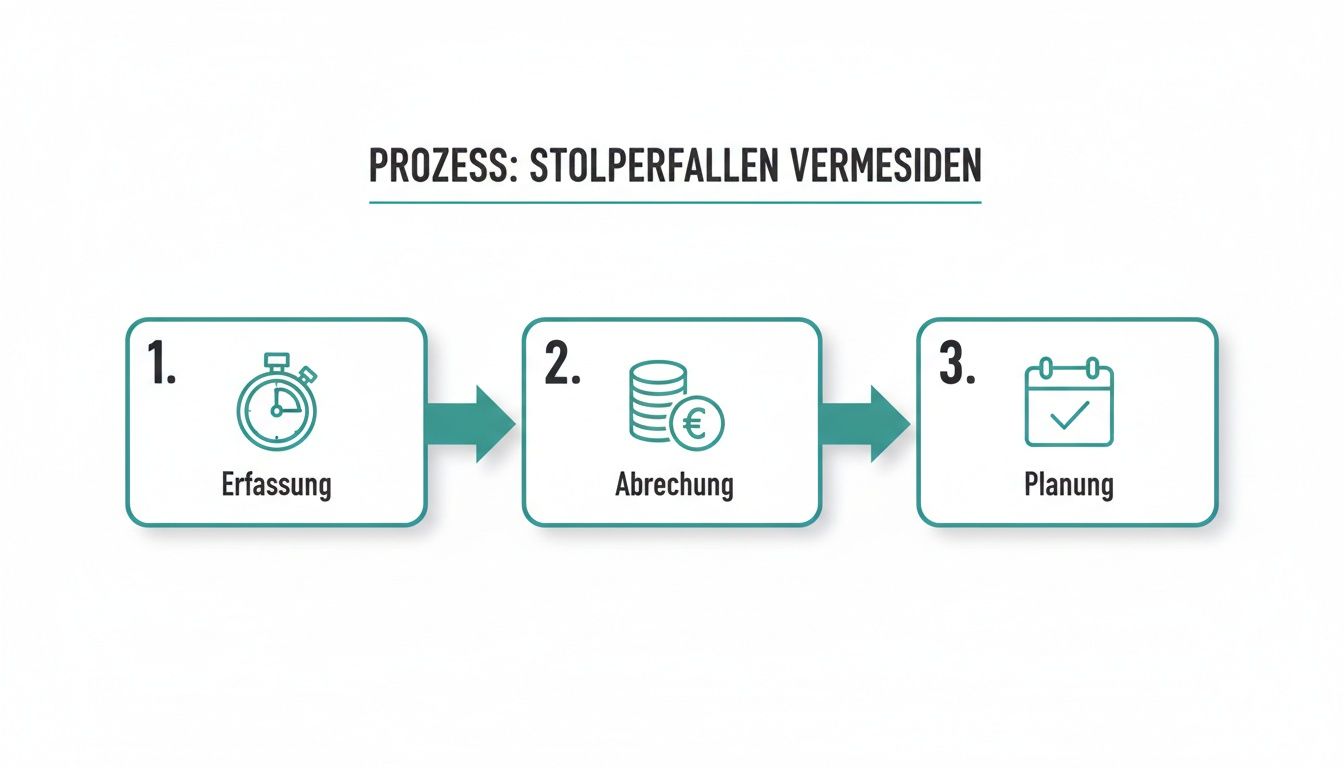
Dieser nahtlose Prozess – von der Zeiterfassung über die Abrechnung bis hin zur Planung – minimiert manuelle Fehler und sorgt für absolut lückenlose Daten.
Mobile Zeiterfassung für glasklare Daten
Excel-Listen oder Stundenzettel aus Papier? Das sind Relikte aus einer anderen Zeit. Sie sind ungenau, gehen gerne mal verloren und verursachen einen riesigen administrativen Aufwand am Monatsende. Die Lösung ist denkbar einfach: eine mobile Zeiterfassung per App, direkt auf dem Smartphone deiner Mitarbeitenden.
Jeder Mitarbeiter stempelt sich bei Schichtbeginn mit einem Klick ein und am Ende wieder aus. Pausen werden ebenfalls auf die Minute genau erfasst.
Eine digitale Stempeluhr ist die Wahrheit für beide Seiten. Sie schafft eine unbestechliche Datengrundlage, die Diskussionen über Arbeitszeiten beendet und eine absolut korrekte Lohnabrechnung erst möglich macht.
Die erfassten Daten landen sofort im System. Du siehst in Echtzeit, wer gerade im Einsatz ist, und hast am Monatsende alle Stundenberichte auf Knopfdruck parat. Diese Transparenz ist nicht nur für dich, sondern auch für dein ganzes Team ein echter Gewinn.
Von der Stempeluhr direkt in die Lohnbuchhaltung
Der grösste Sprung nach vorn gelingt, wenn deine Systeme nahtlos ineinandergreifen. Die Daten aus der mobilen Zeiterfassung sollten ohne Umwege direkt in deine Lohnbuchhaltung fliessen. Das mühsame Abtippen von Stundenzetteln gehört damit endgültig der Vergangenheit an.
So sieht das in der Praxis aus:
Ein Mitarbeiter stempelt seine Arbeitszeit von 14:00 bis 23:15 Uhr und eine Pause von 45 Minuten. Die Software berechnet daraus automatisch die Nettoarbeitszeit von 8.5 Stunden. Am Monatsende werden alle erfassten Stunden automatisch an das Lohnprogramm übergeben.
Dort rechnet das System die Zuschläge für Ferien (10.64 %) und den 13. Monatslohn (8.33 %) automatisch auf den korrekten Bruttolohn drauf und weist alles sauber aus. Fehler bei der Berechnung oder Übertragung sind damit praktisch ausgeschlossen.
Dieser automatisierte Datenfluss ist Gold wert, gerade in einer Branche wie der Schweizer Gastronomie, die rund 187’300 Menschen beschäftigt und stark von Klein- und Familienbetrieben geprägt ist. Gerade hier, wo die Personalplanung oft manuell und kurzfristig passiert, bieten digitale Werkzeuge ein enormes Potenzial, die Abläufe zu straffen und Kosten zu senken. Mehr zur Struktur der Gastronomie in der Schweiz erfährst du auf statista.com.
Indem du auf digitale Helfer setzt, wird die Einhaltung des L-GAV Gastronomie vom Stressfaktor zum Kinderspiel. Du gewinnst Zeit, minimierst Risiken und schaffst eine professionelle Basis für deinen Betrieb.
Flexibilität und L-GAV-Konformität erfolgreich verbinden
Die Gastronomie lebt von ihrer Dynamik. Ein unerwartet sonniger Tag füllt die Terrasse, eine grosse Firmenfeier schneit kurzfristig herein – und zack, brauchst du mehr Personal. Gleichzeitig verlangt der L-GAV klare, planbare Strukturen. Das klingt erstmal wie ein Widerspruch, muss es aber überhaupt nicht sein.
Man kann Flexibilität und Gesetzeskonformität durchaus unter einen Hut bringen. Der Trick liegt darin, clever zu planen und die richtigen Werkzeuge zu nutzen. So kannst du blitzschnell und trotzdem absolut korrekt auf Nachfragespitzen reagieren.
Flexible Mitarbeiterpools L-GAV-konform managen
Ein Pool aus Aushilfen, Teilzeitkräften und Freelancern ist oft die beste Antwort auf ein schwankendes Geschäft. Aber genau hier lauert die grösste Stolperfalle: Jede einzelne Aushilfe, selbst wenn sie nur für einen einzigen Abend einspringt, unterliegt dem L-GAV. Ohne Wenn und Aber.
Das heisst ganz konkret:
- Korrekte Erfassung: Jede einzelne Arbeitsminute muss sauber erfasst werden, inklusive der Pausen. Da gibt es keinen Spielraum.
- Lohnzuschläge: Der Anspruch auf Ferien (10,64 %) und den 13. Monatslohn (8,33 %) besteht anteilig ab der ersten Stunde. Diese Zuschläge müssen auf der Lohnabrechnung klar ersichtlich sein.
- Ruhezeiten: Auch nach einem kurzen Einsatz muss die gesetzliche Ruhezeit von elf Stunden bis zum nächsten Job eingehalten werden.
Die echte Herausforderung ist, den Überblick zu behalten. Wer ist verfügbar, wer hat die nötigen Qualifikationen und wer darf überhaupt arbeiten, ohne die L-GAV-Vorgaben zu verletzen?
Kurzfristige Personalplanung ohne Stress
Stell dir ein perfektes Sommerwochenende vor. Das Telefon klingelt ununterbrochen, die Online-Reservationen explodieren. Jetzt schnell gutes Personal zu finden, ist matchentscheidend. Genau an diesem Punkt trennt sich die Spreu vom Weizen.
Statt hektisch in WhatsApp-Gruppen zu schreiben oder rumzutelefonieren, kannst du mit einer digitalen Lösung viel gezielter vorgehen. Eine moderne Software hilft dir, deinen Mitarbeiterpool nach Verfügbarkeit und Skills zu filtern. Mit wenigen Klicks schickst du eine Anfrage an alle passenden Servicekräfte oder Köche und besetzt die offenen Schichten in Rekordzeit.
Ein typisches Beispiel aus dem Betriebsalltag:
Du brauchst für Samstagabend kurzfristig zwei zusätzliche Servicekräfte. Über eine App schickst du eine Schichtanfrage an deinen Aushilfspool. Das System prüft im Hintergrund automatisch, wer in den letzten Tagen genug Ruhezeit hatte und noch freie Stundenkapazitäten besitzt. So bekommst du nur Zusagen von Leuten, deren Einsatz zu 100 % L-GAV-konform ist.
Die Fähigkeit, schnell auf Nachfragespitzen zu reagieren, entscheidet oft über den wirtschaftlichen Erfolg eines ganzen Tages. Ein System, das dir dabei hilft, verfügbare und qualifizierte Mitarbeitende zu finden und gleichzeitig die gesetzlichen Regeln prüft, ist kein Luxus, sondern ein klarer Wettbewerbsvorteil.
Diese präzise Planung wird immer wichtiger. Trotz steigender Logiernächte meldete die Gastronomie in manchen Regionen verbreitet schwächere Umsätze. Dieses Spannungsfeld – mehr Gäste bei stagnierendem Ertrag – erhöht den Druck auf die Produktivität. Eine an die realen Gästezahlen gekoppelte Personaleinsatzplanung ist der Schlüssel, um in engen Margenfenstern profitabel zu bleiben. Erfahre mehr über die aktuelle Konjunkturlage im Gastgewerbe.
Software als Brücke zwischen Flexibilität und Vorschrift
Eine passende Software ist genau diese Brücke, die Spontanität und Regelwerk verbindet. Sie ist viel mehr als nur ein Planungstool – sie ist dein digitaler Kontrolleur, der im Hintergrund für dich mitdenkt. Sie stellt sicher, dass du bei aller Hektik niemals die gesetzlichen Rahmenbedingungen aus den Augen verlierst.
Damit kannst du deinen flexiblen Pool aktiv managen, die Kommunikation mit den Aushilfen massiv vereinfachen und die Abrechnung automatisieren. Das spart dir nicht nur unglaublich viel Zeit in der Administration, sondern gibt dir auch die Gewissheit, bei jeder Kontrolle auf der sicheren Seite zu sein. So kannst du dich voll und ganz darauf konzentrieren, deinen Gästen ein grossartiges Erlebnis zu bieten, während deine Personalplanung L-GAV-konform und reibungslos im Hintergrund läuft.
Die häufigsten Fragen zum L-GAV aus der Praxis
Zum Schluss wollen wir noch die Fragen klären, die uns im Alltag mit Gastronomen immer wieder begegnen. Betrachte diesen Abschnitt als dein persönliches FAQ für den schnellen Überblick und als Zusammenfassung der wichtigsten Punkte, die du wirklich im Kopf behalten solltest.
Gilt der L-GAV auch für meine Aushilfen und Teilzeitkräfte?
Ja, uneingeschränkt. Der L-GAV Gastronomie gilt für alle Mitarbeitenden in einem unterstellten Betrieb, völlig egal, wie hoch ihr Arbeitspensum ist. Das schliesst also Aushilfen, Mitarbeitende im Stundenlohn und Teilzeitkräfte vollständig mit ein.
Alle zentralen Spielregeln – vom Mindestlohn über den anteiligen Ferienanspruch bis hin zur lückenlosen Zeiterfassung – müssen auch für sie korrekt umgesetzt werden. Echte Ausnahmen gibt es nur für einen ganz kleinen Kreis, etwa für enge Familienangehörige des Inhabers oder für Lernende. Im Zweifelsfall lohnt es sich aber immer, genau hinzuschauen, um auf der sicheren Seite zu sein.
Wie gehe ich mit Überstunden laut L-GAV korrekt um?
Das Wichtigste zuerst: Jede einzelne Überstunde muss lückenlos erfasst werden – da gibt es keinen Spielraum. Laut L-GAV hast du dann zwei Möglichkeiten, damit umzugehen:
- Kompensation: Die geleisteten Überstunden werden eins zu eins mit Freizeit von genau derselben Dauer ausgeglichen.
- Auszahlung: Werden die Überstunden ausbezahlt, ist ein Lohnzuschlag von 25 % fällig. Das gilt immer, ausser im Arbeitsvertrag wurde schriftlich etwas anderes vereinbart.
Ein kurzes Beispiel aus dem Alltag: Dein Mitarbeiter macht in einer hektischen Woche vier Überstunden. Du kannst ihm dafür entweder einen halben Tag freigeben (vier Stunden Kompensation) oder ihm die vier Stunden mit einem Zuschlag von 25 % auszahlen. Eine saubere, digitale Zeiterfassung ist hierfür die absolute Grundlage. Nur so bist du rechtlich abgesichert und vermeidest endlose Diskussionen im Nachhinein.
Was passiert eigentlich, wenn ich den L-GAV nicht einhalte?
Die Nichteinhaltung des L-GAV kann für deinen Betrieb richtig unangenehme und vor allem teure Folgen haben. Man sollte die Risiken kennen, denn Unwissenheit schützt bekanntlich nicht vor Strafe.
Die Konsequenzen können vielfältig sein:
- Lohnnachforderungen: Deine Mitarbeitenden können Lohnansprüche bis zu fünf Jahre rückwirkend geltend machen. Das kann sich schnell zu beträchtlichen Summen aufsummieren, die dann auf einen Schlag fällig werden.
- Kontrollen und Strafen: Paritätische Kommissionen führen regelmässig Kontrollen durch. Stellen sie Verstösse fest, können empfindliche Konventionalstrafen verhängt werden.
- Ruf als Arbeitgeber: Neben dem finanziellen Schaden leidet vor allem dein Ruf. In Zeiten des Fachkräftemangels ist ein schlechter Ruf pures Gift für dein Geschäft und macht die Suche nach gutem Personal fast unmöglich.
Die Einhaltung des L-GAV ist also viel mehr als nur eine lästige Pflicht. Sie ist eine wirtschaftliche Notwendigkeit und ein klares Zeichen für einen professionellen Betrieb, der seine Leute wertschätzt.
Wenn du die Regeln kennst und deine Prozesse sauber aufsetzt, schützt du nicht nur dich selbst. Du schaffst auch ein Arbeitsklima, in dem dein Team gerne sein Bestes gibt – für dich und für deine Gäste.
Bist du bereit, deine Personalplanung, Zeiterfassung und Lohnabrechnung endlich L-GAV-konform und mühelos zu gestalten? job.rocks gibt dir die digitalen Werkzeuge an die Hand, um den administrativen Aufwand auf ein Minimum zu reduzieren und gleichzeitig volle Rechtssicherheit zu erlangen. Entdecke auf https://job.rocks, wie du Flexibilität und Compliance spielend leicht unter einen Hut bringst.