
Personaldisposition ist im Kern die Kunst, die richtige Person mit den richtigen Fähigkeiten zur richtigen Zeit an den richtigen Ort zu bringen. Im Grunde geht es darum, dein Personal so zu planen, dass alle Aufgaben gut erledigt werden – ohne dass dein Team überlastet wird oder unnötige Kosten entstehen.
Was Personaldisposition wirklich bedeutet
Stell dir vor, du organisierst ein grosses Musikfestival. Du brauchst Techniker für die Bühne, Sicherheitspersonal für die Eingänge, Servicekräfte für die Bars und Reinigungsteams für das Gelände. Jeder Einzelne muss genau dann vor Ort sein, wenn er gebraucht wird, und die passenden Qualifikationen mitbringen. Ein Tontechniker kann schliesslich nicht einfach die Aufgaben eines Sanitäters übernehmen.
Genau hier kommt die Personaldisposition ins Spiel. Sie ist das strategische Gehirn, das im Hintergrund für einen reibungslosen Ablauf sorgt. Ohne sie? Pures Chaos: Schichten wären doppelt besetzt, wichtige Positionen blieben unbemannt und am Ende wären nicht nur die Mitarbeitenden frustriert, sondern auch die Festivalbesucher unzufrieden.
Mehr als nur ein Schichtplan
Personaldisposition ist weit mehr als das blosse Ausfüllen eines Dienstplans. Es ist ein lebendiger Prozess, der ständig verschiedene Faktoren ausbalancieren muss. Stell es dir wie einen Jongleur vor, der drei Bälle gleichzeitig in der Luft hält:
- Unternehmensziele: Du musst sicherstellen, dass alle betrieblichen Anforderungen erfüllt werden und das Unternehmen wirtschaftlich arbeitet. Jeder Einsatz muss einen klaren Zweck erfüllen und im Budget bleiben.
- Kundenwünsche: Der Kunde erwartet einen reibungslosen Service. Egal ob im Restaurant, im Spital oder bei einem Event – die richtige Anzahl qualifizierter Mitarbeitender ist für die Qualität entscheidend.
- Mitarbeiterzufriedenheit: Dein Team hat Wünsche – bezüglich Arbeitszeiten, Urlaubsanträgen oder bevorzugten Aufgaben. Eine faire und vorausschauende Planung steigert die Motivation ungemein und senkt die Fluktuation.
Eine wirklich gute Disposition erkennt diese Zusammenhänge und findet den besten Kompromiss. Sie agiert vorausschauend, nicht nur reagierend. Statt also nur auf kurzfristige Ausfälle zu reagieren, plant sie voraus und hat mögliche Engpässe schon längst auf dem Schirm.
Eine durchdachte Personaldisposition ist kein reiner Verwaltungsakt, sondern ein klarer Wettbewerbsvorteil. Sie beeinflusst direkt die Wirtschaftlichkeit, die Kundenzufriedenheit und die Mitarbeiterbindung deines Unternehmens.
Der strategische Wert in der Praxis
Gerade in Branchen mit stark schwankendem Personalbedarf ist eine professionelle Personaldisposition unverzichtbar. In der Gastronomie musst du blitzschnell auf Gästezahlen reagieren, in der Pflege werden für bestimmte Schichten ganz spezielle Qualifikationen benötigt. Und Sicherheitsdienste müssen bei Grossveranstaltungen in der Lage sein, Hunderte von Mitarbeitenden zu koordinieren.
Eine gute Planung hilft dir also nicht nur, den Betrieb am Laufen zu halten. Sie hilft dir auch, Kosten zu senken und die Qualität zu steigern. Wenn du verstehst, wie du dein Team passend einsetzt, vermeidest du teure Überstunden und verhinderst gleichzeitig, dass deine besten Leute ausbrennen. Mehr über die Grundlagen einer gelungenen Planung erfährst du in unserem Leitfaden zur Einsatzplanung.
Letztlich ist Personaldisposition die Fähigkeit, das menschliche Potenzial deines Unternehmens voll auszuschöpfen – und es in messbaren Erfolg umzuwandeln.
Die vier Kernprozesse der Einsatzplanung
Eine gute Personaldisposition folgt einem klaren, logischen Muster. Du kannst den gesamten Ablauf in vier Schritte zerlegen, die wie Zahnräder ineinandergreifen. Wenn du diese Phasen verstehst und im Griff hast, schaffst du eine Planung, die nicht nur funktioniert, sondern auch fair und für alle nachvollziehbar ist.
Der Prozess ist dabei ein Kreislauf – er endet nicht mit dem fertigen Plan. Die folgende Grafik zeigt das sehr schön:
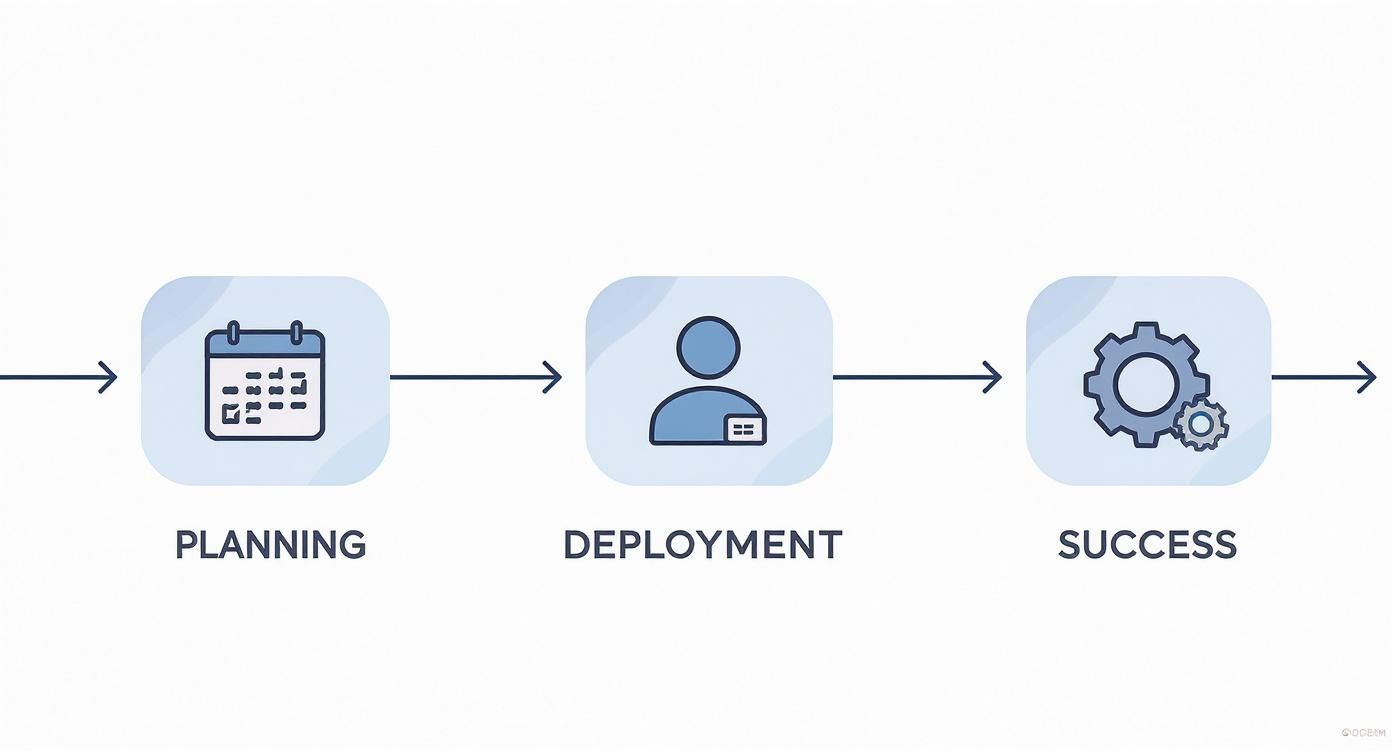
Jeder Schritt baut auf dem vorherigen auf. Ein Fehler am Anfang zieht sich durch den gesamten Prozess. Lass uns die einzelnen Phasen mal genauer ansehen.
1. Verfügbarkeitsabfrage: Wer kann überhaupt?
Alles beginnt mit der entscheidenden Frage: Wer steht mir zur Verfügung? Bevor du auch nur eine einzige Schicht planen kannst, brauchst du einen glasklaren Überblick, auf wen du zählen kannst.
Stell dir vor, du organisierst eine grosse Firmenfeier am Wochenende. Statt jetzt jeden einzeln anzurufen oder dich durch endlose E-Mail-Ketten zu wühlen, schickst du eine zentrale Anfrage an deinen gesamten Mitarbeiterpool. Darin nennst du den Zeitraum und die gesuchten Rollen, zum Beispiel "Servicekraft" oder "Logistikhelfer".
Deine Leute melden direkt zurück, ob sie an den Tagen Zeit haben. So siehst du sofort, wer einsatzbereit ist. Dieser erste Schritt ist das Fundament – ist er wackelig, wird der ganze Plan instabil.
2. Schichtplanung: Die richtige Person am richtigen Ort
Jetzt wird gepuzzelt. Mit den gesammelten Verfügbarkeiten geht es an die eigentliche Schichtplanung. Hier geht es um viel mehr als nur Namen in eine Liste einzutragen. Du musst mehrere Faktoren gleichzeitig im Blick haben.
Es reicht nicht zu wissen, wer kann, du musst auch wissen, was die Person kann. Hat die Servicekraft genug Erfahrung für den VIP-Bereich? Besitzt der Security-Mitarbeiter die nötige Zertifizierung für den Einlass?
Eine smarte Schichtplanung balanciert drei Dinge aus: die Qualifikationen der Mitarbeitenden, die Anforderungen des Auftrags und die gesetzlichen Spielregeln wie Arbeits- und Ruhezeiten.
Nehmen wir einen Dienstplan für eine Pflegestation. Du brauchst pro Schicht mindestens eine examinierte Pflegefachkraft, eine Assistenz und jemanden mit Zusatzausbildung für Medikamente. Du kannst also nicht einfach drei Leute einteilen, die Zeit haben – die Qualifikationen müssen exakt passen. Nebenbei musst du Pausen und die maximale Wochenarbeitszeit einhalten.
3. Buchen und bestätigen: Jetzt wird's verbindlich
Der Plan steht, aber er ist noch nicht in Stein gemeisselt. Im dritten Schritt machst du Nägel mit Köpfen. Das Buchen und Bestätigen der Schichten schafft Klarheit auf beiden Seiten und verhindert teure Missverständnisse.
Sobald du jemanden für eine Schicht vorgesehen hast, schickst du eine formelle Buchungsanfrage raus. Die enthält alle wichtigen Infos: Datum, genaue Uhrzeit, Einsatzort und Rolle. Erst wenn dein Mitarbeiter oder deine Mitarbeiterin diese Buchung aktiv bestätigt, wird aus einem Plan ein fester Einsatz.
Dieser Schritt schafft Verbindlichkeit. Du weisst, die Position ist sicher besetzt, und dein Team weiss genau, wann und wo es gebraucht wird.
4. Zeiterfassung und Abrechnung: Die Basis für Fairness
Der Einsatz ist gelaufen, die Arbeit für dich aber noch nicht ganz. Die letzte Phase ist die Zeiterfassung und Abrechnung. Dieser Schritt ist nicht nur für eine pünktliche und korrekte Lohnzahlung wichtig, er liefert dir auch wertvolle Daten für die Zukunft.
Die Mitarbeitenden erfassen ihre tatsächlich geleisteten Stunden, am besten digital per App. Du prüfst diese Daten und gibst sie für die Lohnbuchhaltung frei. So stellst du sicher, dass jeder fair für seine Arbeit bezahlt wird.
Gleichzeitig lernst du daraus: War deine Zeitplanung realistisch? Brauchen bestimmte Aufgaben regelmässig länger als gedacht? Diese Erkenntnisse fliessen direkt in die nächste Planungsrunde ein und machen deine Personaldisposition mit jedem Mal ein Stück besser.
Um dir den Überblick zu erleichtern, habe ich die Kernprozesse noch einmal in einer Tabelle zusammengefasst.
Übersicht der Kernprozesse und ihre Ziele
Diese Tabelle fasst die vier zentralen Schritte der Personaldisposition zusammen und zeigt dir auf einen Blick, welches Ziel jeder Prozess verfolgt und welche typischen Aufgaben damit verbunden sind.
| Prozessschritt | Hauptziel | Typische Aufgaben |
|---|---|---|
| 1. Verfügbarkeitsabfrage | Überblick über einsatzbereites Personal gewinnen | Anfragen versenden, Rückmeldungen sammeln, Pool an verfügbaren Mitarbeitenden erstellen |
| 2. Schichtplanung | Passende Besetzung aller Schichten sicherstellen | Qualifikationen abgleichen, Arbeitszeitgesetze beachten, Dienstplan erstellen |
| 3. Buchen & Bestätigen | Beidseitige Verbindlichkeit schaffen | Buchungsanfragen versenden, Bestätigungen einholen, finale Einsatzpläne kommunizieren |
| 4. Zeiterfassung & Abrechnung | Faire Vergütung und Datengewinnung | Arbeitszeiten erfassen, Daten prüfen und freigeben, Lohnabrechnung vorbereiten, Analyse für künftige Planungen |
Jeder dieser Schritte ist für einen reibungslosen Ablauf wichtig. Wenn du sie systematisch angehst, legst du den Grundstein für eine mitarbeiterfreundliche Einsatzplanung.
So meisterst du die branchenspezifischen Hürden
Jede Branche tickt anders. Das gilt besonders für die Personaldisposition. Was in der Gastronomie reibungslos klappt, kann im Sicherheitsgewerbe zu einem riesigen Problem werden. Genau deshalb ist es so wichtig, die Spielregeln deines Sektors zu kennen, um deine Planung wirklich passgenau zu gestalten.

Werfen wir mal einen Blick auf vier Bereiche, die unterschiedlicher nicht sein könnten: Eventmanagement, Gastronomie, Pflege und Sicherheitsdienste. Du wirst schnell merken, wie verschieden die Anforderungen sind – und was das für dich als Disponent bedeutet.
Eventmanagement: Flexibilität ist alles
Routine? Fehlanzeige. Im Eventbereich ist jeder Auftrag ein neues Spiel – mal ein eintägiges Musikfestival, mal eine mehrwöchige Messe. Die grösste Herausforderung hier: extreme Kurzfristigkeit und der Druck, blitzschnell grosse Teams mit den unterschiedlichsten Skills auf die Beine zu stellen.
Stell dir vor, du planst den Personalbedarf für eine grosse Firmenveranstaltung mit 500 Gästen. Du brauchst nicht nur Servicekräfte, sondern auch Logistikhelfer für den Aufbau, Techniker für Licht und Ton und vielleicht Hostessen für den Empfang.
Deine grössten Hürden sind dabei:
- Schnelle Skalierbarkeit: Du musst in der Lage sein, innerhalb weniger Tage ein grosses, qualifiziertes Team zu mobilisieren. Oft erfährst du erst kurz vorher, wie viele Leute du wirklich brauchst.
- Vielfältige Qualifikationen: Du benötigst Spezialisten aus komplett verschiedenen Bereichen. Ein guter Logistiker ist eben noch lange kein erfahrener Barmitarbeiter.
- Unvorhersehbare Änderungen: Der Kunde wünscht sich spontan eine zusätzliche Bar oder die Veranstaltung dauert länger als geplant. Deine Planung muss so flexibel sein, dass du sofort reagieren kannst.
Gastronomie und Hotellerie: Auf schwankende Nachfrage reagieren
In der Gastronomie und Hotellerie diktiert die Nachfrage den Personalbedarf. An einem sonnigen Wochenende platzt die Terrasse deines Restaurants aus allen Nähten, an einem verregneten Dienstagabend verirrt sich kaum ein Gast zu dir. Eine starre Schichtplanung ist hier der sichere Weg in den Personalmangel oder in teuren Leerlauf.
Deine Aufgabe ist es, den Bedarf so präzise wie möglich vorauszusehen. Das bedeutet, du musst Wettervorhersagen, Feiertage und lokale Events immer im Blick haben, um deine Personaldisposition laufend anzupassen.
Der Schlüssel liegt darin, einen Kern aus festen Mitarbeitenden mit einem flexiblen Pool an Aushilfen zu kombinieren. So fängst du Spitzen ab, ohne deine Fixkosten durch die Decke gehen zu lassen.
Ein klassisches Szenario: Ein nahegelegenes Stadion kündigt ein grosses Fussballspiel an. Du weisst genau, dass dein Restaurant davor und danach überrannt wird. Deine Planung muss sicherstellen, dass du für genau diese paar Stunden genügend Personal im Service und in der Küche hast.
Pflege: Qualifikationen und Empathie im Zentrum
Im Gesundheitswesen geht es um so viel mehr als nur Anwesenheit. Die Personaldisposition in der Pflege ist extrem komplex, weil hier spezifische medizinische Qualifikationen und strenge gesetzliche Vorgaben das Sagen haben. Du kannst nicht einfach irgendjemanden auf eine Station schicken.
Die Herausforderungen sind hier besonders gross:
- Strenge Qualifikationsanforderungen: Für jede Schicht ist eine exakte Zusammensetzung aus Fachkräften vorgeschrieben – von diplomierten Pflegefachpersonen bis zu Pflegehelfern.
- Hohe Verantwortung: Eine Fehlplanung kann direkte, ernste Konsequenzen für die Gesundheit und das Wohlbefinden von Patienten haben.
- Emotionale Belastung: Hier zählt nicht nur das Fachliche, sondern auch die persönliche Eignung. Nicht jeder Mitarbeitende ist für den Einsatz auf einer Palliativstation gemacht.
Deine Planung muss auch die persönliche Disposition deiner Mitarbeitenden berücksichtigen. Die Arbeitszufriedenheit in der Schweiz ist bemerkenswert stabil, was auch auf eine hohe Anpassungsfähigkeit hindeutet. Eine Studie zeigte, dass über 74 % der Befragten eine grosse Offenheit ihrer Arbeitgeber gegenüber neuen Technologien spüren – ein klares Zeichen für eine lernbereite Haltung. Diese anpassungsfähige Veranlagung ist eine Stärke, die du nutzen kannst, um Teams zu bilden, die auch unter Druck hervorragend zusammenarbeiten. Mehr zu den Ergebnissen dieser Untersuchung findest du im Schweizer HR-Barometer 2020.
Sicherheitsdienste: Gesetze und Zuverlässigkeit
Im Sicherheitsgewerbe gibt es keine Kompromisse: Zuverlässigkeit und die strikte Einhaltung rechtlicher Auflagen stehen an erster Stelle. Jeder Mitarbeitende muss nicht nur qualifiziert, sondern auch absolut vertrauenswürdig sein.
Nimm als Beispiel die Bewachung eines grossen Industriegeländes. Du brauchst Leute für die Pforte, für Patrouillen und vielleicht für die Überwachungszentrale. Jeder dieser Posten erfordert eine spezielle Ausbildung und oft auch behördliche Zertifikate.
Deine Planung muss daher Folgendes garantieren:
- Lückenlose Dokumentation: Du musst jederzeit nachweisen können, dass jeder eingesetzte Mitarbeiter die nötigen Lizenzen und Schulungen besitzt.
- Absolute Pünktlichkeit: Ein unbesetzter Posten ist ein enormes Sicherheitsrisiko. Deine Planung darf keine einzige Lücke haben.
- Klare Anweisungen: Jeder im Team muss exakt wissen, was seine Aufgaben sind und wie er im Notfall reagieren muss.
Wie du siehst, braucht jede Branche eine ganz eigene Herangehensweise an die Personaldisposition. Ein tiefes Verständnis für die spezifischen Herausforderungen deines Arbeitsumfeldes ist der erste und wichtigste Schritt zu einer Planung, die wirklich funktioniert.
Wichtige Kennzahlen und Risiken in der Disposition
Eine erstklassige Personaldisposition verlässt sich nicht aufs Bauchgefühl. Sie basiert auf messbaren Ergebnissen und einer glasklaren Einschätzung möglicher Risiken. Um den Erfolg deiner Planung wirklich bewerten und Gefahren frühzeitig erkennen zu können, brauchst du die richtigen Werkzeuge.
Indem du die richtigen Kennzahlen im Auge behältst, machst du deine Einsatzplanung von einer reinen Verwaltungsaufgabe zu einem strategischen Hebel für deinen Unternehmenserfolg.
Kennzahlen, die du kennen musst
Zahlen lügen nicht. Sie zeigen dir ungeschminkt, wo deine Planung rundläuft und wo es hakt. Am besten konzentrierst du dich auf einige wenige, aber wirklich aussagekräftige Metriken, um nicht im Datendschungel den Überblick zu verlieren.
Hier sind drei zentrale Kennzahlen für eine schlagkräftige Personaldisposition:
- Personaleinsatzquote (PEQ): Diese Zahl setzt deine Personalkosten direkt ins Verhältnis zum Umsatz. Sie ist der ehrlichste Indikator dafür, wie wirtschaftlich du dein Team einsetzt. Schiesst die Quote nach oben, kann das ein Warnsignal für Überbesetzung oder eine unpassende Planung sein.
- Auslastungsrate: Hiermit misst du, wie viel Prozent der vertraglich vereinbarten Arbeitszeit deiner Mitarbeitenden tatsächlich für bezahlte Einsätze verplant ist. Eine konstant niedrige Rate deutet auf zu viel Leerlauf hin, während eine permanent hohe Rate deine Leute geradewegs in die Überlastung treibt.
- Quote der kurzfristigen Ausfälle: Wie oft platzen geplante Einsätze, weil Mitarbeitende kurzfristig abspringen? Eine hohe Quote ist oft ein Symptom für tiefere Probleme wie mangelnde Mitarbeiterbindung oder eine von Anfang an unrealistische Planung.
Kennzahlen sind wie das Cockpit eines Flugzeugs. Sie geben dir die nötigen Daten, um Kurs zu halten, Turbulenzen zu umschiffen und sicher am Ziel anzukommen. Ohne sie fliegst du im Blindflug.
Zu einer guten Personaldisposition gehört auch, die Kosten im Griff zu haben. Das Verständnis marktüblicher Stundenlöhne für Reinigungspersonal ist dabei ein wichtiger Faktor, der direkt in die Wirtschaftlichkeit deiner Einsatzplanung einfliesst.
Typische Risiken und wie du sie meidest
Wo geplant wird, da lauern auch Pannen. Eine vorausschauende Personaldisposition erkennt potenzielle Risiken, bevor sie zu handfesten Problemen werden. Deine Aufgabe ist es also nicht nur, den perfekten Plan zu schmieden, sondern auch die „Was-wäre-wenn“-Szenarien im Kopf zu haben.
Das Risiko von Personalengpässen
Ein wichtiger Mitarbeiter meldet sich krank – ausgerechnet am Tag des Grossauftrags. Das ist der Albtraum jedes Disponenten. Ein Personalengpass verursacht nicht nur Stress, sondern kann schnell zu Auftragsverlusten und verärgerten Kunden führen.
Gegenmassnahme: Bau dir einen flexiblen Mitarbeiterpool auf. Pflege den Kontakt zu qualifizierten Aushilfen oder Freelancern, die du im Notfall blitzschnell aktivieren kannst. Eine gute Software hilft dir dabei, verfügbare Ersatzkräfte mit den passenden Skills in Sekunden zu finden, statt hektisch herumzutelefonieren.
Die Gefahr der Überplanung
Das genaue Gegenteil ist genauso schädlich. Planst du ständig zu viele Leute ein, treibst du die Personalkosten ohne Not in die Höhe. Mitarbeitende, die während ihrer Schicht Däumchen drehen, verlieren schnell die Motivation – und das spürt am Ende auch der Kunde.
Gegenmassnahme: Analysiere deine Daten aus der Vergangenheit. Wann gab es Bedarfsspitzen? Wann war es ruhiger? Nutze diese Erfahrungswerte, um deinen Personalbedarf viel realistischer vorherzusagen und teuren Leerlauf zu vermeiden.
Rechtliche Fallstricke vermeiden
Das Arbeitszeitgesetz und die DSGVO sind keine vagen Empfehlungen, sondern knallharte Spielregeln. Verstösse können empfindliche Bussen und unangenehme rechtliche Konsequenzen nach sich ziehen. Werden Ruhezeiten missachtet oder sensible Daten falsch gehandhabt, ist der Ärger vorprogrammiert.
Gegenmassnahme: Setze auf Planungstools, die gesetzliche Vorgaben automatisch im Blick haben. Moderne Systeme schlagen Alarm, wenn du im Begriff bist, eine Ruhezeit zu verletzen oder einen Mitarbeiter über seine maximal erlaubte Stundenzahl hinaus einzuplanen.
Stell dir eine Spedition vor: Ein einziger falsch geplanter Fahrer, der seine gesetzliche Lenkzeit überschreitet, kann die gesamte Lieferkette lahmlegen. Die Ware kommt zu spät an, Folgeaufträge platzen und Vertragsstrafen drohen. Dieses Beispiel zeigt, wie eine kleine Fehlentscheidung in der Personaldisposition grosse wirtschaftliche Wellen schlagen kann.
Rechtliche Grundlagen und Datenschutz beachten
In der Personaldisposition bewegst du dich nicht im luftleeren Raum. Du jonglierst nicht nur mit Schichten und Qualifikationen, sondern auch mit handfesten rechtlichen Vorgaben. Werden diese ignoriert, kann das schnell zu empfindlichen Strafen und grossem Ärger führen. Zwei Bereiche sind dabei besonders zentral: das Arbeitszeitgesetz und der Datenschutz.
Das Arbeitszeitgesetz ist deine Leitplanke. Es regelt ganz klar, wie lange deine Mitarbeitenden arbeiten dürfen, wann ihnen Pausen zustehen und wie viel Ruhezeit zwischen zwei Einsätzen liegen muss. Verstösse hiergegen sind keine Kleinigkeiten und können bei Kontrollen richtig teuer werden.
Datenschutz als tägliche Pflicht
Noch sensibler wird es beim Umgang mit Mitarbeiterdaten. Die Datenschutz-Grundverordnung (DSGVO) schreibt ganz genau vor, welche Informationen du für die Personaldisposition sammeln, verarbeiten und speichern darfst. Im Kern geht es darum, die Privatsphäre deiner Mitarbeitenden zu schützen – ein absolutes Muss.
Für deine tägliche Arbeit bedeutet das:
- Datenminimierung: Sammle nur, was du für die Planung wirklich brauchst. Name, Qualifikationen und Verfügbarkeiten sind okay – private Hobbys oder der Familienstand sind es in der Regel nicht.
- Zweckbindung: Die Daten sind ausschliesslich für die Einsatzplanung da. Sie einfach mal für den Marketing-Newsletter zu nutzen, ist tabu.
- Speicherfristen: Mitarbeiterdaten dürfen nicht ewig gehortet werden. Sobald der Zweck der Speicherung wegfällt, müssen sie sauber gelöscht werden.
Gerade gesundheitliche Informationen sind extrem heikel. Stell dir vor, ein Disponent erhält die Info, dass ein Mitarbeiter wegen einer psychischen Erkrankung ausfällt. Gibt er diesen Grund unbedacht an einen Kollegen weiter, um den Schichttausch zu erklären, liegt ein schwerwiegender DSGVO-Verstoss vor. Die reine Information „krankheitsbedingter Ausfall“ hätte völlig ausgereicht.
Der Schutz sensibler Daten ist kein optionales Extra, sondern eine gesetzliche und moralische Verpflichtung. Ein transparenter und respektvoller Umgang mit Mitarbeiterdaten ist die Basis für Vertrauen und eine gute Zusammenarbeit.
Für detailliertere Einblicke in die rechtlichen Aspekte findest du hier spezifische Informationen zum Datenschutz, die dir weiterhelfen können.
Diskriminierung als rechtliches Risiko
Ein oft übersehener, aber wichtiger Aspekt ist das Diskriminierungsverbot. Deine Entscheidungen bei der Schichtvergabe müssen fair und nachvollziehbar sein. Bevorzugst oder benachteiligst du systematisch jemanden aufgrund von Herkunft, Geschlecht oder Alter, ist das nicht nur unfair, sondern auch rechtlich angreifbar.
Diskriminierungserfahrungen haben tiefgreifende Auswirkungen auf die persönliche Disposition von Menschen. Eine Erhebung in der Schweiz zwischen 2016 und 2022 ergab, dass sich fast jede dritte Person diskriminiert fühlte. Bei über 40 % der Betroffenen führte dies zu Ausgrenzung und Spott, was wiederum das Gefühl der gesellschaftlichen Zugehörigkeit stark beeinträchtigte.
Eine saubere Dokumentation deiner Planungsentscheidungen ist deshalb Gold wert. Im Streitfall kannst du so belegen, dass deine Disposition auf sachlichen Kriterien wie Qualifikation und Verfügbarkeit beruhte. Wie du deine Datenprozesse von Anfang an sicher und konform gestaltest, kannst du in unserem Beitrag über den Umgang mit Mitarbeiterdaten nach DSGVO nachlesen.
Wie Software deine Einsatzplanung vereinfacht
Excel-Listen, Telefonketten, unzählige WhatsApp-Nachrichten – kommt dir das bekannt vor? Die manuelle Personaldisposition ist nicht nur mühsam, sondern auch extrem fehleranfällig. Moderne Software räumt mit diesem Chaos auf und macht aus einer lästigen Pflicht einen strategischen Hebel. Sie nimmt dir die repetitiven, zeitraubenden Aufgaben ab, damit du dich auf das konzentrieren kannst, was wirklich zählt: deine Kunden und dein Team.

Der grösste Gewinn steckt in der Automatisierung. Anstatt mühsam Verfügbarkeiten abzufragen, schickt das System eine Anfrage direkt an deinen Mitarbeiterpool. Deine Leute geben ihre Bereitschaft bequem per App zurück – schnell, einfach und für dich sofort sichtbar.
Vom manuellen Chaos zur digitalen Klarheit
Stell dir ein Catering-Unternehmen vor, das für eine grosse Hochzeit 20 Servicekräfte braucht. Der traditionelle Weg ist ein Albtraum: Dutzende Anrufe tätigen, Nachrichten hin- und herschicken und alles in eine unübersichtliche Excel-Liste eintragen. Ein falscher Klick, ein Missverständnis – und schon droht das Event zu kippen.
Mit einer Einsatzplanungssoftware sieht die Welt komplett anders aus. Du erstellst den Bedarf im System, filterst nach qualifiziertem Personal und lädst die passenden Leute mit einem Klick ein. Das Tool berücksichtigt dabei automatisch Qualifikationen, Wunscharbeitszeiten und natürlich auch die gesetzlichen Vorgaben.
Der Unterschied ist gewaltig: Statt Stunden mit Administration zu verschwenden, besetzt du offene Schichten in wenigen Minuten. Die Fehlerquote sinkt gegen null, während die Transparenz für alle Beteiligten massiv steigt.
Zeitersparnis und zufriedenere Mitarbeitende
Eine gute Software ist aber mehr als nur ein Planungstool. Sie verbessert die Kommunikation und stärkt die Bindung zu deinem Team. Alle relevanten Infos, von Schichtdetails bis zu den erfassten Arbeitszeiten, sind direkt auf dem Smartphone verfügbar. Das schafft Vertrauen und reduziert ständige Rückfragen.
Gerade die psychische Gesundheit und eine positive Persönlichkeitsdisposition sind entscheidend für die Zufriedenheit. In der Schweiz fühlten sich 2022 zwar über 80 % der Menschen meistens glücklich, doch der Druck nimmt zu. Eine faire und transparente Planung ist ein wichtiger Baustein für das Wohlbefinden, denn sie reduziert Stress und schafft Verlässlichkeit. Insbesondere junge Frauen berichten von steigender psychischer Belastung, was die Bedeutung einer ausgewogenen Arbeitsumgebung nur noch unterstreicht. Mehr zur Gesundheit der Schweizer Bevölkerung erfährst du in diesen Grafiken.
Die richtige Software für dich finden
Die Auswahl des passenden Werkzeugs ist der entscheidende Schritt. Nicht jede Lösung passt zu jedem Unternehmen. Bevor du dich entscheidest, solltest du deine eigenen Prozesse und Bedürfnisse genau unter die Lupe nehmen.
Checkliste für deine Software-Wahl:
- Benutzerfreundlichkeit: Ist die Software für dich und dein Team wirklich einfach und intuitiv bedienbar? Eine komplizierte Lösung wird niemand nutzen.
- Mobile App: Gibt es eine stabile, schnelle App, über die dein Team Verfügbarkeiten melden und Schichtpläne einsehen kann? Das ist heute ein Muss.
- Automatisierung: Kann das System die Planung anhand von Regeln – wie Qualifikationen oder Arbeitszeitgesetzen – intelligent unterstützen?
- Kommunikation: Sind Chat-Funktionen integriert, um unkompliziert mit Einzelpersonen oder ganzen Gruppen zu kommunizieren?
- Zeiterfassung: Bietet die Plattform eine digitale und rechtssichere Zeiterfassung? Das erspart dir eine weitere Insellösung.
- Skalierbarkeit: Wächst die Software mit deinem Unternehmen mit? Was passiert, wenn du mehr Mitarbeitende oder komplexere Anforderungen hast?
Eine sorgfältige Auswahl sorgt dafür, dass du eine Lösung findest, die deine Personaldisposition nicht nur verwaltet, sondern aktiv verbessert und dein Unternehmen voranbringt.
Fragen aus der Praxis: Antworten für Disponenten
Jeder Disponent kennt sie – die typischen Kopfzerbrecher im Planungsalltag. Hier habe ich die häufigsten Fragen und meine praxiserprobten Antworten für dich zusammengefasst, damit du in Zukunft noch souveräner agieren kannst.
Was mache ich bei kurzfristigen Ausfällen am besten?
Ein Anruf, 15 Minuten vor Schichtbeginn: „Ich bin krank.“ Das ist der Klassiker und bringt jeden Plan ins Wanken. Die beste Reaktion darauf ist nicht Aktionismus, sondern gute Vorbereitung.
Der Schlüssel liegt darin, einen Pool an flexiblen und vor allem zuverlässigen Mitarbeitenden aufzubauen, die du im Notfall anfragen kannst. Früher bedeutete das, eine endlose Telefonliste durchzugehen. Heute kann dir eine gute Software diese Arbeit abnehmen. Mit einem Klick siehst du, wer verfügbar ist und die richtige Qualifikation mitbringt. So wird aus einer stressigen Telefonkette ein blitzschneller, automatisierter Prozess.
Wie kann ich die Wünsche meiner Mitarbeiter fair einplanen?
Wunschplanung ist ein Balanceakt. Absolute Fairness ist eine Illusion, aber Transparenz ist machbar und entscheidend. Kommuniziere von Anfang an klar, nach welchen Regeln du planst. Geht es nach Qualifikation, Betriebszugehörigkeit oder gesetzlichen Vorgaben?
Wenn du einen Wunsch nicht berücksichtigen kannst, erkläre das Warum. Nichts ist frustrierender als eine stille Ablehnung. Tools mit einer digitalen Wunschbuch-Funktion sind hier eine enorme Hilfe. Sie sammeln alle Anfragen an einem Ort und machen es dir leichter, den Überblick zu behalten und Entscheidungen nachvollziehbar zu treffen. So fühlt sich dein Team gehört, selbst wenn nicht jeder Wunsch in Erfüllung geht.
Welche Rolle spielt die Kommunikation in der Personaldisposition wirklich?
Sie ist nicht nur ein Teil des Jobs – sie ist der Job. Jede unklare Anweisung oder verspätete Information ist ein potenzieller Fehler in der Kette. Statt auf unzählige E-Mails, Anrufe und Chat-Nachrichten zu setzen, brauchst du eine einzige, verlässliche Informationsquelle.
Eine zentrale Plattform, auf der alle Schichtpläne, kurzfristige Änderungen und wichtige Ansagen für jeden verbindlich einsehbar sind, ist Gold wert. Das schafft nicht nur Klarheit, sondern beendet auch das ständige Nachfragen und die nervenaufreibende Abstimmung.
Eine gute Kommunikation ist das Fundament jeder gelungenen Personaldisposition. Sie schafft Vertrauen, vermeidet Konflikte und sorgt dafür, dass dein Team motiviert und gut informiert bleibt.
Muss ich bei der Planung wirklich auf die persönliche Eignung achten?
Unbedingt. Fachliche Qualifikation ist nur die halbe Miete. Ein top qualifizierter Mitarbeiter kann in einem unpassenden Team komplett untergehen und die Stimmung vergiften.
Eine sensible Personaldisposition schaut über den Lebenslauf hinaus und berücksichtigt auch die Soft Skills und die persönliche Disposition deiner Leute. Wer passt gut zusammen? Wer braucht klare Ansagen, wer mehr Freiraum? Am Ende des Tages ist ein harmonierendes Team produktiver, zufriedener und hat eine niedrigere Fluktuation. Vergiss nie, den Menschen hinter den Fähigkeiten zu sehen.
Möchtest du deine Personaldisposition auf das nächste Level heben und dabei Zeit, Kosten und Nerven sparen? job.rocks automatisiert deine gesamten Prozesse von der Verfügbarkeitsabfrage bis zur Zeiterfassung. Entdecke jetzt, wie einfach gute Planung sein kann, auf https://job.rocks.