
Schluss mit dem Zettelchaos! Software für Veranstaltungstechnik ist Dein digitales Cockpit, mit dem Du jedes Event von A bis Z planst und steuerst. Statt mit unzähligen Excel-Listen, E-Mails und Notizen zu jonglieren, bündelt eine solche Software alle Fäden an einem zentralen Ort. So behältst Du den Überblick – von der ersten Idee bis zur finalen Abrechnung.
Was ist Software für Veranstaltungstechnik wirklich?
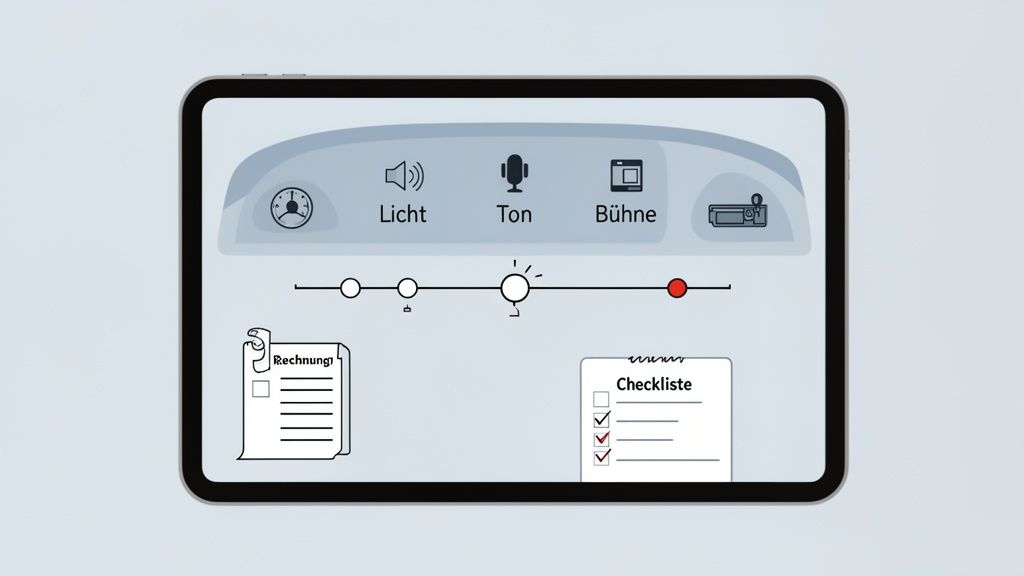
Stell Dir vor, Du planst ein mittelgrosses Firmenjubiläum. Früher hiess das: eine Excel-Tabelle für die Materialliste, eine separate für das Personal, unzählige E-Mails zur Koordination und gedruckte Pläne, die schon beim Ausdrucken veraltet waren. Ein riesiger Aufwand.
Eine Software für Veranstaltungstechnik macht genau damit Schluss. Sie ist viel mehr als nur ein digitales Adressbuch oder ein Kalender. Sie ist das Gehirn Deiner gesamten Operation, das alle Fäden zusammenhält und für Ordnung sorgt.
Du verwaltest nicht einfach nur Aufgaben – Du dirigierst ein ganzes Orchester aus Technik, Personal und Logistik von einer einzigen Konsole aus. Jeder weiss genau, was zu tun ist, und Du hast jederzeit die volle Kontrolle.
Vom Chaos zur Kontrolle
Moderne Event-Software hilft Dir, jeden Aspekt Deines Projekts zu managen. Das beginnt bei der ersten Anfrage des Kunden und hört erst auf, wenn das letzte Kabel wieder sauber im Lager liegt. Typische Aufgaben, die Du damit spielend bewältigst, sind:
- Materialverwaltung: Du siehst sofort, welche Scheinwerfer, Lautsprecher oder Traversen verfügbar sind, reservierst sie für Dein Projekt und erstellst auf Knopfdruck Packlisten. Kein Doppelbuchen, kein Suchen. Ein Beispiel: Du planst eine Konferenz und brauchst 15 Headsets. Die Software zeigt Dir sofort, dass nur 12 verfügbar sind, und Du kannst rechtzeitig reagieren.
- Personalplanung: Die richtigen Techniker für die richtigen Aufgaben? Kein Problem. Du planst Schichten, prüfst Verfügbarkeiten und hast Qualifikationen immer im Blick.
- Technische Planung: Erstelle detaillierte Bühnen-, Licht- und Tonpläne direkt in der Software, oft sogar in 3D. So sehen alle Beteiligten, vom Rigger bis zum Lichttechniker, wie das Endergebnis aussehen soll.
- Dokumentation: Alle wichtigen Unterlagen wie Sicherheitsanweisungen, Ladepläne und technische Rider werden automatisch erzeugt und sind für das ganze Team digital zugänglich.
Die Digitalisierung hat die Eventbranche massiv verändert. Die SBB zum Beispiel managt in der Schweiz jährlich rund 300 Events mit über 45'000 Gästen – mit einem Kernteam von nur drei Personen. Das ist nur möglich, weil eine zentrale Softwareplattform alle Prozesse bündelt. Solche Zahlen zeigen: Software für Veranstaltungstechnik spart nicht nur Zeit, sie macht echtes Wachstum erst möglich.
Auch ein Blick über den Tellerrand lohnt sich. Die Entwicklungen bei der Digitalisierung bei Tagungen und in Museen zeigen ähnliche Muster: Digitale Werkzeuge werden genutzt, um Erlebnisse zu schaffen und Abläufe zu vereinfachen.
Am Ende geht es darum, Fehler zu minimieren, die Kommunikation zu verbessern und Dir den Rücken freizuhalten. So kannst Du Dich auf das konzentrieren, was wirklich zählt: ein grossartiges Event zu schaffen.
Die wichtigsten Module, die Du kennen solltest
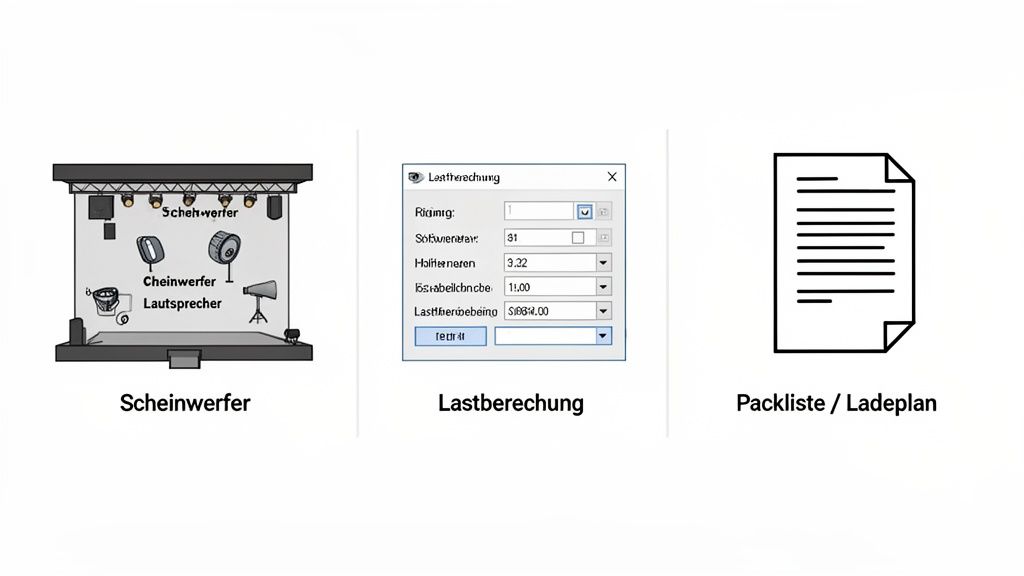
Gute Software für Veranstaltungstechnik funktioniert wie ein professioneller Werkzeugkasten. Du kaufst nicht das ganze Set, wenn Du nur einen Schraubenzieher brauchst. Stattdessen wählst Du genau die Module aus, die für Deine Projekte entscheidend sind. Das macht die Software unglaublich flexibel – egal, ob Du ein kleines Clubkonzert oder ein riesiges Open-Air-Festival stemmst.
Stell Dir vor, Du planst genau so ein grosses Musikfestival. Jeder Bereich, von der Bühne bis zur Sicherheit, hat ganz eigene Anforderungen und braucht spezielle Werkzeuge. Werfen wir einen Blick auf die wichtigsten Bausteine und wie sie Dich bei diesem Mammutprojekt unterstützen.
Funktionsmodule einer Veranstaltungssoftware im Überblick
Diese Tabelle zeigt Dir auf einen Blick, welche Kernmodule es gibt und wie sie Dir in der Praxis, zum Beispiel bei einem Musikfestival, das Leben leichter machen.
| Modul | Hauptfunktion | Praktisches Beispiel (Musikfestival) |
|---|---|---|
| Licht & Ton | Präzise Planung von Scheinwerfern, Lautsprechern und deren Ausrichtung auf digitalen Bühnenplänen. | Du platzierst die Lautsprecher so, dass der Sound auf dem gesamten Festivalgelände optimal ist und keine Lärmschutzauflagen verletzt werden. |
| Rigging | Automatische Berechnung von Lasten, Hängepunkten und Traversen für maximale Sicherheit. | Die Software prüft, ob die Dachkonstruktion der Hauptbühne das Gewicht der LED-Wände und Scheinwerfer sicher tragen kann. |
| Bühnenplanung (2D/3D) | Erstellung von technischen Zeichnungen und realistischen 3D-Visualisierungen der gesamten Veranstaltung. | Du erstellst ein 3D-Modell der Bühne, um Sponsoren zu überzeugen und dem Aufbauteam eine exakte Anleitung zu geben. |
| Dokumentation | Automatisierte Erstellung von Packlisten, Ladeplänen und Case-Labels auf Basis der Planung. | Auf Knopfdruck erzeugt die Software eine Liste, damit Dein Lagerteam genau weiss, welches Equipment in welchen LKW geladen werden muss. |
| Personalplanung | Effiziente Zuweisung von Personal basierend auf Qualifikationen und Verfügbarkeiten. | Das System stellt sicher, dass nur zertifizierte Rigger für den Bühnenaufbau und geprüfte Elektriker für den Stromanschluss eingeteilt werden. |
Jedes dieser Module ist ein Spezialwerkzeug, das in Kombination mit den anderen seine volle Stärke entfaltet. So greifen alle Planungsschritte nahtlos ineinander.
Licht und Ton präzise steuern
Die visuelle und akustische Atmosphäre ist das Herzstück jedes Events. Ein spezielles Modul für die Licht- und Tonplanung ersetzt grobe Skizzen durch einen millimetergenauen, digitalen Bühnenplan.
Für Dein Festival heisst das konkret: Du ziehst Scheinwerfer, Lautsprecher und Mischpulte per Drag-and-Drop an ihre exakten Positionen. Die Software simuliert sofort die Ausbreitung der Lichtkegel und die Schallabdeckung der Lautsprecher. So erkennst Du dunkle Ecken oder Zonen mit schlechtem Sound, lange bevor der erste Truck auf das Gelände rollt.
Rigging und Lastenberechnung für kompromisslose Sicherheit
Sicherheit steht über allem. Sobald schwere Technik über den Köpfen von Besuchern schwebt, sind exakte Berechnungen keine Option, sondern Pflicht. Ein Rigging-Modul ist quasi Dein digitaler Statiker und Sicherheitsingenieur in einem.
Du entwirfst die Traversenkonstruktion für die Hauptbühne. Das Modul berechnet automatisch die Lastenverteilung und prüft, ob alle Hängepunkte, Motoren und Träger den Kräften standhalten. Bei Überlastung schlägt die Software sofort Alarm und hilft Dir, eine sichere Alternative zu finden. Das Ergebnis ist eine lückenlose Dokumentation, die Du den Behörden vorlegen kannst.
Ein durchdachtes Rigging-Konzept ist kein Luxus, sondern die Grundlage für eine sichere Veranstaltung. Die Software nimmt Dir die komplizierten Berechnungen ab und gibt Dir die Gewissheit, dass alles den Vorschriften entspricht.
Bühnenplanung und 3D-Visualisierung
Kunden, Sponsoren und Partner wollen sehen, was sie bekommen – am liebsten schon Monate im Voraus. Ein Modul für die Bühnenplanung in 2D und 3D macht genau das möglich. Du entwirfst nicht nur den technischen Aufbau, sondern schaffst eine realistische Vorschau, die begeistert.
Für Dein Festival erstellst Du ein komplettes 3D-Modell der Bühne, inklusive Videowänden und Deko-Elementen. Diesen Entwurf kannst Du im Management oder bei Sponsoren präsentieren, um alle vom Konzept zu überzeugen. Gleichzeitig dient der Plan Deinem Team als glasklare Aufbauanleitung vor Ort.
- 2D-Pläne: Perfekt für technische Zeichnungen mit exakten Massen für den Aufbau.
- 3D-Modelle: Ideal für die visuelle Präsentation und um ein echtes Gefühl für den Raum zu bekommen.
Diese Planungsmodule sind oft eng mit der Personalplanung verknüpft. Um mehr darüber zu erfahren, wie Du Dein Team passend zum technischen Aufbau steuerst, findest Du wertvolle Tipps in unserem Leitfaden über Workforce-Management-Software.
Technische Dokumentation auf Knopfdruck
Am Ende des Tages müssen all die brillanten Pläne irgendwie zu Deinem Team auf der Baustelle gelangen. Ein Modul für die technische Dokumentation automatisiert diesen Prozess und stellt sicher, dass keine Information auf dem Weg verloren geht.
Basierend auf Deiner finalen Planung erzeugt die Software automatisch alle Dokumente, die Du für Dein Festival brauchst:
- Packlisten: Welches Gerät muss aus dem Lager geholt werden?
- Ladepläne: Wie werden die Trucks am effizientesten und sichersten beladen?
- Case-Labels: Jeder Koffer ist klar beschriftet und dem richtigen Bereich zugeordnet.
- Sicherheitsanweisungen: Wichtige Infos für das gesamte Team, zentral an einem Ort.
Diese automatische Erstellung spart Dir unzählige Stunden manueller Arbeit und minimiert die Fehlerquote drastisch. Jeder im Team hat Zugriff auf die aktuellsten Dokumente, was die Kommunikation und den gesamten Ablauf vor Ort massiv vereinfacht.
Warum Deine Personalplanung direkt angebunden sein muss
Die beste Technik nützt nichts ohne die richtigen Leute, die sie bedienen. Eine moderne Software für Veranstaltungstechnik hat das verstanden und geht weit über die reine Materialverwaltung hinaus.
Die nahtlose Verbindung zur Personalplanung ist kein nettes Extra, sondern der entscheidende Hebel für reibungslose und erfolgreiche Events. Ohne diese Verbindung bleibt Deine Planung ein Puzzle aus zwei getrennten Welten, die Du mühsam von Hand zusammenfügen musst.
Stell Dir vor, Du planst den Aufbau einer grossen Messe. Deine Software weiss genau, welche Traversen, Scheinwerfer und Tonanlagen nötig sind. Aber weiss sie auch, dass Du dafür drei zertifizierte Rigger, zwei erfahrene Lichttechniker und einen Toningenieur mit spezifischer Pult-Erfahrung brauchst? Genau hier schliesst eine verknüpfte Personalplanung die Lücke.
Anstatt mühsam in Excel-Listen oder separaten Programmen nach passendem Personal zu suchen, werden die technischen Anforderungen aus Deiner Materialplanung direkt als Qualifikationsbedarf an das Personal-Tool übergeben. Das System weiss also: "Für diesen Job am Dienstag brauche ich Personal mit der Qualifikation 'Rigger-Lizenz Stufe 3'."
Vom Materialbedarf zur passenden Crew
Dieser automatisierte Abgleich ist ein echter Wendepunkt. Eine direkte Verbindung zwischen Technik- und Personalplanung macht den gesamten Dispositionsprozess schneller, präziser und vor allem weniger fehleranfällig.
Denk mal an den klassischen Ablauf: Du erstellst eine Materialliste und schickst sie per E-Mail an den Disponenten. Der wühlt sich durch seine Tabellen, telefoniert herum und schickt irgendwann eine Liste mit Namen zurück. Bei jeder kleinen Änderung beginnt das Spiel von vorn.
Mit einer angebundenen Personalplanung wird dieser manuelle Prozess überflüssig. Die Software wird zu Deinem intelligenten Assistenten, der Verfügbarkeiten, Qualifikationen und Arbeitszeiten automatisch im Blick hat und Dir die passenden Leute vorschlägt.
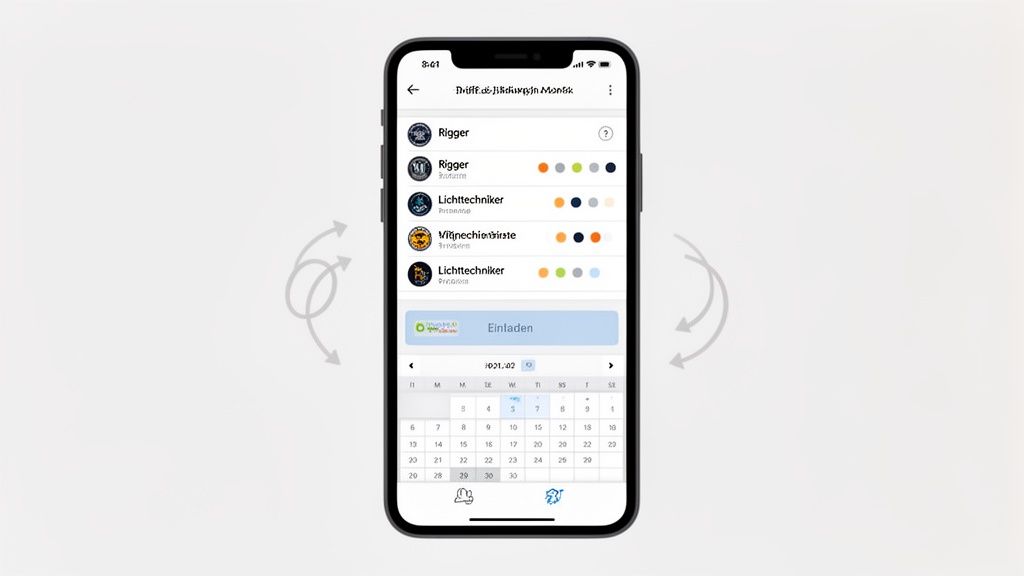
Du siehst auf einen Blick, welche Rollen besetzt werden müssen, und kannst mit wenigen Klicks die richtigen Mitarbeitenden einladen.
Mobile Apps als Kommunikationszentrale
Sobald die Planung steht, beginnt die nächste Herausforderung: die Kommunikation mit dem Team. Wo genau ist der Einsatzort? Wann ist Treffpunkt? Welche Aufgaben stehen an? Hier spielen mobile Apps ihre ganze Stärke aus.
Die direkte Verbindung Deiner Software für Veranstaltungstechnik mit einer Mitarbeiter-App sorgt dafür, dass alle Informationen in Echtzeit auf den Smartphones Deines Teams landen. Das ist kein Luxus, sondern eine Notwendigkeit.
- Automatisierte Einladungen: Das System schickt personalisierte Einladungen direkt an alle qualifizierten und verfügbaren Mitarbeitenden. Kein manuelles Nachtelefonieren mehr.
- Zentrale Job-Übersicht: Jeder im Team sieht seine anstehenden Einsätze mit allen relevanten Details – Adresse, Ansprechpartner, Aufgaben. Alles an einem Ort.
- Digitale Zeiterfassung: Das Ein- und Ausstempeln erfolgt direkt über die App. Das vereinfacht nicht nur die Lohnabrechnung enorm, es macht sie auch präziser.
- Push-Benachrichtigungen: Der Aufbau verschiebt sich um eine Stunde? Eine kurze Push-Nachricht und alle sind sofort im Bilde.
Gerade die Eventbranche in der Schweiz profitiert stark von solchen All-in-One-Lösungen. Über 100 Schweizer Unternehmen aus Bereichen wie Catering und Eventlocations berichten von bis zu 50 Prozent Zeitersparnis durch automatisierte Arbeitsprozesse. Wenn ein Caterer eine Veranstaltung in einer Konzerthalle plant, läuft alles digital – von der Reservierung bis zur Abrechnung. Dieser Ansatz reduziert Fehler und beschleunigt die gesamte Abwicklung massiv.
Letztlich bedeutet die Verbindung von Technik- und Personalplanung, dass Du immer das richtige Personal mit den richtigen Fähigkeiten am richtigen Ort hast. Du sparst nicht nur enorm viel Zeit bei der Disposition, sondern stellst auch sicher, dass alle gesetzlichen Vorgaben, wie die Einhaltung von Arbeitszeiten, automatisch berücksichtigt werden.
Die Nutzung einer Event-Staffing-App ist hierbei der logische nächste Schritt, um die Kommunikation und Organisation Deines Teams zu professionalisieren. Sie wird zur zentralen Anlaufstelle für Deine gesamte Crew.
Wie Du bei DSGVO und Datenschutz auf der sicheren Seite bleibst
Ganz ehrlich: Datenschutz in der Eventbranche ist kein optionales Extra, sondern ein absolutes Muss. In dem Moment, in dem Du persönliche Daten von Mitarbeitenden, Freelancern oder Kunden verwaltest – und das tust Du jeden Tag – bist Du voll in der Pflicht, die Datenschutz-Grundverordnung (DSGVO) einzuhalten. Hohe Bussgelder und der Verlust von Vertrauen sind Risiken, die Du Dir schlicht nicht leisten kannst.
Genau hier wird eine professionelle Software für Veranstaltungstechnik, die eng mit Deiner Personalplanung verzahnt ist, zu Deinem wichtigsten Verbündeten. Statt Dich auf manuelle Checklisten und lückenhafte Prozesse zu verlassen, hilft sie Dir, rechtlich sauber zu arbeiten und Compliance-Vorgaben systematisch umzusetzen.
Zugriffskontrolle und Protokollierung
Wer darf welche Daten sehen? Das ist die Kernfrage im Datenschutz. Ohne glasklare Regeln kann schnell jemand auf sensible Informationen zugreifen, für die er keine Berechtigung hat. Gute Software löst das elegant über ein rollenbasiertes Rechtesystem.
Stell Dir vor, Du arbeitest mit einem externen Dienstleister. Du kannst ihm ganz gezielt nur die Informationen freigeben, die er für seinen Job braucht. Sensible Vertrags- oder Lohndaten bleiben für ihn komplett unsichtbar. So einfach ist das.
Ausserdem protokolliert das System jede einzelne Änderung lückenlos mit. Wenn jemand einen Datensatz anfasst, wird genau festgehalten, wer das wann getan hat. Diese Nachvollziehbarkeit ist nicht nur bei internen Fragen Gold wert, sondern auch ein knallharter Nachweis gegenüber den Behörden.
Sichere Datenspeicherung und Löschkonzepte
Die sicherste Festung bringt nichts, wenn der Schlüssel unter der Fussmatte liegt. Deshalb ist der Ort, an dem Deine Daten lagern, absolut entscheidend.
- Zertifizierte Rechenzentren: Achte darauf, dass der Anbieter Deiner Software die Daten in hochsicheren, zertifizierten Rechenzentren speichert.
- Standort Schweiz: Ein Server-Standort in der Schweiz gibt Dir durch das hohe nationale Datenschutzniveau zusätzliche rechtliche Sicherheit.
- Datenlöschung: Die DSGVO schreibt vor, dass Du Daten nach Ablauf der gesetzlichen Fristen löschen musst. Eine gute Software nimmt Dir das mit automatisierten Löschroutinen ab.
Ein durchdachtes Löschkonzept ist einer der wichtigsten Pfeiler der DSGVO-Konformität. Die Software hilft Dir, den Überblick zu behalten und sorgt dafür, dass keine "Datenleichen" in Deinem System zurückbleiben, die nur ein unnötiges Risiko darstellen.
Ein Praxisbeispiel aus der Personalvermittlung
Ein perfektes Beispiel ist die Personalvermittlung für ein grosses Festival. Du jonglierst mit den Daten von hunderten Freelancern: Qualifikationen, Bankverbindungen, Vertragsdetails und erfasste Arbeitszeiten. Jede einzelne dieser Informationen ist hochsensibel.
Mit der richtigen Software stellst Du sicher, dass diese Daten zu 100 % DSGVO-konform behandelt werden. Qualifikationsnachweise werden sicher abgelegt, Arbeitsverträge sind nur für die richtigen Augen sichtbar, und die Zeiterfassung ist transparent und jederzeit nachvollziehbar. Detailliertere Infos dazu findest Du übrigens auch in unserem umfassenden Überblick zum Datenschutz bei der Personalplanung.
Entscheidend ist auch der generelle Umgang des Anbieters mit sensiblen Daten. Für genaue Informationen solltest Du immer die Datenschutzbestimmungen des Anbieters prüfen. Durch die Automatisierung vieler Abläufe senkst Du ausserdem das Risiko menschlicher Fehler, die oft die Ursache für Datenschutzpannen sind. So schützt Du Dein Unternehmen, baust Vertrauen auf und kannst Dich auf das konzentrieren, was Du am besten kannst: grossartige Events schaffen.
Wie Du die richtige Software auswählst und einführst
Die Entscheidung für eine neue Software für Veranstaltungstechnik ist eine grosse Sache. Kein Pappenstiel. Sie greift tief in die Arbeitsweise Deines Teams ein, prägt Deinen professionellen Auftritt und entscheidet oft über den reibungslosen Ablauf ganzer Projekte. Damit Du bei dieser Weichenstellung nicht falsch abbiegst, haben wir den Prozess in drei knackige, praxiserprobte Schritte zerlegt.
Stell Dir eine mittelständische Event-Agentur vor. Der Alltag? Ein wilder Mix aus Excel-Listen für die Materialplanung, unzähligen Kalender-Apps für die Personaldisposition und einem E-Mail-Postfach, das aus allen Nähten platzt. Das Ergebnis ist immer dasselbe: Doppelbuchungen beim Personal, veraltete Packlisten und jede Menge Adrenalin kurz vor Showbeginn. Hier ist klar: Eine zentrale Plattform muss her.
Schritt 1 Die schonungslose Bedarfsanalyse
Bevor Du Dich in die Welt der bunten Software-Demos stürzt, heisst es: Hausaufgaben machen. Welches Feuer soll die neue Lösung eigentlich löschen? Je präziser Du hier bist, desto besser.
Nimm Dein Team mit ins Boot und stellt Euch gemeinsam den harten Fragen:
- Wo verpufft unsere Zeit? Ist es die zermürbende Suche nach verfügbaren Freelancern oder das manuelle Abtippen von Materiallisten?
- Welche Fehler kosten uns Nerven und Geld? Vielleicht sind es die immer wiederkehrenden Doppelbuchungen von Technik oder die ständigen Missverständnisse in der Kommunikation.
- Was brauchen wir wirklich? Eine Komplettlösung, die von der Offerte bis zur Rechnung alles kann? Oder eher ein messerscharfes Spezialwerkzeug, das sich nahtlos mit der bestehenden Buchhaltung verbindet?
In unserer Beispiel-Agentur wird schnell klar: Die grössten Schmerzpunkte sind die chaotische Personalplanung und der fehlende Live-Überblick über das Material im Lager. Das Ziel ist also eine Software, die genau diese beiden Bereiche exzellent beherrscht.
Schritt 2 Der Anbietervergleich mit klarem Fokus
Mit einem klaren Anforderungsprofil in der Tasche startet die Recherche. Aber Achtung: Lass Dich nicht von endlosen Feature-Listen blenden. Die meisten davon wirst Du nie brauchen. Konzentriere Dich auf die Punkte, die für Dein Business matchentscheidend sind.
Halte bei der Auswahl nach diesen Kriterien Ausschau:
- Skalierbarkeit: Fängt die Software Dich auf, wenn Dein Unternehmen wächst? Kannst Du klein starten und später Module oder Nutzer dazubuchen, ohne gleich das ganze System wechseln zu müssen?
- Schnittstellen (APIs): Spielt die Software gut mit anderen? Lässt sie sich einfach mit Tools wie Deinem Buchhaltungsprogramm oder Kalender verbinden?
- Support: Bekommst Du Hilfe, wenn's brennt? Und zwar schnell, kompetent und von jemandem, der Deine Sprache spricht und Dein Geschäft versteht?
- Datenschutz: Ein Punkt, der oft unterschätzt wird. Wo liegen Deine Daten? Ein Server-Standort in der Schweiz ist nicht nur ein nettes Label, sondern bietet Dir handfeste rechtliche Sicherheit nach DSGVO.
Diese Grafik bringt die Kernfragen für einen schnellen DSGVO-Check auf den Punkt.
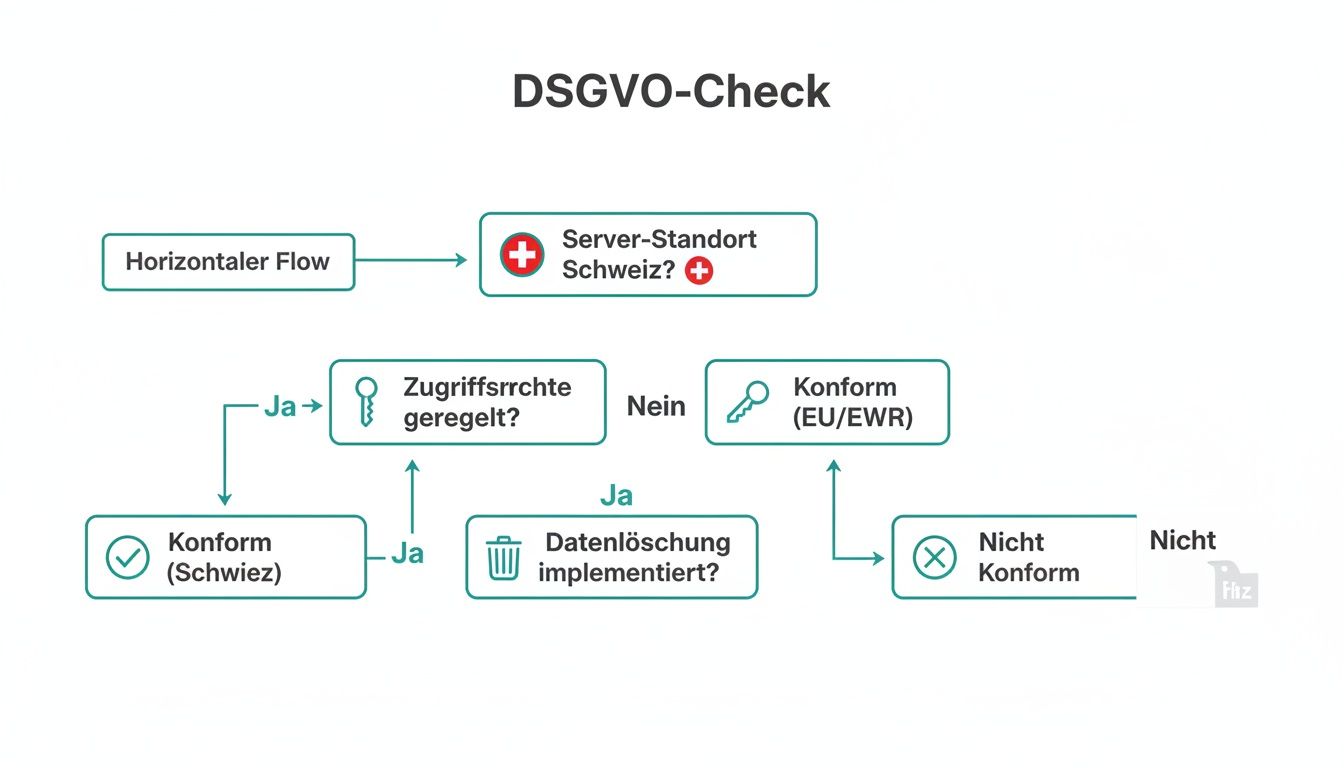
Ein klarer Blick auf Serverstandort, Zugriffsrechte und Löschkonzepte trennt schnell die Spreu vom Weizen.
Schritt 3 Die Einführung – Der Mensch im Mittelpunkt
Du hast sie gefunden. Die perfekte Software. Herzlichen Glückwunsch! Doch die eigentliche Arbeit fängt jetzt erst an. Die brillanteste Software ist nutzlos, wenn sie im Team auf Ablehnung stösst.
Eine Software-Einführung ist kein IT-Projekt. Es ist ein Change-Prozess. Dein Team ist der Schlüssel zum Erfolg – beziehe es von Anfang an mit ein und nimm Bedenken ernst.
Die Akzeptanz im Team steht und fällt mit Deiner Planung. Gehe den Rollout strategisch an:
- Frühzeitige und ehrliche Kommunikation: Erkläre Deinem Team das "Warum". Welchen konkreten Vorteil hat jeder Einzelne davon? Zum Beispiel: "Leute, kein lästiges Nachtelefonieren mehr. Ihr tragt Eure Verfügbarkeit direkt in der App ein und habt sofort den Überblick."
- Praxisnahe Schulungen: Vergiss langweilige Frontalvorträge. Lasst die Leute die Software an einem echten, aber unkritischen Projekt selbst ausprobieren. Learning by doing.
- Geduld und offene Ohren: Es wird nicht alles vom ersten Tag an rundlaufen. Das ist normal. Gib Deinem Team Zeit, sich an die neuen Abläufe zu gewöhnen. Feiere kleine Erfolge und signalisiere, dass Deine Tür für Fragen immer offen ist.
Moderne Tools helfen Dir sogar, den Erfolg sichtbar zu machen. Analyse-Funktionen, wie sie beispielsweise Eventfrog anbietet, visualisieren Kennzahlen wie Ticketverkäufe oder Einnahmen. Diese Daten zeigen schwarz auf weiss, wie sich die optimierte Planung auf das Ergebnis auswirkt – eine starke Motivation für das ganze Team.
Wenn Du diesen Prozess Schritt für Schritt gehst, stellst Du sicher, dass Deine neue Software für Veranstaltungstechnik keine teure Fehlinvestition wird, sondern sich zu einem echten Motor für Dein Unternehmen entwickelt.
Konkrete Anwendungsfälle aus dem Event-Alltag
Theorie ist gut und schön, aber am Ende zählt nur, was auf dem Hallenboden, auf der Bühne oder im Projektbüro wirklich ankommt. Wie genau setzen verschiedene Akteure der Eventbranche eine Software für Veranstaltungstechnik im Alltag ein? Und welche handfesten Vorteile ziehen sie daraus?
Werfen wir einen Blick auf drei typische Szenarien. Sie zeigen, welches Potenzial auch in Deinem Unternehmen schlummert – egal, ob Du Material vermietest, kreative Konzepte schmiedest oder eine feste Location betreibst.
Der Event-Dienstleister: Material und Personal endlich im Griff
Stell Dir einen mittelgrossen Event-Dienstleister vor. Traversen, Licht- und Tontechnik für Messen und Firmenanlässe sind sein täglich Brot. Früher war die Disposition eine echte Zerreissprobe: Excel-Listen für das Material, ein separater Outlook-Kalender für das Personal und unzählige Telefonate, um Doppelbuchungen in letzter Sekunde zu verhindern. Ein reines Nervenspiel.
Seit der Einführung einer zentralen Software für Veranstaltungstechnik hat sich das Bild komplett gewandelt. Jeder Scheinwerfer, jedes Mikrofon ist im System erfasst – inklusive Verfügbarkeit in Echtzeit. Plant ein Projektleiter heute einen Auftrag, reserviert er das nötige Equipment direkt in der Software. Gleichzeitig sieht er, welche Techniker mit den passenden Qualifikationen frei sind, und kann sie mit einem Klick für den Job anfragen.
Das Ergebnis ist messbar und vor allem spürbar:
- Keine Doppelbuchungen mehr: Das System blockiert Material und Personal, sobald sie einem Projekt zugewiesen sind. Das sorgt für Ruhe.
- Bessere Auslastung: Der Disponent erkennt auf einen Blick freie Kapazitäten und kann proaktiv den Verkauf informieren, welches Material noch raus muss.
- Weniger Papierkram: Die Software erzeugt Packlisten und Personalbriefings automatisch. Das spart dem Team nachweislich 20 % des bisherigen Verwaltungsaufwands. Zeit, die jetzt in die Qualität der Events fliesst.
Die Event-Agentur: Schnellere Angebote, glücklichere Kunden
Eine kreative Event-Agentur lebt davon, ihre Kunden mit überzeugenden Konzepten zu begeistern. Und zwar schnell. In der Vergangenheit dauerte es oft Tage, bis nach dem Kreativ-Meeting ein detailliertes Angebot mit technischer Planung und einer ersten 3D-Visualisierung auf dem Tisch lag. Wertvolle Zeit, in der der Kunde abspringen konnte.
Heute nutzt die Agentur eine Software, die alle Schritte nahtlos verbindet. Während der Konzeption entwirft der Planer bereits eine erste 3D-Visualisierung der Bühne. Im Hintergrund kalkuliert die Software parallel die benötigte Technik und spuckt eine ziemlich genaue Kostenschätzung aus.
Ein Kunde, der sein Event schon vorab virtuell durchwandern kann, ist viel leichter zu überzeugen. Die Visualisierung macht aus einer abstrakten Idee ein greifbares Erlebnis und beschleunigt die Entscheidung enorm.
Diese Arbeitsweise hat den Angebotsprozess der Agentur revolutioniert:
- 15 % schnellere Angebotsphase: Von der ersten Idee bis zur fertigen Offerte vergeht heute deutlich weniger Zeit.
- Weniger Rückfragen: Die 3D-Modelle sind so aussagekräftig, dass sie die meisten Fragen des Kunden visuell beantworten, bevor sie überhaupt gestellt werden.
- Professioneller Auftritt: Automatisierte, sauber gestaltete Angebote hinterlassen einen bleibenden Eindruck und heben die Agentur klar vom Wettbewerb ab.
Die Konzerthalle: Standards für wiederkehrende Events schaffen
Eine Konzerthalle hat jede Woche andere Künstler auf der Bühne, doch die grundlegenden Abläufe sind oft identisch: Bühnenaufbau, Soundcheck, Sicherheitsplanung. Ohne ein System wurde das Rad bei jeder Veranstaltung neu erfunden. Das führte zu unnötigem Stress, Fehlern und einem Team, das ständig am Limit lief.
Die Lösung war so einfach wie effektiv: eine Software, in der die Halle Vorlagen für verschiedene Veranstaltungsarten anlegen konnte. Für ein typisches Rockkonzert gibt es jetzt eine Master-Checkliste, die alle technischen und sicherheitsrelevanten Punkte enthält. Diese Vorlage wird für jedes neue Konzert einfach kopiert und an die spezifischen Anforderungen der Band angepasst.
Dieser standardisierte Ansatz spart bei jeder einzelnen Show wertvolle Zeit und stellt sicher, dass kein wichtiges Detail mehr untergeht. Das technische Team kann sich endlich wieder auf die Besonderheiten des jeweiligen Künstlers konzentrieren, anstatt sich mit Routinekram aufzuhalten.
Noch Fragen? Hier kommen die Antworten.
Hier klären wir die Fragen, die uns in der Praxis am häufigsten begegnen. Kurz, ehrlich und auf den Punkt gebracht, damit Du die richtige Entscheidung für Dein Geschäft treffen kannst.
Lohnt sich spezialisierte Software auch für kleine Agenturen?
Ja, unbedingt. Die Zeiten, in denen solche Tools nur für die grossen Player erschwinglich waren, sind längst vorbei. Moderne Lösungen sind so gebaut, dass sie mit Deinem Unternehmen mitwachsen. Du fängst klein an und schaltest bei Bedarf einfach weitere Funktionen frei.
Gerade für kleine Teams ist die Zeitersparnis durch automatisierte Abläufe Gold wert. Stell Dir mal vor, Du sparst pro Woche nur drei Stunden, die Du sonst mit dem manuellen Zusammenstellen von Packlisten oder der mühsamen Koordination von Freelancern verbringst. Aufs Jahr gerechnet sind das fast 20 Arbeitstage! Diese Zeit kannst Du direkt in neue Kunden oder kreative Konzepte stecken. Der Gewinn zeigt sich oft schon nach wenigen Monaten: weniger Fehler, professionellere Angebote und eine deutlich bessere Auslastung Deiner Leute und Deines Materials.
Wie kompliziert ist die Anbindung an bestehende Systeme wie die Buchhaltung?
Das kommt ganz auf den Anbieter an, ist heute aber meist unkomplizierter als gedacht. Die führenden Systeme im Event-Bereich bringen standardisierte Schnittstellen (APIs) mit. Man kann sich das wie eine universelle Steckdose vorstellen, die eine saubere Verbindung zu den gängigen Buchhaltungs- oder CRM-Programmen herstellt.
Kläre das unbedingt vor dem Kauf ab und lass Dir konkrete Beispiele zeigen. Eine gute Anbindung sorgt dafür, dass Daten wie Rechnungen oder erfasste Arbeitszeiten automatisch dorthin fliessen, wo sie hingehören. Das erspart Dir nicht nur die manuelle Tipparbeit, sondern verhindert auch teure Fehler. Für die einmalige Einrichtung solltest Du zwar etwas Zeit einplanen, aber danach läuft der Datenaustausch im Idealfall völlig selbstständig im Hintergrund.
Kann ich damit auch Freelancer und externe Dienstleister managen?
Ja, das ist sogar eine der Kernfunktionen moderner Software für Veranstaltungstechnik, wenn sie mit einer intelligenten Personalplanung verknüpft ist. Du kannst für jeden Freelancer ein eigenes Profil anlegen und dort Qualifikationen, Verfügbarkeiten, Stundensätze und Zertifikate hinterlegen.
Das System wird quasi zu Deinem digitalen Booker. Statt mühsam herumzutelefonieren, siehst Du auf einen Blick, wer für einen Job überhaupt infrage kommt und verfügbar ist.
Ein typisches Szenario: Du suchst für ein Festival kurzfristig einen erfahrenen Lichttechniker mit MA-Pult-Zertifikat. Anstatt Deine ganze Kontaktliste durchzugehen, setzt Du in der Software einfach den entsprechenden Filter. Das System zeigt Dir sofort alle passenden Freelancer an, die Du direkt aus der Anwendung heraus anfragen kannst. Das macht nicht nur die Planung einfacher, sondern auch die anschliessende Abrechnung – und stellt ganz nebenbei sicher, dass alles sauber und nachvollziehbar dokumentiert ist.
Möchtest Du Deine Personalplanung für Events auf das nächste Level heben? job.rocks bietet Dir die Werkzeuge, um Deine Crew effizient, transparent und DSGVO-konform zu steuern. Erfahre mehr auf https://job.rocks.