
Eine aktuelle Studie zur Automatisierung der Einsatzplanung bringt es auf den Punkt: Unternehmen, die ihre Personalplanung auf Autopilot schalten, sparen bis zu 70 % ihrer Planungszeit. Gleichzeitig sinken die damit verbundenen Kosten. Statt dich in endlosen Excel-Listen zu verlieren, kannst du dich wieder um das kümmern, was wirklich zählt: deine strategischen Aufgaben. Ein intelligentes System sorgt im Hintergrund für die perfekte Schichtbesetzung.
Was automatisierte Einsatzplanung für dich bedeutet
Du fragst dich jetzt vielleicht, was sich hinter dem Begriff „automatisierte Einsatzplanung“ wirklich verbirgt? Stell dir vor, du organisierst ein grosses Festival. Früher hättest du stundenlang telefoniert und unzählige E-Mails verschickt, um Techniker, Sicherheitspersonal und Aushilfen aufzutreiben.
Heute schickst du deine Anfrage einfach an ein smartes System. Es prüft sofort, wer verfügbar ist, die nötigen Qualifikationen mitbringt und ob alle gesetzlichen Pausenzeiten eingehalten werden. Innerhalb von Minuten steht dein Team. Genau das ist der Kern der Automatisierung: Sie nimmt dir die sich wiederholenden, zeitraubenden Aufgaben wie Verfügbarkeitsabfragen und Schichtzuweisungen komplett ab.
Vom manuellen Chaos zur smarten Planung
Anstatt dich in unübersichtlichen Listen und endlosen E-Mail-Ketten zu verzetteln, gewinnst du wertvolle Zeit, senkst deine Kosten und vermeidest ärgerliche menschliche Fehler. Die Vorteile gehen dabei weit über die reine Planung hinaus. Ein gutes Beispiel aus einem anderen Lebensbereich ist die automatisierte Wohnungssuche, die den Ablauf beschleunigt, indem sie passende Angebote viel schneller findet.
Der Kern der Automatisierung ist nicht, den Menschen zu ersetzen, sondern ihn zu befähigen. Du bekommst ein Werkzeug, das dir die Routinearbeit abnimmt, damit du dich auf die komplexen Entscheidungen und die Betreuung deines Teams konzentrieren kannst.
Dieser Wandel macht deinen Arbeitsalltag nicht nur leichter, sondern vor allem strategischer. Du hast plötzlich die Kapazität, dich um die Weiterentwicklung deiner Mitarbeitenden oder die Verbesserung von Arbeitsabläufen zu kümmern. Wenn du tiefer in die Grundlagen eintauchen willst, findest du in unserem Leitfaden zur Einsatzplanung viele weitere wertvolle Informationen.
Ein direkter Vergleich: Manuell vs. automatisiert
Um die Unterschiede wirklich greifbar zu machen, stellen wir die beiden Ansätze direkt gegenüber. Die Tabelle zeigt dir auf einen Blick, wo die entscheidenden Vorteile einer modernen, automatisierten Planung liegen.
Vergleich zwischen manueller und automatisierter Einsatzplanung
Die Tabelle zeigt dir auf einen Blick die Unterschiede zwischen der klassischen Planung von Hand und einem modernen, automatisierten Ansatz.
| Aspekt | Manuelle Planung | Automatisierte Planung |
|---|---|---|
| Zeitaufwand | Hoch (Stunden bis Tage) | Gering (Minuten) |
| Fehlerquote | Hoch (z. B. Doppelbuchungen, falsche Qualifikation) | Minimal (dank automatischer Systemprüfungen) |
| Flexibilität | Gering (Änderungen sind extrem aufwendig) | Hoch (blitzschnelle Reaktion auf Ausfälle) |
| Compliance | Mühsam (manuelle Prüfung von Arbeitsgesetzen) | Automatisch (integrierte Regeln und Vorgaben) |
Die Gegenüberstellung macht klar, wie sich der Planungsvorgang verändert. Anstelle einer reaktiven und fehleranfälligen Methode bekommst du ein proaktives, verlässliches System, das dir den Rücken freihält.
Die wichtigsten Ergebnisse der Studie auf einen Blick
Jetzt geht’s ans Eingemachte. Was bringt die Automatisierung der Einsatzplanung wirklich, wenn man sich die Zahlen ansieht? Die Studie liefert klare Antworten und zeigt messbare Erfolge in drei Bereichen: Produktivität, Kosten und Rechtssicherheit.
Diese Infografik bringt die beeindruckenden Ergebnisse auf den Punkt und zeigt, wie sich Automatisierung in harter Zeit- und Kostenersparnis sowie weniger Fehlern niederschlägt.
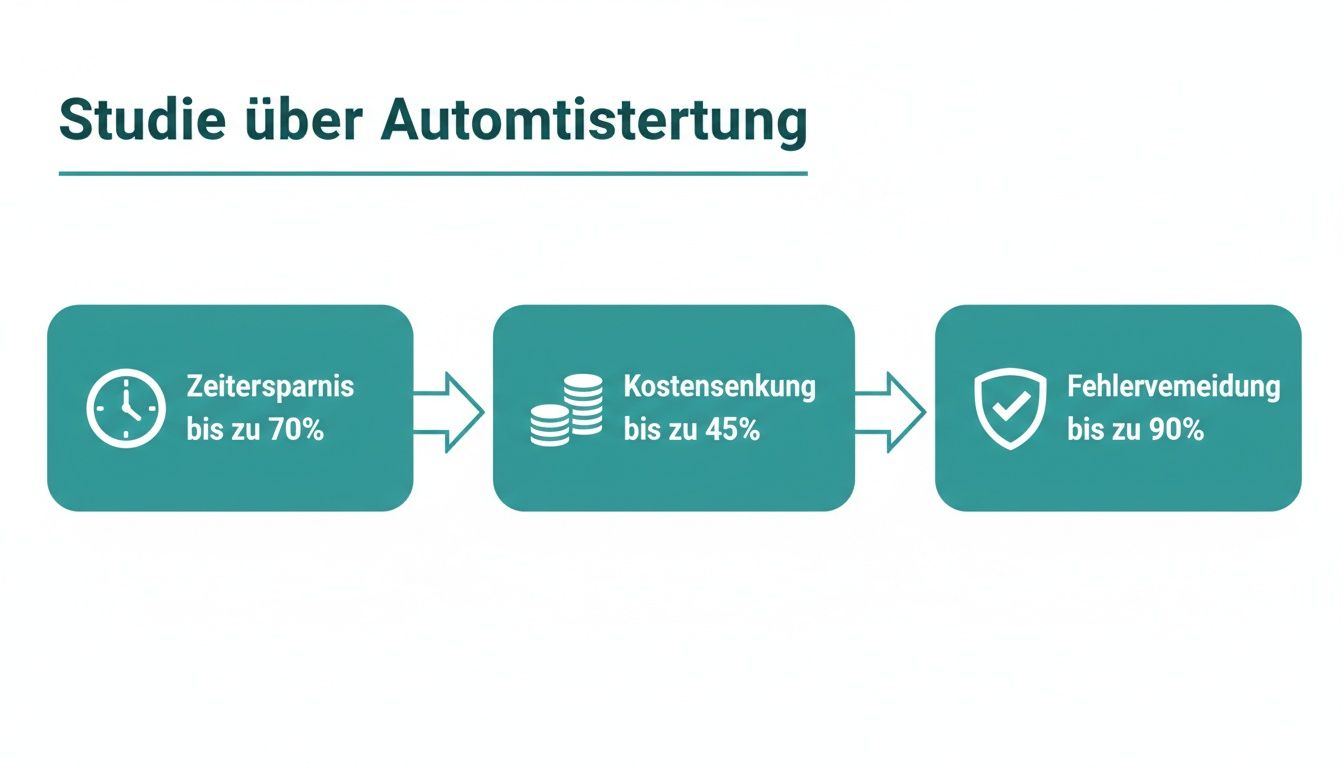
Die Zahlen machen deutlich, wie stark sich automatisierte Abläufe auf die Leistung auswirken und Unternehmen dabei helfen, ihre Mittel viel intelligenter zu steuern.
Produktivitätssprung durch weniger Routine
Stell dir vor, dein Planungsteam verbringt den Grossteil des Tages nicht mehr mit endlosen Telefonaten, E-Mails und dem manuellen Abgleich von Excel-Listen. Genau hier setzt die Automatisierung an. Die Studie belegt, dass Unternehmen den administrativen Aufwand für die Planung um bis zu 70 % reduzieren können.
Diese frei gewordene Zeit ist ein direkter Gewinn für wertschöpfende Aufgaben. Deine Planer können sich endlich um das kümmern, was wirklich zählt:
- Vorausschauende Problemlösung: Statt nur auf kurzfristige Ausfälle zu reagieren, können sie vorausplanen und Engpässe frühzeitig erkennen.
- Mitarbeiterbindung: Sie haben mehr Zeit für die persönliche Betreuung des Teams, was die Zufriedenheit und Loyalität enorm stärkt.
- Qualitätsmanagement: Die Konzentration auf die richtige Qualifikation für jede Schicht verbessert die Servicequalität deines Unternehmens spürbar.
Ein Gastronomiebetrieb, der an der Studie teilnahm, konnte die Zeit für die Erstellung des wöchentlichen Dienstplans von sechs Stunden auf unter eine Stunde drücken. Der Betriebsleiter nutzte die gewonnene Zeit, um neue Schulungsprogramme für das Servicepersonal zu entwickeln.
Spürbare Kostensenkung und finanzielle Vorteile
Die finanziellen Auswirkungen sind oft der überzeugendste Faktor. Automatisierung ist eine Investition, die sich erstaunlich schnell bezahlt macht. Die Studie zeigt gleich mehrere Hebel auf, mit denen du direkt Geld sparst.
Erstens vermeidest du teure Fehlplanungen. Doppelbuchungen, die Zuweisung unqualifizierten Personals oder die Nichteinhaltung von Pausenzeiten führen zu direkten Kosten – sei es durch ineffiziente Arbeit oder sogar durch Bussen.
Durch die Automatisierung der Einsatzplanung konnten die untersuchten Unternehmen ihre Betriebskosten im Planungsbereich um durchschnittlich 45 % senken. Das liegt vor allem an weniger Überstunden, einer schnelleren Besetzung offener Schichten und der Vermeidung von Leerlaufzeiten.
Zweitens beschleunigst du die Besetzung offener Schichten massiv. Fällt ein Mitarbeiter kurzfristig aus, sendet das System automatisch Anfragen an alle verfügbaren und qualifizierten Kräfte. Was früher Stunden dauerte, ist nun in Minuten erledigt – ohne kostspielige Ausfallzeiten.
Mehr Rechtssicherheit und Compliance
Die Einhaltung von Arbeitszeitgesetzen, Ruhezeiten und Datenschutzvorgaben (DSGVO) ist eine grosse Verantwortung. Manuelle Fehler können hier schnell zu rechtlichen Problemen und empfindlichen Strafen führen. Ein automatisiertes System ist dein digitaler Schutzschild.
Es überwacht kontinuierlich die Einhaltung aller relevanten Regeln. So kannst du sicher sein, dass dein Unternehmen jederzeit gesetzeskonform handelt.
Ein Beispiel aus der Sicherheitsbranche:
Ein Sicherheitsdienst muss sicherstellen, dass seine Mitarbeitenden die gesetzlich vorgeschriebenen Ruhezeiten zwischen den Einsätzen einhalten. Bei hunderten Mitarbeitenden ist das manuell kaum fehlerfrei zu überblicken.
Ein automatisiertes System blockiert die Einplanung eines Mitarbeiters automatisch, wenn die Ruhezeit unterschritten würde. Dadurch sinkt das Risiko für rechtliche Konsequenzen auf nahezu null. Dieser Aspekt ist auch ein zentraler Punkt, wenn du dich mit der KI-basierten Einsatzplanung beschäftigst.
Dieses Potenzial ist in der Schweiz besonders gross. Eine Untersuchung von Exxas und dem Institut LINK zeigt, dass bis zu 11 % der Arbeitszeit in Büroberufen durch Automatisierung eingespart werden könnte. Trotzdem schätzt rund die Hälfte der befragten KMU ihren eigenen Automatisierungsgrad als rückständig ein.
Wie automatisierte Planung in deiner Branche funktioniert
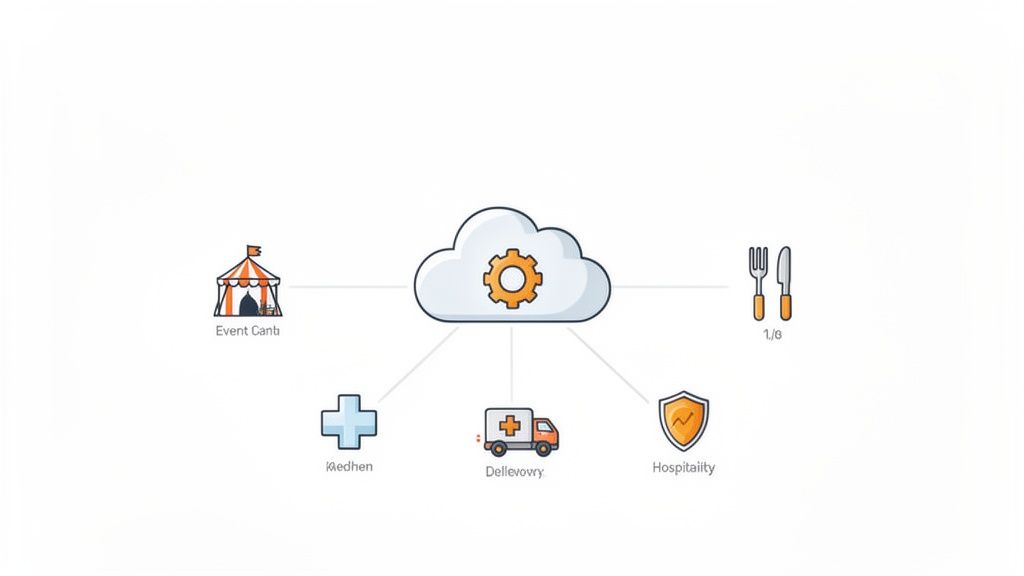
Jede Branche tickt anders, jede hat ihre eigenen Regeln und Rhythmen in der Einsatzplanung. Ein Patentrezept gibt es schlicht nicht. Genau hier liegt aber die Stärke eines wirklich guten, automatisierten Systems: Es ist flexibel und passt sich den ganz spezifischen Herausforderungen deines Geschäftsfeldes an, anstatt dich in ein starres Korsett zu zwängen.
Schauen wir uns mal an, wie die Automatisierung in verschiedenen Branchen ganz konkrete, alltägliche Probleme löst. Du wirst schnell merken: Es geht um weit mehr als nur darum, ein paar Stunden pro Woche zu sparen.
Eventmanagement und Promotion
Im Eventbereich ist Flexibilität die Währung, mit der du bezahlst. Grosse Pools an Freelancern, ständig wechselnde Anforderungen und der Druck, kurzfristig reagieren zu müssen – das manuell zu stemmen, ist ein Albtraum.
Hier spielt die Automatisierung ihre Muskeln voll aus. Stell dir vor, du brauchst für ein Festival am Wochenende spontan 20 zusätzliche Helfer mit Sanitätsausbildung. Statt jetzt Dutzende Telefonate zu führen oder in WhatsApp-Gruppen zu hoffen, schickst du eine einzige Anfrage über dein System.
Die Software filtert sofort nach den Kriterien «verfügbar» und «Sanitätsausbildung» und benachrichtigt nur die passenden Leute. Die ersten Zusagen landen oft schon nach wenigen Minuten in deinem Postfach. Dein Team steht, und du kannst dich um das Wesentliche kümmern.
Gastronomie und Hotellerie
Wer in der Gastro oder Hotellerie arbeitet, kennt den täglichen Kampf mit schwankenden Gästezahlen. Ein einziger sonniger Nachmittag kann die Nachfrage nach Servicekräften auf der Terrasse explodieren lassen – oder eben auch nicht.
Ein automatisiertes System ist dein Joker für solche unvorhersehbaren Spitzen. Du kannst für verschiedene Szenarien Schichtvorlagen anlegen. Kommt der unerwartete Ansturm, aktivierst du mit ein paar Klicks die Vorlage für den «Hochbetrieb».
Das System schlägt dir sofort verfügbare Mitarbeitende vor oder versendet offene Schichten an deinen Personalpool. So stellst du sicher, dass deine Gäste immer den besten Service bekommen, ohne dass du ständig über- oder unterbesetzt bist.
Gesundheitswesen und Pflege
Im Gesundheitswesen geht es um viel mehr als nur Anwesenheit. Die richtige Qualifikation zur richtigen Zeit am richtigen Ort ist entscheidend für die Sicherheit und das Wohl der Patienten. Hier verzeiht die Planung keine Fehler.
Die qualifikationsbasierte Planung ist das Herzstück der Automatisierung in diesem Sektor. Das System stellt sicher, dass für jede Schicht die vorgeschriebene Anzahl an diplomierten Pflegefachkräften, Pflegehelfern und Spezialisten eingeplant ist.
Stell dir vor, eine Fachkraft für Intensivpflege fällt kurzfristig aus. Das System erkennt diesen Engpass sofort, schlägt Alarm und sucht gezielt nach Ersatz mit exakt dieser Qualifikation. Manuelle Fehler, die hier gravierende Folgen haben könnten, werden damit praktisch ausgeschlossen.
Sicherheit und Logistik
Im Sicherheitsgewerbe und in der Logistik sind die Anforderungen oft standort- und objektbezogen. Es geht nicht nur darum, wer arbeitet, sondern auch wo und auf welcher Route.
- Für Sicherheitsdienste: Ein automatisiertes System kann die Besetzung von hunderten Objekten gleichzeitig managen. Es kennt die spezifischen Anforderungen jedes Standorts, wie etwa einen Waffenschein oder bestimmte Erste-Hilfe-Zertifikate. Fällt jemand aus, wird der Ersatz gezielt aus einem Pool von Leuten gesucht, die für genau dieses Objekt freigegeben sind.
- Für die Logistik: Bei der Planung von Fahrern ist die Einhaltung gesetzlicher Lenk- und Ruhezeiten das A und O. Die Automatisierung hilft, Routen zu optimieren und diese Vorschriften lückenlos zu überwachen. Das System kann sogar Fahrer basierend auf ihrem aktuellen Standort und ihrer verbleibenden Lenkzeit automatisch für neue Touren vorschlagen. Das verbessert die Auslastung deiner Flotte spürbar.
Reinigungsbranche
In der Reinigungsbranche jonglierst du oft mit einer grossen Anzahl von Mitarbeitenden, die auf unzählige Objekte verteilt sind. Die grösste Herausforderung: den Überblick behalten und bei Kundenwünschen oder kurzfristigen Ausfällen sofort reagieren zu können.
Mit einem automatisierten System siehst du auf einen Blick, welches Team welchem Objekt zugeordnet ist. Du kannst kinderleicht Vertretungen organisieren, indem dir die Software verfügbare Mitarbeitende in unmittelbarer Nähe des Einsatzortes vorschlägt.
Diese Beispiele aus dem Alltag zeigen: Automatisierte Einsatzplanung ist weit mehr als nur ein technisches Spielzeug. Sie ist eine strategische Antwort auf die echten, täglichen Herausforderungen, die jede Branche einzigartig machen.
So führst du die automatisierte Einsatzplanung ein

Die Entscheidung für eine neue Software ist gefallen, und jetzt fragst du dich: Wie geht's weiter? Keine Sorge, die Einführung einer automatisierten Einsatzplanung ist kein Hexenwerk. Dieser Leitfaden führt dich Schritt für Schritt durch den Vorgang – ganz ohne technisches Kauderwelsch.
Alles beginnt mit einer ehrlichen Bestandsaufnahme deiner aktuellen Abläufe. Nimm dir einen Moment Zeit und schau genau hin, wo es wirklich hakt.
Schritt 1: Die Basis schaffen – deine Abläufe verstehen
Bevor du irgendein Werkzeug in die Hand nimmst, musst du genau wissen, was du reparieren willst. Stell dir selbst und deinem Team ein paar kritische Fragen, um die grössten Zeitfresser und Fehlerquellen aufzudecken.
- Wo geht am meisten Zeit verloren? Ist es die mühsame Suche nach verfügbarem Personal für kurzfristige Ausfälle? Oder die endlose Abstimmung von Urlaubsanträgen mit dem Dienstplan?
- Welche Fehler passieren immer wieder? Planst du versehentlich Mitarbeitende doppelt ein? Setzt du vielleicht jemanden ohne die nötige Qualifikation für einen speziellen Auftrag ein?
- Wie komplex ist deine Kommunikation? Verlierst du den Überblick in unzähligen E-Mails, Anrufen und Messenger-Nachrichten, nur um Schichtänderungen zu kommunizieren?
Diese Analyse ist dein Fundament. Sie hilft dir nicht nur, die richtige Software auszuwählen, sondern auch, den Erfolg der Umstellung später messbar zu machen.
Schritt 2: Dein Team von Anfang an überzeugen
Die beste Software nützt rein gar nichts, wenn dein Team sie nicht akzeptiert. Deine Mitarbeitenden sind der Schlüssel zum Erfolg, deshalb musst du sie von Beginn an ins Boot holen. Offene Kommunikation ist hier das A und O.
Erkläre klar und verständlich, welche Vorteile die neue Lösung für jeden Einzelnen bringt. Es geht nicht darum, jemanden zu ersetzen, sondern darum, den Arbeitsalltag für alle spürbar zu erleichtern.
Mache deutlich, dass es um Entlastung geht: Weniger administrative Routine bedeutet mehr Zeit für spannendere Aufgaben. Eine transparentere Planung und fairere Schichtverteilung verbessern das Gleichgewicht zwischen Arbeit und Privatleben.
Organisiere Schulungen, die auf die verschiedenen Rollen zugeschnitten sind. Ein Disponent braucht schliesslich ein anderes Wissen als ein Mitarbeiter, der seine Verfügbarkeiten über eine App meldet. Gib deinem Team Zeit, das neue System in einer Testphase kennenzulernen, und sammle aktiv Rückmeldungen.
Schritt 3: Daten und Systemeinstellungen vorbereiten
Jetzt wird es praktisch. Die Qualität deiner automatisierten Planung hängt direkt von der Qualität deiner Daten ab. Sorge also dafür, dass alle Stammdaten deiner Mitarbeitenden sauber und vollständig sind.
Checkliste für deine Datenaufbereitung:
- Mitarbeiterstammdaten: Sind alle Kontaktdaten, Verträge und Arbeitszeitmodelle korrekt hinterlegt?
- Qualifikationen: Hast du alle relevanten Fähigkeiten und Zertifikate erfasst (z. B. Führerschein, Sprachkenntnisse, Sicherheitszertifikate)?
- Standorte und Objekte: Sind alle Einsatzorte mit ihren spezifischen Anforderungen im System angelegt?
Sobald die Datenbasis steht, konfigurierst du das System nach deinen Regeln. Lege fest, welche gesetzlichen Vorgaben oder internen Richtlinien die Software automatisch berücksichtigen soll. Beim Einsatz von KI und automatisierten Technologien sind saubere Abläufe und eine gute Qualitätskontrolle entscheidend. Wenn du eine passende Lösung suchst, wirf einen Blick auf die Möglichkeiten moderner Einsatzplanungssoftware.
Schweizer Organisationen sind übrigens führend bei der Automatisierung. Eine Untersuchung zeigt, dass 52 % der Schweizer Unternehmen KI-Agenten nutzen, um Abläufe zu automatisieren – deutlich mehr als der globale Durchschnitt von 46 %. Da 80 % der Schweizer Führungskräfte das kommende Jahr als entscheidend für die Neuausrichtung ihrer Geschäftsstrategien mit KI ansehen, wird dieser Trend weiter zunehmen.
Häufige Risiken – und wie du sie umschiffst
Ganz ehrlich: Eine neue Technologie einzuführen, fühlt sich oft wie ein Sprung ins kalte Wasser an. Neben all den Chancen gibt es natürlich auch mögliche Hürden. Lass uns deshalb ganz offen über die typischen Stolpersteine sprechen – und dir direkt zeigen, wie du sie von Anfang an geschickt vermeidest.
Die Erfahrung zeigt: Das grösste Hindernis ist selten die Technik selbst. Es sind die Menschen, die am Ende damit arbeiten sollen. Mangelnde Akzeptanz im Team kann jedes noch so gute Projekt ausbremsen, bevor es überhaupt richtig ins Rollen kommt.
Ängste im Team proaktiv begegnen
Mitarbeitende reagieren auf neue Systeme oft mit einer Mischung aus Neugier und Sorge. Die häufigsten Bedenken sind die Angst vor totaler Überwachung oder die Befürchtung, dass der eigene Arbeitsplatz durch die Automatisierung überflüssig wird. Diese Sorgen sind real und du musst sie absolut ernst nehmen.
Dein wichtigstes Werkzeug ist hier Transparenz, und zwar von Tag eins an. Erkläre glasklar, warum ihr die Einsatzplanung automatisiert und welche konkreten Vorteile das für jede einzelne Person im Team hat. Betone, dass es darum geht, lästige Routineaufgaben loszuwerden, damit mehr Zeit für die wirklich wichtigen und spannenden Tätigkeiten bleibt.
Zum Glück ist das Risiko, durch Automatisierung ersetzt zu werden, in der Schweiz im europäischen Vergleich verschwindend gering. Laut einer Untersuchung des Bundesamtes für Statistik (BfS) hat nur ein Prozent der Erwerbstätigen einen Job, der einen hohen Routineanteil mit wenig Autonomie kombiniert – genau die Mischung, die als Hauptrisikofaktor gilt. Mehr Details dazu findest du in der Analyse auf 20min.ch.
Dein Ziel muss es sein, die Technologie als unterstützendes Werkzeug zu positionieren, nicht als Ersatz für menschliche Fähigkeiten. Mach deutlich, wie eine faire, transparente und fehlerfreie Planung den Arbeitsalltag für alle verbessert.
Organisiere Workshops und biete unkomplizierte Schulungen an. Gib deinem Team die Chance, Fragen zu stellen und das System selbst auszuprobieren. So baust du Vertrauen auf und machst aus skeptischen Mitarbeitenden überzeugte Befürworter.
Datenqualität als entscheidender Erfolgsfaktor
Ein weiteres, oft unterschätztes Risiko: schlecht gepflegte Daten. Ein automatisiertes System ist immer nur so gut wie die Informationen, mit denen du es fütterst. Fehlerhafte oder veraltete Mitarbeiterdaten führen unweigerlich zu einer chaotischen Planung.
Stell dir nur mal vor, die Qualifikationen eines Mitarbeiters sind nicht korrekt hinterlegt. Das System plant ihn dann vielleicht für eine Aufgabe ein, für die er gar nicht zertifiziert ist. Oder veraltete Kontaktdaten führen dazu, dass wichtige Schichtinformationen ins Leere laufen.
So stellst du eine hohe Datenqualität sicher:
- Klare Verantwortlichkeiten: Bestimme eine Person oder ein kleines Team, das für die Pflege der Stammdaten den Hut aufhat.
- Regelmässige Checks: Führe in festen Abständen eine Überprüfung der Daten durch. Sind alle Zertifikate noch gültig? Stimmen die Kontaktdaten noch?
- Mitarbeiter einbeziehen: Die smarteste Lösung ist, deinen Mitarbeitenden die Möglichkeit zu geben, ihre eigenen Daten über eine App selbst zu pflegen. Das reduziert deinen administrativen Aufwand und erhöht die Genauigkeit massiv.
Investiere zu Beginn die nötige Zeit, um eine saubere und vollständige Datenbasis aufzubauen. Dieser Aufwand mag anfangs mühsam wirken, zahlt sich aber auf lange Sicht tausendfach aus, weil er die Zuverlässigkeit deiner gesamten Planung sicherstellt.
Die richtige Balance zwischen Mensch und Maschine finden
Eine letzte Gefahr ist die blinde Abhängigkeit von der Technik. Automatisierung ist ein mächtiges Werkzeug, aber sie ersetzt niemals den gesunden Menschenverstand und die menschliche Intuition. Kein Algorithmus der Welt kann alle unvorhergesehenen Ereignisse oder zwischenmenschlichen Feinheiten berücksichtigen.
Behalte immer die Kontrolle. Die finale Entscheidung sollte stets bei deinen Disponenten liegen. Das System liefert intelligente Vorschläge und nimmt die Routinearbeit ab, aber die menschliche Aufsicht bleibt unverzichtbar.
Es geht darum, eine intelligente Partnerschaft zu schaffen, in der die Technologie dient und der Mensch die strategische Führung behält. Genau so nutzt du die Stärken beider Welten und umgehst die typischen Fallstricke bei der Studie über: Automatisierung der Einsatzplanung.
Häufig gestellte Fragen zur automatisierten Einsatzplanung
Bei einem so wichtigen Thema wie der Automatisierung der Einsatzplanung tauchen natürlich Fragen auf. Wir haben die häufigsten gesammelt und geben dir hier klare, praxisnahe Antworten – ohne Marketing-Blabla, damit du genau weisst, woran du bist.
Wie lange dauert die Einführung einer Software für die Einsatzplanung?
Die Dauer hängt stark von der Grösse deines Unternehmens und der Komplexität deiner Abläufe ab. Mit einer Lösung wie job.rocks kannst du aber oft schon innerhalb weniger Wochen voll durchstarten.
Der Schlüssel liegt in der Vorbereitung. Wenn du deine Mitarbeiterdaten sauber aufbereitest, Qualifikationen klar definierst und genau weisst, was du erreichen willst, geht alles viel schneller. Der Startschuss fällt meist früher als gedacht.
Lohnt sich die automatisierte Planung auch für kleine Unternehmen?
Ja, absolut. Gerade in kleineren Teams frisst die manuelle Planung unverhältnismässig viel Zeit – Zeit, die du besser in dein Kerngeschäft und die Betreuung deiner Kunden investieren könntest. Der administrative Aufwand ist oft genauso hoch wie bei grossen Firmen, nur dass er auf weniger Schultern lastet.
Moderne Software-Lösungen sind heute skalierbar und auch für kleine Teams absolut erschwinglich. Du gewinnst sofort an Struktur, machst deutlich weniger Fehler und wirkst gegenüber deinem Personal viel professioneller.
Viele kleine Unternehmen erleben den grössten relativen Gewinn, weil jeder eingesparte Planungsaufwand direkt in Wachstum und Qualität fliesst.
Verlieren meine Disponenten durch die Automatisierung die Kontrolle?
Nein, ganz im Gegenteil – deine Disponenten gewinnen an echter Kontrolle und Übersicht. Die Software ist ein Werkzeug, das ihnen die zeitraubenden und monotonen Routineaufgaben abnimmt. So bleibt endlich mehr Zeit für das, was wirklich zählt: die persönliche Betreuung der Mitarbeitenden und die Lösung kniffliger Probleme.
Sie steuern das System, setzen die Regeln und greifen nur dann ein, wenn es wirklich nötig ist oder eine besondere Situation menschliches Fingerspitzengefühl erfordert. Die finale Entscheidung bleibt immer in den Händen des Menschen; die Technologie liefert lediglich die bestmögliche Grundlage dafür.
Bist du bereit, deine Einsatzplanung zu vereinfachen und wertvolle Zeit zu gewinnen? Erfahre, wie job.rocks deinem Unternehmen helfen kann. Entdecke jetzt die Möglichkeiten auf job.rocks.