
Fragst Du Dich, wie viele Arbeitstage pro Monat es eigentlich sind? Diese Zahl ist weit mehr als nur eine Ziffer im Kalender – sie ist der Dreh- und Angelpunkt für eine faire Lohnabrechnung und eine clevere Personalplanung.
Als Faustregel gilt in der Schweiz bei einer Fünf-Tage-Woche ein Durchschnitt von 20 bis 22 Arbeitstagen. Aber wie so oft steckt der Teufel im Detail, denn kantonale Feiertage oder individuelle Arbeitsmodelle können das Ergebnis schnell verändern.
⚡ Schnellantwort: Wie viele Arbeitstage hat ein Jahr in der Schweiz?
Ein Jahr in der Schweiz hat durchschnittlich 252 Arbeitstage (bei einer 5-Tage-Woche, Montag bis Freitag). Die genaue Anzahl variiert je nach Kanton und hängt von den kantonalen Feiertagen ab:
- 2026: 251-254 Arbeitstage (je nach Kanton)
- 2027: 253-255 Arbeitstage (je nach Kanton)
- Pro Monat: Durchschnittlich 21 Arbeitstage (zwischen 20-22)
Formel: 365 Tage − 104 Wochenendtage − 9-13 kantonale Feiertage = ca. 252 Arbeitstage
Arbeitstage für 2026 sofort berechnen
Hol dir den kostenlosen Jahresplaner für die Schweiz mit Feiertagen, Kantonslogik und schneller Sollstunden-Planung.
- Arbeitstage 2026 und 2027 auf einen Blick
- Feiertage je Kanton besser einplanen
- Sollstunden schneller und sauberer berechnen
Gratis. Kein Spam. Sofort verfügbar.
Warum die genaue Zahl der Arbeitstage entscheidend ist
Die korrekte Anzahl der Arbeitstage pro Monat zu ermitteln, ist keine reine Formsache. Sie ist das Fundament für eine gerechte Gehaltsabrechnung, eine funktionierende Einsatzplanung und eine transparente Urlaubsverwaltung. Stimmt diese Basis nicht, sind Missverständnisse und Fehler vorprogrammiert, die am Ende nur Zeit, Geld und Nerven kosten.
Soll-Arbeitstage vs. Ist-Arbeitstage: Der kleine, aber feine Unterschied
Um Klarheit zu schaffen, musst Du zwei Begriffe auseinanderhalten, die im Alltag oft verwechselt werden:
- Soll-Arbeitstage: Das ist die vertraglich vereinbarte Anzahl an Tagen, die ein Mitarbeitender in einem Monat arbeiten müsste. Diese Zahl ist die unverrückbare Basis für die Lohnabrechnung.
- Ist-Arbeitstage: Das sind die Tage, an denen tatsächlich gearbeitet wurde. Die Differenz zu den Soll-Tagen entsteht ganz natürlich durch Urlaub, Krankheit oder andere geplante Abwesenheiten.
Diese klare Trennung ist entscheidend, um den Überblick zu behalten und die Ressourcenplanung präzise zu steuern. Stell Dir vor, Du leitest eine Event-Agentur. Deine Soll-Tage geben Dir vor, wie viele Personaltage Du für den Monat einplanen musst. Die Ist-Tage zeigen Dir am Monatsende, wer wie viel gearbeitet hat, was für die Abrechnung von Überstunden oder Minusstunden wichtig ist.
Um Dir eine schnelle Orientierung zu geben, haben wir die wichtigsten Durchschnittswerte für die Schweiz in einer Tabelle zusammengefasst.
Durchschnittliche Arbeitstage pro Monat im Überblick (Fünf-Tage-Woche)
Diese Tabelle zeigt Dir eine schnelle Orientierung für die durchschnittliche Anzahl an Arbeitstagen und Arbeitsstunden pro Monat in der Schweiz.
| Kennzahl | Durchschnittswert | Hinweis |
|---|---|---|
| Arbeitstage pro Monat | 21 Tage | Durchschnittswert, der je nach Monat und Kanton variiert (zwischen 20-22). |
| Arbeitstage pro Jahr | ~252 Tage | Basierend auf 365 Tagen abzüglich Wochenenden und Feiertagen. |
| Wochenstunden (Vollzeit) | 42 Stunden | Gängiger Durchschnittswert gemäss Schweizer Arbeitsgesetz. |
| Arbeitsstunden pro Monat | ~182 Stunden | Berechnet aus 42 Wochenstunden ÷ 5 Tage × 21,67 Tage. |
Arbeitstage pro Jahr: Übersicht für 2026 und 2027
Die genaue Anzahl der Arbeitstage pro Jahr hängt stark von den kantonalen Feiertagen ab. Während einige Kantone nur 9 gesetzliche Feiertage haben, kommen andere auf bis zu 13 Tage. Das macht einen Unterschied von bis zu 4 Arbeitstagen pro Jahr – relevant für deine Personalplanung und Lohnabrechnung.
Arbeitstage 2026 nach Kanton (5-Tage-Woche)
| Kanton | Arbeitstage 2026 | Besonderheiten |
|---|---|---|
| Zürich, Bern, Aargau | 252 | Durchschnitt, ohne regionale Sonderfeiertage |
| Basel-Stadt, Basel-Landschaft | 251 | 1. Mai (Tag der Arbeit) als Feiertag |
| Genf | 250 | Zusätzlich Genfer Bettag (Jeûne genevois) |
| Tessin | 251 | Peter und Paul (29. Juni) + Mariä Himmelfahrt (15. August) |
| Graubünden, Uri, Schwyz | 252-253 | Variiert nach Gemeinde (lokale Patronatsfeste) |
Arbeitstage 2027 nach Kanton (5-Tage-Woche)
| Kanton | Arbeitstage 2027 | Unterschied zu 2026 |
|---|---|---|
| Zürich, Bern, Aargau | 253 | +1 Tag (Ostern verschiebt sich) |
| Basel-Stadt, Basel-Landschaft | 252 | +1 Tag |
| Genf | 251 | +1 Tag |
| Tessin | 252 | +1 Tag |
Praxistipp: Für präzise Personalplanung empfehlen wir eine moderne Personalplanungs-Software, die kantonale Feiertage automatisch berücksichtigt und dir bei der Einsatzplanung hilft.
Warum schwanken die Arbeitstage zwischen Jahren?
Die Anzahl der Arbeitstage pro Jahr ist nie identisch. Hauptgründe:
- Bewegliche Feiertage: Ostern, Auffahrt und Pfingsten fallen jedes Jahr auf andere Wochentage
- Schaltjahre: Der 29. Februar kann ein zusätzlicher Arbeitstag sein
- Wochenend-Feiertage: Fällt ein Feiertag auf Samstag/Sonntag, gibt es keinen Kompensationstag
Für eine vollständige Jahresplanung ist es daher sinnvoll, mit einer Zeiterfassungs-Software zu arbeiten, die automatisch die korrekten Soll-Tage berechnet und mit den Ist-Arbeitsstunden abgleicht.
Diese Zahlen sind natürlich nur Richtwerte. Sie helfen Dir aber bei der groben Planung und bei der Lohnkalkulation. Wie Du die genauen Werte für Dein Unternehmen ermittelst, erfährst Du in den nächsten Abschnitten. Mehr Details zur Berechnung der Arbeitstage in der Schweiz findest du auch auf job.rocks.
Die genaue Kenntnis der monatlichen Arbeitstage vermeidet Fehler bei der Gehaltsabrechnung und stellt Deine Personalplanung auf eine solide Basis.
Mit den richtigen Werkzeugen und einem klaren Verständnis für die Berechnung schaffst Du Transparenz – für Dich und für Dein ganzes Team. Wir zeigen Dir jetzt Schritt für Schritt, wie Du die exakte Anzahl der Arbeitstage ermittelst und dabei auch Sonderfälle wie Teilzeit oder Schichtarbeit meisterst.
Die genaue Berechnung Schritt für Schritt erklärt
Die exakte Anzahl der Arbeitstage pro Monat auszurechnen, ist kein Hexenwerk, wenn Du weisst, wie Du vorgehen musst. Es ist ein klarer, logischer Prozess, der eine verlässliche Basis für Deine gesamte Planung und Lohnabrechnung schafft. Lass uns das mal gemeinsam durchgehen.
Als Ausgangspunkt nimmst Du immer die Gesamtzahl der Kalendertage eines Monats. Davon ziehst Du als Erstes alle Wochenendtage ab, also die Samstage und Sonntage. Dieser simple Schritt bringt Dich schon erstaunlich nah an das richtige Ergebnis.
Wochenenden und Feiertage abziehen
Der wirklich entscheidende zweite Schritt ist aber die Berücksichtigung der gesetzlichen Feiertage. Genau hier passieren die meisten Fehler, denn die Feiertage sind in der Schweiz kantonal geregelt. Was im Kanton Zürich ein Feiertag ist, muss im Kanton Bern noch lange keiner sein.
Wichtig ist vor allem: Du ziehst nur die Feiertage ab, die tatsächlich auf einen Wochentag von Montag bis Freitag fallen. Fällt ein Feiertag auf einen Sonntag, ändert das an der Zahl Deiner Arbeitstage rein gar nichts.
Um die korrekten Feiertage für Deinen Standort zu finden, wirfst Du am besten einen Blick auf die offizielle Liste Deines Kantons. Viele kantonale Verwaltungsseiten bieten aktuelle Kalender an, die Du Dir einfach herunterladen kannst.
Ein praktisches Beispiel für Zürich
Stellen wir uns vor, Du berechnest die Arbeitstage für den Mai 2024 im Kanton Zürich. Der Monat hat insgesamt 31 Kalendertage.
- Gesamttage: Du startest mit 31 Tagen.
- Wochenenden abziehen: Im Mai 2024 gibt es 4 Samstage und 4 Sonntage. Das sind 8 Tage, die Du direkt abziehen kannst.
- 31 – 8 = 23 Tage
- Kantonale Feiertage prüfen: Jetzt wird es spannend. Im Kanton Zürich sind der Tag der Arbeit (1. Mai, ein Mittwoch) und die Auffahrt (9. Mai, ein Donnerstag) gesetzliche Feiertage, die auf Wochentage fallen. Auch der Pfingstmontag (20. Mai) kommt noch dazu. Das sind also 3 zusätzliche freie Tage.
- Feiertage abziehen: 23 – 3 = 20 Arbeitstage
So einfach kommst Du auf die exakte Anzahl der Soll-Arbeitstage für diesen spezifischen Monat und Standort. Diese Methode kannst Du für jeden beliebigen Monat und Kanton anwenden.
Was Du bei Schaltjahren beachten musst
Ein kleiner, aber feiner Punkt sind Schaltjahre, wie zum Beispiel 2024. Der zusätzliche 29. Februar kann die Anzahl der jährlichen Arbeitstage beeinflussen, sofern er auf einen Wochentag fällt. Für die einzelne Monatsberechnung ist das kaum relevant, aber für die Jahresplanung solltest Du es im Hinterkopf behalten. Du willst mehr darüber wissen? In unserem Beitrag über die Berechnung der Arbeitstage pro Jahr gehen wir genauer auf dieses Thema ein.
Feiertage und Wochenenden richtig einplanen
Feiertage sind oft der Knackpunkt, wenn Du die Arbeitstage pro Monat exakt berechnen willst. Ein freier Tag mitten in der Woche, etwa ein Dienstag, wirbelt Deine Planung ganz anders durcheinander als ein Feiertag, der praktischerweise aufs Wochenende fällt. Schauen wir uns das mal im Detail an, damit Du zukünftig immer den Überblick behältst.
Die richtige Planung ist eigentlich ganz einfach: Du nimmst die Kalendertage eines Monats als Basis und ziehst systematisch alle Tage ab, an denen nicht gearbeitet wird. So ermittelst Du am Ende die exakte Anzahl der Soll-Arbeitstage.
Die folgende Grafik zeigt Dir diesen Prozess auf einen Blick.
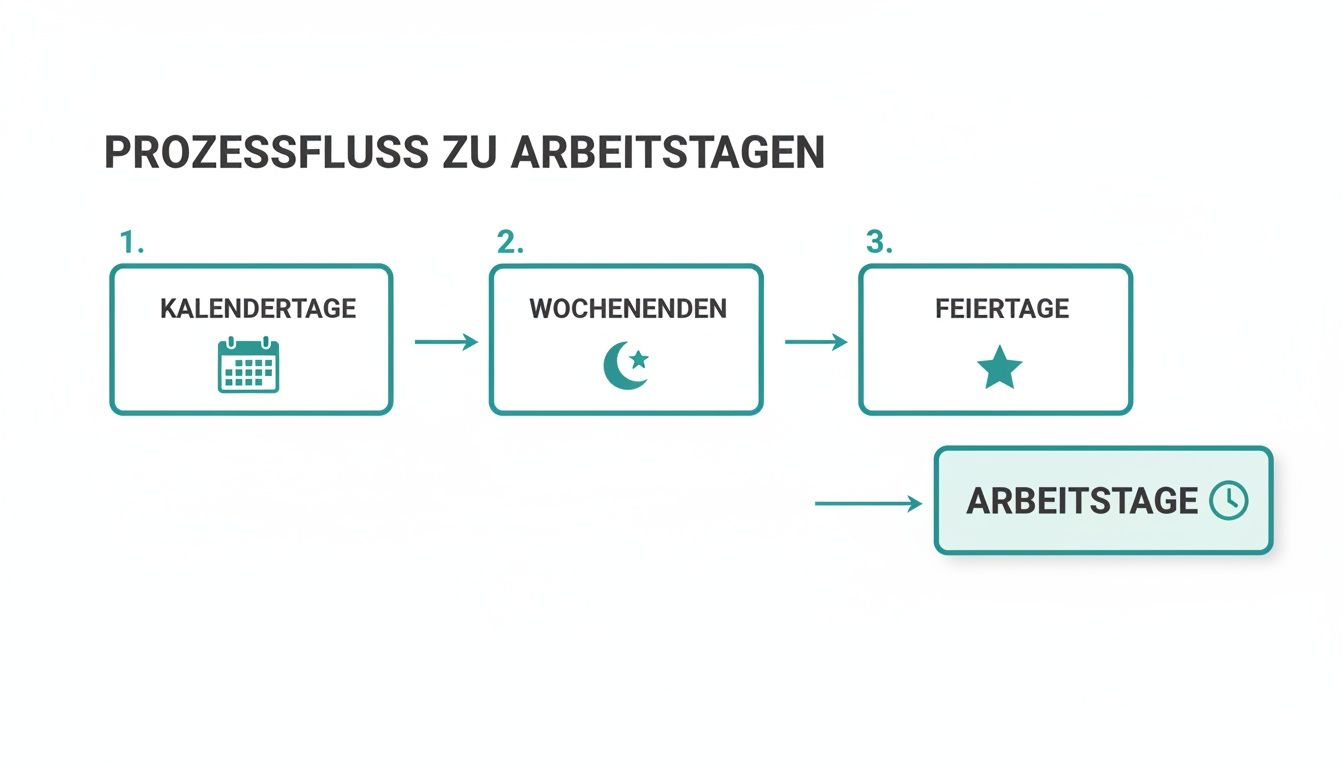
Wie Du siehst, ist der Weg von den Kalendertagen zu den tatsächlichen Arbeitstagen ein simpler Abzugsprozess. Die Feiertage sind dabei der letzte, aber oft entscheidende Schritt.
Nationale und kantonale Feiertage unterscheiden
Gerade in der Schweiz ist das eine besondere Herausforderung. Neben den wenigen nationalen Feiertagen wie dem 1. August gibt es eine ganze Reihe kantonaler Feiertage. Du musst also immer den Kalender Deines spezifischen Kantons zurate ziehen. Eine verlässliche Übersicht findest Du meist direkt auf den Webseiten der kantonalen Verwaltung.
Wichtig ist auch der Unterschied zwischen Feiertagen mit fixem Datum (wie Weihnachten am 25. Dezember) und beweglichen Feiertagen (wie Auffahrt), die immer auf einen Wochentag fallen. Letztere reduzieren garantiert Deine Arbeitstage, während ein Feiertag mit festem Datum auch mal auf einen Samstag oder Sonntag fallen kann und Deine Planung somit gar nicht beeinflusst.
Die jährliche Anzahl der Arbeitstage in der Schweiz schwankt zwischen 250 und 255 Tagen. Das läuft je nach Kanton und Schaltjahr auf etwa 20,8 bis 21,25 Tage pro Monat hinaus.
Feiertage reduzieren diese Zahl natürlich weiter. Im Kanton Zürich beispielsweise kommen so rund 10 zusätzliche freie Tage pro Jahr obendrauf. Diese genaue Planung wird umso wichtiger, als die durchschnittliche Vollzeit-Wochenarbeitszeit stetig sinkt – 2023 lag sie bei nur noch 40 Stunden und 12 Minuten. Mehr Details dazu findest Du in den aktuellen Arbeitszeitstatistiken vom Bundesamt für Statistik.
Die Bedeutung für Deine Personalplanung
Stell Dir vor, Du betreibst ein Restaurant. Korrekt eingeplante Feiertage haben direkte finanzielle Auswirkungen. Arbeit an einem Feiertag bedeutet oft, dass Du gesetzliche oder vertragliche Lohnzuschläge zahlen musst.
- Zuschlagsberechnung: Eine präzise Planung hilft Dir, die Kosten für Feiertagsarbeit korrekt zu budgetieren.
- Personaldisposition: Du weisst genau, wann Du mehr Personal brauchst, und kannst so Engpässe von vornherein vermeiden.
- Brückentage: Die Tage zwischen einem Feiertag und dem Wochenende sind extrem beliebte Urlaubstage. Behalte sie im Auge, um auf eine veränderte Urlaubsplanung im Team vorbereitet zu sein und Deine Ressourcen entsprechend zu steuern.
Eine vorausschauende Planung dieser speziellen Tage hilft Dir, den Betrieb reibungslos am Laufen zu halten und gleichzeitig fair gegenüber Deinen Mitarbeitenden zu handeln.
Sonderfälle wie Teilzeit und Schichtarbeit meistern
Die klassische Fünf-Tage-Woche von Montag bis Freitag ist längst nicht mehr der einzige Rhythmus in der Arbeitswelt. Deswegen musst Du genau wissen, wie Du die Arbeitstage pro Monat auch für Teilzeitkräfte, Mitarbeitende im Schichtdienst oder mit flexiblen Gleitzeitmodellen sauber ermittelst.
Doch keine Sorge, das ist oft einfacher, als es auf den ersten Blick wirkt. Der Schlüssel liegt immer darin, die vertragliche Basis zu verstehen und sie logisch auf den jeweiligen Monat anzuwenden. Ob Teilzeit, Schichtarbeit oder Ein- und Austritte während des Monats – für jeden Fall gibt es eine klare und faire Methode.
Teilzeitmodelle anteilig berechnen
Bei Teilzeitkräften hängt die Berechnung stark vom konkreten Arbeitsmodell ab. Arbeitet jemand an festen Tagen, zum Beispiel immer von Montag bis Mittwoch, ist die Sache ganz einfach: Du zählst die Montage, Dienstage und Mittwoche des betreffenden Monats und hast Dein Ergebnis.
Etwas kniffliger wird es, wenn jemand ein prozentuales Pensum ohne feste Tage hat, sagen wir 60 %. Hier gehst Du am besten schrittweise vor:
- Soll-Tage der Vollzeitkraft ermitteln: Zuerst berechnest Du die regulären Arbeitstage für eine Vollzeitkraft in diesem Monat (z. B. 22 Tage).
- Mit dem Pensum multiplizieren: Danach multiplizierst Du dieses Ergebnis mit dem Teilzeitpensum.
- Ein praktisches Beispiel: 22 Arbeitstage × 0,60 = 13,2 Soll-Arbeitstage.
In der Praxis rechnet man hier oft genauer mit den Soll-Stunden. Das schafft eine präzisere Grundlage, gerade wenn es um die Lohnabrechnung geht.
Schichtarbeit und unregelmässige Pläne
In der Gastronomie, im Gesundheitswesen oder in der Logistik sind unregelmässige Arbeitszeiten die Norm. Hier kann die Anzahl der Arbeitstage von Monat zu Monat stark schwanken. Statt starrer Tagesberechnungen ist der Schichtplan die einzige verlässliche Grundlage.
Der individuell erstellte Dienstplan definiert die Soll-Arbeitstage für den Monat. Die Lohnabrechnung basiert dann auf den tatsächlich geleisteten und im Plan vorgesehenen Schichten.
Eine sorgfältige und vorausschauende Planung ist hier das A und O, um Fairness zu garantieren und den Überblick zu behalten. Umfassende Strategien zur effizienten Schichtplanung helfen Dir dabei, diese Komplexität in den Griff zu bekommen und Dein Team optimal einzusetzen.
Ein- und Austritt während des Monats
Wenn Mitarbeitende mitten im Monat anfangen oder das Unternehmen verlassen, müssen Lohn und Urlaubsansprüche natürlich anteilig berechnet werden. Die Logik dahinter ist simpel: Du zählst einfach die Arbeitstage ab dem Eintrittsdatum bis zum Monatsende oder vom Monatsanfang bis zum Austrittsdatum.
Ein kurzes Beispiel: Jemand tritt am 16. Mai in einem Monat mit 22 regulären Arbeitstagen ein. Ab dem 16. Mai bleiben noch 12 Arbeitstage im Monat übrig. Genau diese 12 Tage bilden dann die Basis für die anteilige Lohnberechnung. So stellst Du sicher, dass alles fair und korrekt abgerechnet wird.
Warum die genaue Anzahl der Arbeitstage den Unterschied macht
Die korrekte Anzahl der Arbeitstage pro Monat zu kennen, ist weit mehr als nur eine bürokratische Übung. Diese eine Zahl ist das Fundament, auf dem einige der wichtigsten Prozesse in Deinem Unternehmen ruhen. Stimmt sie, laufen Gehaltsabrechnung, Personalplanung und Controlling wie ein Schweizer Uhrwerk.
Eine ungenaue Berechnung hingegen ist ein Garant für Chaos. Falsch verbuchte Überstunden, fehlerhafte Urlaubsansprüche oder ungerechte Lohnkürzungen sind oft die direkte Folge – Probleme, die nicht nur teuer sind, sondern auch das Vertrauen im Team untergraben.
Präzision bei der Lohnabrechnung
Die exakte Anzahl der Soll-Arbeitstage ist der Dreh- und Angelpunkt für eine fehlerfreie Lohnbuchhaltung. Hier zählt jeder einzelne Tag, besonders wenn variable Lohnbestandteile oder Sonderfälle ins Spiel kommen.
Stell Dir vor, ein Mitarbeitender tritt mitten im Monat ein oder verlässt das Unternehmen. Nur wenn Du die genaue Zahl der Arbeitstage kennst, kannst Du das Gehalt fair und gesetzeskonform anteilig berechnen. Das Gleiche gilt für die korrekte Verrechnung von Überstunden oder die Bewertung von Ferientagen – eine saubere Datenbasis verhindert hier kostspielige Fehler und schafft die nötige Transparenz.
Effizienz in der Personaleinsatzplanung
Die Soll-Arbeitstage sind die Grundlage jeder vorausschauenden Schicht- und Einsatzplanung. Sie geben Dir schwarz auf weiss vor, wie viele Arbeitstage Du in einem Monat abdecken musst, und ermöglichen so eine Planung, die sich am tatsächlichen Bedarf orientiert.
- Engpässe vermeiden: Du siehst frühzeitig, wann es knapp wird, etwa rund um Feiertage oder in saisonalen Hochphasen.
- Überbesetzung verhindern: Gleichzeitig vermeidest Du, zu viele Mitarbeitende einzuplanen, was unnötig Kosten in die Höhe treibt.
- Faire Arbeitslast schaffen: Eine durchdachte Planung sorgt für eine ausgewogene Verteilung der Arbeit und steigert so die Zufriedenheit im Team nachhaltig.
Eine datengestützte Planung, die auf den korrekten Arbeitstagen basiert, ist der Schlüssel, um Dein Team weder zu überfordern noch brachliegen zu lassen.
Dieser Punkt gewinnt zunehmend an Bedeutung, da sich Arbeitszeiten wandeln. Zwischen 2018 und 2023 sank die wöchentliche Vollzeit-Arbeitszeit in der Schweiz um 46 Minuten auf 40 Stunden und 12 Minuten. Mehr zu diesem Trend und was er für die Arbeitswelt bedeutet, liest Du in diesem spannenden Artikel auf watson.ch.
Klarheit für das Controlling
Im Controlling sind exakte Arbeitstage pures Gold. Sie liefern Dir die harten Fakten, die Du für aussagekräftige Analysen und eine solide Kostenkontrolle brauchst.
Mit diesen Daten kannst Du verlässliche Kennzahlen wie den Umsatz pro Arbeitstag ermitteln oder die Personalkosten pro effektiv geleisteter Stunde analysieren. Das sind genau die Informationen, die Du brauchst, um fundierte Geschäftsentscheidungen zu treffen und die Weichen für den langfristigen Erfolg Deines Unternehmens zu stellen.
Wie clevere Tools Dir die Rechnerei abnehmen
Die Arbeitstage von Hand in Excel-Listen zu jonglieren oder gar auf Papier auszurechnen, ist nicht nur eine Geduldsprobe – es ist auch eine der häufigsten Fehlerquellen in der Personalplanung. Zum Glück gibt es heute smarte Helfer, die Dir diese zeitraubende Aufgabe abnehmen und den ganzen Prozess kinderleicht machen.
Anstatt alles manuell zusammenzusuchen, kannst Du auf bewährte Formeln und spezialisierte Software setzen. So sparst Du nicht nur wertvolle Zeit, sondern vermeidest auch Rechenfehler, die Dich spätestens bei der Lohnabrechnung teuer zu stehen kommen.
Excel-Formeln für den schnellen Überblick
Excel ist ein unglaublich mächtiges Werkzeug, wenn Du weisst, wie Du es richtig anpackst. Statt mühsam Kalendertage zu zählen, kannst Du einfach die eingebauten Funktionen nutzen, um die Arbeitstage pro Monat im Handumdrehen zu ermitteln.
Eine besonders nützliche Formel dafür ist NETTOARBEITSTAGE. Sie berechnet automatisch die Anzahl der Arbeitstage zwischen zwei Daten und lässt die Wochenenden standardmässig aussen vor. Du kannst sogar eine separate Liste mit Feiertagen anlegen und diese direkt in die Formel einbeziehen.
- So geht’s: Gib einfach das Start- und Enddatum des Monats an.
- Feiertage berücksichtigen: Erstelle eine Liste mit allen relevanten kantonalen Feiertagen und verweise in der Formel auf diesen Bereich. Excel zieht diese Tage dann ganz von allein ab.
Auch wenn Excel für einfache Fälle super praktisch ist, stösst es bei komplexen Schichtplänen oder unterschiedlichen Arbeitszeitmodellen schnell an seine Grenzen. Mehr Tipps zur Personalplanung mit Excel findest Du übrigens in unserem weiterführenden Guide.
Professionelle Software für die Einsatzplanung
Für Unternehmen, die einen Schritt weitergehen und ihre Planung wirklich professionalisieren wollen, sind spezialisierte Softwarelösungen die Antwort. Systeme für die Personaleinsatzplanung berechnen nicht nur die Soll-Arbeitstage, sondern nehmen Dir den gesamten Prozess ab – von der Planung bis zur Abrechnung.
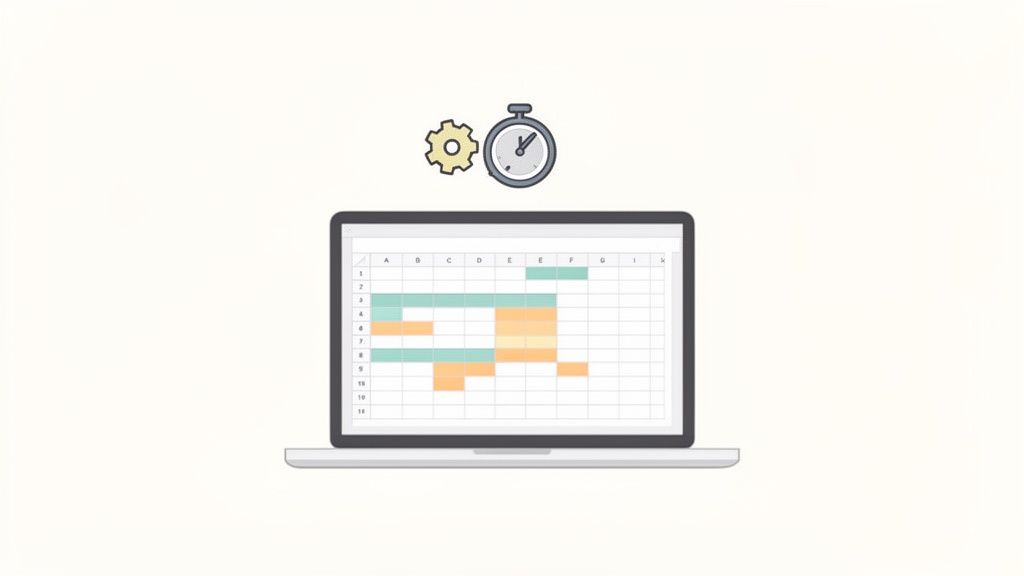
Solche Tools berücksichtigen automatisch kantonale Feiertage, individuelle Arbeitszeitmodelle und jegliche Abwesenheiten. Gerade für Praxen, die ihre Abläufe umfassend verwalten und automatisieren möchten, kann eine spezialisierte Praxissoftware für Ergotherapie die Arbeitszeitplanung und -erfassung massiv vereinfachen.
Diese Systeme reduzieren den administrativen Aufwand drastisch, minimieren Fehler und geben Dir die Zeit zurück, Dich auf das Wesentliche zu konzentrieren: Dein Kerngeschäft.
Wenn du Arbeitstage, Sollstunden und Schichten nicht mehr manuell zusammensuchen willst, buch dir hier eine kurze Demo mit Fabio: https://job.rocks/demo-vereinbaren
Häufig gestellte Fragen zur Berechnung der Arbeitstage
Wenn es um die Berechnung der Arbeitstage pro Monat geht, tauchen in der Praxis immer wieder dieselben Fragen auf. Egal ob für die Lohnabrechnung, die Urlaubsplanung oder die Schichtorganisation – klare Antworten sind hier Gold wert, um Fehler zu vermeiden und für Transparenz zu sorgen.
Hier habe ich die häufigsten Fragen für Dich gesammelt und kurz und bündig auf den Punkt gebracht.
Wie viele Arbeitstage hat ein Monat in der Schweiz im Durchschnitt?
Bei einer klassischen Fünf-Tage-Woche kannst Du in der Schweiz im Schnitt von 20 bis 22 Arbeitstagen pro Monat ausgehen. Für schnelle Kalkulationen hat sich die Faustregel von 21 Arbeitstagen als praktischer Richtwert bewährt.
Wie kommt diese Zahl zustande? Ganz einfach: Du nimmst die gesamten Kalendertage eines Monats und ziehst die Wochenenden sowie die durchschnittliche Anzahl der kantonalen Feiertage ab. Natürlich schwankt die exakte Zahl je nach Monat, Jahr und den spezifischen Feiertagen in Deinem Kanton.
Wie berechne ich Arbeitstage für Teilzeitmitarbeitende?
Für Teilzeitkräfte ist die Berechnung immer anteilig und hängt stark vom Arbeitsmodell ab. Das ist einfacher, als es klingt.
- Feste Arbeitstage: Arbeitet jemand zum Beispiel immer nur montags und dienstags, zählst Du schlicht die Montage und Dienstage im jeweiligen Monat. Simpel und direkt.
- Flexibles Pensum: Bei einem 60-%-Pensum ohne feste Tage wird es rechnerisch. Du nimmst die Soll-Arbeitstage einer Vollzeitkraft (z. B. 22 Tage) und multiplizierst sie mit dem Pensum: 22 Tage × 0,6 ergibt 13,2 Soll-Arbeitstage. Für die Lohnabrechnung ist die Berechnung mit den Soll-Stunden aber oft noch genauer und vermeidet Rundungsfehler.
Welche Rolle spielen Feiertage bei der Berechnung?
Gesetzliche Feiertage reduzieren die Anzahl Deiner Soll-Arbeitstage, aber nur, wenn sie auf einen Wochentag von Montag bis Freitag fallen. Fällt ein Feiertag auf einen Samstag oder Sonntag, hat das für Deine Berechnung keine Auswirkungen.
Ein ganz wichtiger Punkt: Die Feiertagsregelungen sind in der Schweiz kantonal extrem unterschiedlich. Es ist deshalb unerlässlich, dass Du immer den gültigen Kalender für Deinen Firmenstandort zur Hand hast. Nur so stellst Du sicher, dass die Lohnabrechnung und Deine gesamte Personalplanung korrekt sind.
Diese genaue Unterscheidung ist der Schlüssel, um Missverständnisse zu vermeiden und eine faire Grundlage für alle Mitarbeitenden zu schaffen.
Möchtest Du die Berechnung von Arbeitstagen, die Schichtplanung und die Lohnvorbereitung endlich hinter Dir lassen? job.rocks bietet Dir eine integrierte Lösung, die den administrativen Aufwand auf ein Minimum reduziert und Deine Personalprozesse wirklich vereinfacht. Entdecke jetzt die Vorteile von job.rocks.
Häufig gestellte Fragen zu Arbeitstagen pro Monat und Jahr
Wie viele Arbeitstage hat ein Jahr in der Schweiz?
Ein Jahr in der Schweiz hat durchschnittlich 252 Arbeitstage bei einer 5-Tage-Woche (Montag bis Freitag). Die genaue Anzahl variiert je nach Kanton zwischen 250 und 254 Tagen, abhängig von den kantonalen Feiertagen. Für 2026 rechnet man mit 251-254 Arbeitstagen, für 2027 mit 253-255 Arbeitstagen.
Wie berechne ich die Arbeitstage pro Monat korrekt?
Die Berechnung erfolgt in drei Schritten:
- Nimm die Gesamtzahl der Kalendertage des Monats
- Ziehe alle Wochenenden ab (Samstag + Sonntag)
- Ziehe die kantonalen Feiertage ab, die auf Wochentage fallen
Beispiel Januar 2026 (Zürich): 31 Tage − 8 Wochenendtage − 1 Feiertag (Neujahr) = 22 Arbeitstage. Für automatisierte Berechnung empfiehlt sich eine Personalplanungs-Software.
Was ist der Unterschied zwischen Soll- und Ist-Arbeitstagen?
Soll-Arbeitstage sind die vertraglich vereinbarten Arbeitstage pro Monat (Basis für Lohnabrechnung). Ist-Arbeitstage sind die tatsächlich geleisteten Arbeitstage nach Abzug von Urlaub, Krankheit oder Abwesenheiten. Die Differenz ist wichtig für die Berechnung von Überstunden und Urlaubsansprüchen.
Wie viele Arbeitstage hat ein Monat durchschnittlich in der Schweiz?
Im Durchschnitt hat ein Monat in der Schweiz 21 Arbeitstage (bei einer 5-Tage-Woche). Die tatsächliche Anzahl schwankt zwischen 20 und 22 Tagen, abhängig von:
- Monatslänge (28-31 Tage)
- Anzahl der Wochenenden (4-5 pro Monat)
- Kantonalen Feiertagen, die auf Wochentage fallen
Wie berechne ich Arbeitstage bei Teilzeit?
Bei Teilzeit berechnest du die Arbeitstage proportional zum Pensum. Formel: (Vollzeit-Arbeitstage × Pensum) ÷ 100.
Beispiel: Ein Monat hat 21 Vollzeit-Arbeitstage. Bei 60% Pensum: 21 × 0,6 = 12,6 Arbeitstage. Für flexible Arbeitsmodelle nutzt du am besten eine Einsatzplanungs-App, die Teilzeit-Pensen automatisch berechnet.
Welche Kantone haben die meisten Arbeitstage pro Jahr?
Kantone mit den wenigsten Feiertagen haben die meisten Arbeitstage. Das sind typischerweise Zürich, Bern, Aargau und andere deutschsprachige Kantone mit 9-10 Feiertagen pro Jahr (ca. 252-253 Arbeitstage). Kantone mit mehr Feiertagen wie Genf, Tessin oder katholisch geprägte Kantone haben 250-251 Arbeitstage.
Wie plane ich Arbeitstage für Schichtarbeit und flexible Teams?
Für Schichtarbeit und flexible Teams ist eine digitale Planung essentiell:
- Nutze eine Schichtplan-Software statt Excel
- Berücksichtige Soll-Arbeitstage pro Mitarbeiter (inkl. Teilzeit-Pensen)
- Plane Pufferzeiten für Ausfälle ein (Krankheit, Urlaub)
- Automatisiere die Verfügbarkeits-Abfrage über eine Mitarbeiter-App
So stellst du sicher, dass alle gesetzlichen Vorgaben eingehalten werden und dein Team optimal ausgelastet ist.
Was passiert wenn ein Feiertag auf einen Sonntag fällt?
Fällt ein Feiertag in der Schweiz auf einen Sonntag, gibt es in der Regel keinen Kompensationstag. Der Feiertag „verfällt” praktisch, da der Sonntag ohnehin bereits arbeitsfrei ist. Das unterscheidet die Schweiz von manchen anderen Ländern. Einzige Ausnahme: Einige Unternehmen gewähren freiwillig einen zusätzlichen freien Tag, wenn wichtige Feiertage wie Weihnachten oder Neujahr auf ein Wochenende fallen – das ist aber nicht gesetzlich vorgeschrieben.