
Digitising HR processes for Swiss SMEs
Digitising HR processes means replacing manual, time-consuming tasks with suitable software for time tracking, shift planning, applicant management and clear workflows for everyone.
Digitalizing HR processes – what does that actually mean? It's simple: you swap manual, time-consuming tasks against suitable software. Instead of digging through piles of paper, you can do time recording, shift planning or applicant management with just a few clicks. The result? More time for what really matters – looking after your team – and at the same time clear, fair processes for everyone.
Why digital HR processes are indispensable today
Imagine the typical chaos of shift planning in a restaurant: You're juggling Excel lists, countless WhatsApp messages about availability and handwritten notes. This is not only tedious, but a ticking time bomb for errors. One wrong entry and you'll find yourself without staff on the most important evening shift.
Digitalization replaces this chaos with a clear, reliable system. An employee enters her availability directly in an app. You can immediately see who can work when and with just a few clicks you can create a fair plan that is automatically sent to the entire team.
More than just a little time saving
Switching to digital operations is not just a convenience, but a tough business decision. Manual tasks eat up valuable energy that could be better used for the further development of your team or improving the working atmosphere.
Think about it: every minute you don't spend looking for a timesheet or correcting a scheduling error is a minute you can invest directly in your employees. This is exactly what strengthens the bond and satisfaction within the team.
Swiss companies have long recognized this. A current study shows that around half of the companies in the DACH region - including 30 percent from Switzerland – invest specifically in digital HR projects. They want to strengthen their human resources departments and respond nimbly to a constantly changing market environment. If you are interested in the details, read more about the study on the role of HR as a strategic partner and discover further insights.
Concrete benefits that you immediately feel in your everyday life
Switching to digital HR processes brings tangible improvements that go far beyond time savings. Not only do you reduce the administrative burden, but you also create a much more solid foundation for your entire human resources management.
Here are the advantages that become noticeable most quickly in practice:
- Fewer errors, less stress: Automated time recording and wage preparation prevent number transposition and calculation errors, which are virtually inevitable with manual transmission.
- Crystal clear communication: All important information such as shift schedules, working hours and vacation requests are accessible to everyone in one central location. No more misunderstandings caused by outdated notices or email chains.
- Real-time workforce planning:Instead of waiting for feedback, you see availability live. If someone is absent at short notice, you can find suitable and qualified employees for the open shift with just one click.
- Happier employees: If your team can easily view working hours via the app, easily swap shifts or request vacation, they will feel valued. This little independence makes a huge difference.
Find the right starting point for digitalization
The biggest hurdle in the digitalization of HR processes is often not that Whether, but that Where. The thought of changing everything at once quickly seems overwhelming and is rarely the right way. My practical tip: start where the shoe pinches the most.
Ask yourself honestly: What task takes up the most time for you and your team each week? Where do the same annoying mistakes keep happening? These are exactly your perfect starting points.
Target time wasters and sources of errors
In many companies, the usual suspects quickly emerge - especially in busy industries such as event catering, healthcare or security services. This refers to processes with many manual steps and a high level of communication effort.
Take a close look at these three areas:
- Availability queries: The absolute classic. You send emails, SMS or WhatsApp messages around and try to make a plan out of a mass of answers. This is not only incredibly time-consuming, but also constantly leads to misunderstandings.
- Shift planning: Based on the painstakingly collected feedback, you create a plan in Excel. If a last-minute change happens, you start over again and have to inform everyone again. A bottomless pit.
- Hour recording and wage preparation: At the end of the month you collect timesheets - often illegible, incomplete or too late. Any error when transferring data to payroll accounting not only costs you time, but also nerves and can quickly lead to dissatisfaction in the team.
This infographic shows the path from such manual, error-prone processes to strategically aligned HR management.
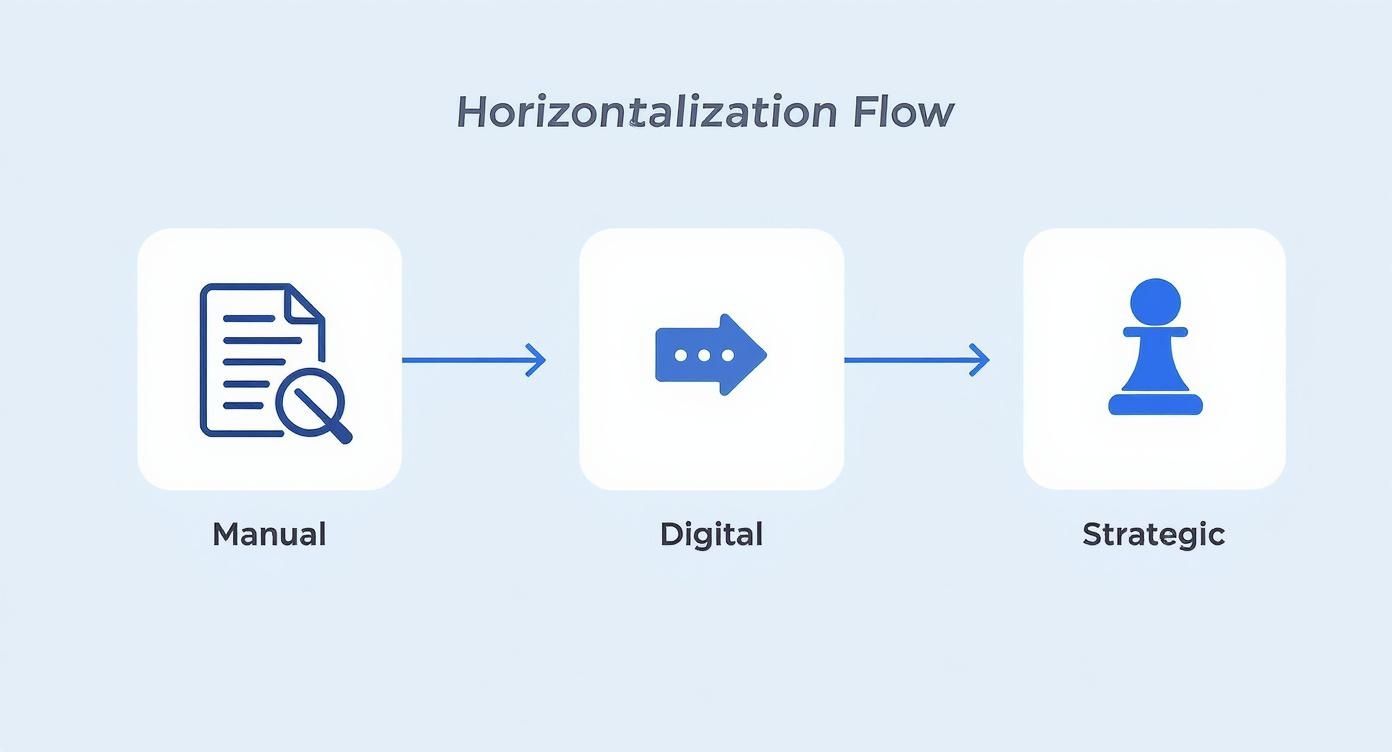
The presentation makes it clear: digitalization is not a one-off project. It is a development that gives you operational freedom so that you finally have time for strategic tasks again.
Develop a clear roadmap
A planned approach is key. In Switzerland, over half of the companies are already using digital HR technologies, but a surprising number still do not have a clear plan. According to the HR Benchmarker Switzerland 2024 54 percent of companiesdoes not yet have a comprehensive digital strategy for the HR area. In order not to lose touch here, a structured approach is necessary. Also take a look at HR trends 2025 to understand the importance of a well-thought-out strategy.
Your roadmap doesn’t have to be complicated. It is simply a clear sequence of steps that contribute to your specific goals. Start with the process that causes the most pain and promises the quickest benefit.
A hotel business could, for example, start with digital shift planning in order to finally get the chaos of vacation and duty planning under control. An event agency, on the other hand, perhaps benefits most from a quick availability query in order to be able to react to new orders at short notice.
Realistically assess the costs and benefits
In order to make an informed decision, a simple comparison helps. Take a process and answer these questions as specifically as possible:
- How much manual effort is there today?
- Practice check: How many hours do you spend per month collecting, checking and preparing timesheets for payroll? Extrapolate that to a whole year. The result is often shocking.
- What direct costs does the process cause?
- Practice check: How much does it cost you to print plans or constantly follow up by phone? Even these small amounts add up.
- Which mistakes happen regularly and what are the consequences?
- Practice check: Do errors in time recording lead to incorrect payslips? This causes dissatisfaction and requires complex, embarrassing corrections.
- What benefit would a digital solution have?
- Practice check: Imagine an app in which employees enter their own hours. The administrative effort is reduced to a minimum and the correct data is immediately available for payroll accounting.
By going through these points for your most urgent HR tasks, you will quickly see where the leverage is greatest. This ensures that you invest your energy and budget exactly where it is most worthwhile.
Prioritization of HR processes according to effort and benefit
The following table should help you make your decision. It shows at a glance where switching to a digital solution will pay off most quickly.
| HR process | Typical manual effort (per month) | Potential benefits of digitalization | Priority (recommendation) |
|---|---|---|---|
| Availability query | 5–15 hours (depending on team size) | High: Massive time savings, quick response to inquiries, fewer errors. | Very high |
| Shift & deployment planning | 10-30 hours (Excel planning, changes) | Very high: Transparency for everyone, flexible adaptation, fewer questions. | Very high |
| Time tracking | 8–20 hours (collect & check timesheets) | Very high: Error-free data, immediate availability, GDPR compliant. | Very high |
| Payroll preparation | 5-10 hours (data transfer, corrections) | High: Seamless connection, 100% correct data, less stress at the end of the month. | High |
| Training new employees | 3–5 hours (documents, master data) | Means: Professional impression, all data immediately in the system, less paperwork. | Means |
| Qualifications management | 2–6 hours (check certificates, licenses) | Means: Overview of skills, targeted planning, automatic reminders. | Means |
This prioritization is of course a recommendation. The order may look different in your company. It is important that you tackle the process with the greatest “pain-to-benefit ratio” first.
Select the right software and implement it successfully
So, the priorities are there. Now it’s time to get down to business: choosing the right tools. The market for HR software is huge and, to be honest, quite confusing. Many solutions promise hope, but everyday life quickly reveals what really works and what just looks good. Your task is to find exactly the software that solves your previously defined problems - without any bells and whistles.
A mistake I see again and again: you allow yourself to be blinded by an ever-long list of functions. You don't need an overloaded system whose functions you never use. Focus hard on the tools that eliminate your biggest time wasters. This is something completely different for an event service provider than for a nursing home.
Your list of requirements as a compass
Before you visit a single provider's website, do your homework. Create a tough list of requirements. This is your compass that will guide you safely through the provider jungle. This list should not only include technical functions, but also very practical aspects of daily work.
The key to a good requirements list is to think from the problem, not the function. Instead of writing down “We need an app,” put it this way: “Our employees need to be able to record their working hours on the go using their smartphone, even if they don’t have network reception.”
This is the only way to ensure that the solution ultimately actually solves your everyday problem.
Must-have features checklist
These points belong on every list. Check with each potential provider whether and how well they meet these requirements.
- Simple User Interface: Can employees with less technical experience use the tool without hours of training? Intuitive operation determines acceptance within the team. This is not a “nice-to-have” but a must-have.
- Mobile availability: Is there a clean, native app for iOS and Android? A reliable mobile application is crucial, especially for teams that are constantly on the move.
- Qualification filter: When planning your workforce, can you specifically look for employees with specific skills? This is absolutely crucial, for example, in the healthcare sector for shift staffing or in the event sector for technicians.
- Interface to payroll accounting: Is there a direct connection to common wage programs such as Abacus or Say? Seamless data transfer avoids errors and saves an incredible amount of time and stress at the end of the month.
- Automated communication: Does the system automatically notify employees about new shifts, changes or important information via push notification? This reduces your communication effort enormously.
The path to a successful introduction
Choosing the right software is only half the battle. The introduction process is at least as important. A rushed introduction without proper planning almost always leads to confusion, data loss and frustrated employees.
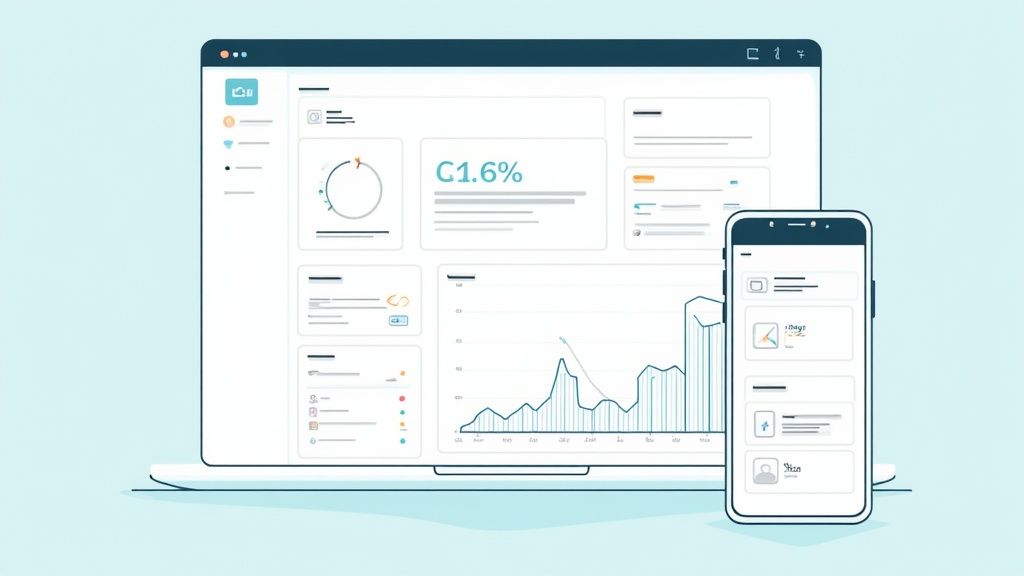
A good example from practice: A catering company from Zurich, a typical Swiss SME, did this in an exemplary manner. Instead of the new software for everyone overnight 80 employees To unlock it, they started with a small pilot project. They chose a single department with 10 people and tested the digital time recording and shift planning for a whole month. During this time, they collected valuable feedback, adjusted the settings and were able to clarify the most frequently asked questions before the big rollout came.
Data transfer without stumbling blocks
Adopting existing data is a critical moment. After all, you don’t want to manually re-enter all employee master data, employment contracts or accumulated overtime. That would be crazy.
Be sure to clarify these points with the software provider before Conclusion of contract:
- Which data formats are supported for import? Can you simply upload existing Excel lists or are you faced with a laborious manual transfer?
- Who will support you with data migration? Does the provider offer personal support or are you on your own and have to fight your way through dry instructions?
- How is the correctness of the data ensured? After importing, is there a way to systematically check the data before going live with the system?
A smooth start depends largely on a clean database. Take enough time for this, it will pay off twice or threefold later. The orderly distribution and setup of the software on the devices is also crucial. To understand this process, you can learn about variousSoftware distribution solutions inform. This will ensure that the new application is installed correctly and securely on all devices.
Winning your team for change
You've found the perfect software, your processes are well thought out - but the most important part of the journey is still ahead of you. Because the best technology is absolutely worthless if your team doesn't accept it and actively use it. In the end, the human factor always decides whether you are successful or not Digitize HR processes want. This is exactly where the real work begins.
Change often creates uncertainty or even resistance. This is a completely normal human reaction. Your job as a manager is to take these concerns seriously from the start and actively involve your team in the change. It's about turning those affected into participants.
Communicate transparently from the start
The biggest mistake you can make is presenting your employees with a fait accompli. Communicate early, openly and, above all, honestly. Don't just explain what changes, but above all, why this change is necessary.
Show the advantages for each individual in concrete terms. Instead of talking about abstract goals like “increasing efficiency,” translate the benefits directly into your team’s everyday work.
- For the service employee in the restaurant: "No more back and forth via WhatsApp. You enter your availability directly into the app and immediately see the finished shift schedule on your cell phone - fair, transparent and always up to date."
- For the nursing staff in the hospital: "The tedious paperwork involved in time recording is over. You simply clock in and out using the app and your overtime hours are recorded correctly and to the second. No more stress at the end of the month."
- For the project manager in the event agency: "You can see live which freelancers are available and what qualifications they have. This means you can respond to customer inquiries at lightning speed and put together the perfect team."
This direct, benefit-oriented communication creates understanding and breaks down the first major hurdle.
Take concerns seriously and manage resistance wisely
Resistance is rarely a sign of lack of loyalty, but is often an expression of concern. Perhaps older employees are afraid of not being able to cope with the new technology. Others fear more control from the system or worry that their previous work will become redundant.
Actively address these concerns. Organize an open question and answer session where everyone can voice their concerns without fear of repercussions. Fears are often resolved with a simple explanation or by showing a practical solution in the system.
Ignored concerns only simmer underground and can slowly poison the acceptance of the entire project. A proactive and appreciative approach to this is crucial.
Gain important opinion leaders as supporters
There are key people in every team. These are not always the official managers, but often experienced colleagues whose judgment is highly valued by others. Identify these “champions” and get them on board as early as possible.
Involve them in the testing phase of the new software. Give them the feeling that they really have a say in the process. When these respected team members buy into the new processes, they become your most important advocates. They can address other people's concerns on an equal level - often much more effectively than you ever could as a boss.
Practice-oriented training instead of dry theory
Forget hour-long PowerPoint presentations. Your training courses must be based directly on the workplace, be practical and maybe even a bit fun.
- Make it playful: Have the teams create fictitious shift schedules in small groups or chase vacation requests through the new system.
- Offer individual help: Not everyone learns at the same pace. Schedule regular office hours for those who need a little more support or a personal explanation.
- Create short video tutorials: Small, understandable videos on the most important functions (“How do I enter my absence?”) are often more helpful than any thick manual.
The key is to create a safe environment where questions are welcome and mistakes are allowed to be made. A study by the Institute for Employment and Employability (IBE), in which Swiss managers were also involved, has shown: Targeted leadership and the genuine involvement of employees are crucial to shaping change successfully and humanely. You can find out more about this in HR Trends Report 2025. In the end, successful digitalization is always a team effort.
Ensure data protection in accordance with Swiss law
If you have your Digitize HR processes If you want to, you are entering a particularly sensitive field. HR data is not just information - it is the trust that your employees place in you. Therefore, data protection, especially compliance with the new data protection law (nDSG) in Switzerland, is an absolute priority.
The smallest mistake can not only be costly, but can also permanently damage the relationship of trust with your team. It's about designing your digitalized processes right from the start so that they are not only practical but, above all, legally secure.
The right server location as a foundation
It all starts with a fundamental decision: Where is the data located? Choosing your software provider is the first and perhaps most important step here. A provider that verifiably operates its servers in Switzerland or at least in the EU gives you a solid basis.
Why is this so important? Data stored outside this jurisdiction is often subject to other, less stringent data protection laws. This can quickly lead to significant legal complications. A server location in Switzerland ensures that your data is protected by the nDSG.
A Swiss server location is more than just a technical information. It is a clear commitment to protecting your employees' sensitive data and a crucial criterion for compliance with the law.
To truly understand the requirements, a basic knowledge of how providers process data is essential. For example, you can general data protection guidelines information in order to get a better feel for the topic.
Control access permissions precisely
Not everyone in the company is allowed to see everything. This sounds obvious, but in practice it is one of the most common sources of error. A modern HR system must allow you to define access rights down to the smallest detail.
A classic example from the hospitality industry: A restaurant manager needs to be able to view and edit his team's shift schedules and working hours. However, he definitely does not need access to the pay slips or illness certificates of employees from another branch.
A precise role and rights concept ensures that employees only the information that is absolutely necessary for you see. This not only protects privacy, but also significantly minimizes the risk of data misuse.
Indispensable: the order processing agreement (AVV)
As soon as you commission an external service provider - such as a software provider - to process personnel data, a Order processing agreement (AVV) required by law. This document is not just a formality, but your legal backbone.
The AVV clearly regulates the rights and obligations between you (the controller) and the provider (the processor). It ensures that the provider only processes the data according to your instructions and in accordance with legal requirements. A reputable partner will proactively present this contract to you.
Checklist for data protection in HR software
Use this table to separate the wheat from the chaff when selecting your software. It summarizes the most important criteria that a solution must meet in order to digitize your HR processes in compliance with data protection regulations.
| requirement | Description | Status (Yes/No/Under review) |
|---|---|---|
| Server location Switzerland/EU | Is all personal data guaranteed to be stored in Switzerland or the EU? | |
| Order processing agreement (AVV) | Does the provider provide an nDSG-compliant AVV? | |
| Roles & rights concept | Can you specify in detail who is allowed to see and edit which data? | |
| Data encryption | Is the data encrypted both in transit and at rest? | |
| Logging of accesses | Is it logged who accessed which data and when? | |
| Extinguishing concept | Is there a function to comply with legal retention and deletion periods? |
These points are non-negotiable. Software that shows weaknesses here represents too great a risk for your company. In the end, data protection is not an optional extra, but the foundation for trustworthy and future-proof HR work.
Measure the success of your digital HR processes
You invested, trained your team and introduced the new processes. But how do you know if all the effort was really worth it? If you have your Digitize HR processes now comes the crucial step: to provide tangible proof of success. It's about replacing gut feeling with clear numbers.
Forget complicated analysis. It is often the simple but even more meaningful key figures that show the biggest difference. This data not only helps you to prove the value of your investment to management, but also to uncover further weak points in the process and make targeted improvements.
Concrete key figures that really count
Focus on metrics that directly reflect change. Very important: Before you start, you should record the current status. This is the only way you will have a real comparison value later.
Here are three simple but extremely effective metrics from practice:
-
Reduction of administrative effort: Stop the time you or your team spends each month on routine tasks like manually scheduling shifts or transferring work hours to payroll. Compare this value after three months with the new, digital process. The result is often a real eye-opener.
-
Error rate in payroll accounting: Before digitalization, how many corrections did you have to make to payroll statements per month because timesheets were transferred incorrectly? Count the cases and compare them with the new, automated billing preparation. Every mistake avoided not only saves time, but also nerves.
-
Speed of filling vacancies: Measure the time from when a short-term shift is advertised until an employee is finally accepted. Especially in industries such as event catering, quick filling can be crucial to the success of an order.
A simple cost-benefit calculation makes success immediately tangible. Compare the monthly software costs with the value of the hours saved. If your HR manager before 20 hours per month spent on manual planning and now only 5 hours needed, you have 15 hours gained valuable working time. Multiply that by his hourly wage and the result is usually pretty impressive.
Collect data and use it for improvements
The data collected is much more than just proof of success. They are your map for the future. Analyze where the greatest progress has been made and where there may still be problems.
You may notice that digital time tracking is working great, but you still get a lot of questions via email when planning your vacation. This is a clear signal that you should perhaps create a short video instruction or offer another, targeted training course.
By consistently measuring and evaluating your metrics, you can gradually transform your HR department from a reactive administrative unit into a proactive, data-driven area that creates strategic added value for the entire company.
The most frequently asked questions from practice about HR digitalization
Here we clear up the typical questions that we come across again and again in consultations. So that you know what to really expect when you do your... Digitize HR processes If you want, let's get to the heart of the most important points.
How long does it really take to introduce new HR software?
Of course, this depends heavily on the scope, but the purely technical side is usually the smallest part - it can often be done in an afternoon. The real work lies elsewhere: in the preparation. You have to prepare your data cleanly, clearly define the new processes and, above all, get your team on board and train them.
For an SME that initially focuses on time recording and shift planning, you should be realistic four to eight weeks count – from the final decision until everything runs smoothly. A good tip from practice: Start with a small pilot project in a department. This speeds up the entire process enormously and helps to quickly eliminate teething problems.
Is my employee data really safe in the cloud?
We hear this concern often, and it's completely understandable. But in most cases it is unfounded - as long as you choose the right partner. Reputable providers with server locations in Switzerland or the EU are subject to tough data protection laws such as the nDSG.
Pay attention to certifications and take a close look at how transparent the provider is when it comes to data security. Your data is often even better protected in a professional data center than on your own server in the office, because specialists there focus exclusively on security around the clock.
How much does the digitalization of my HR processes cost me?
The costs can vary greatly. Most modern providers work with a subscription model where you pay per employee per month. Prices often start at just a few francs per person, depending on the range of functions.
But remember: software costs are only one side of the coin. What you really need to consider is the massive time savings in administration, the error costs you avoid, and the noticeably higher satisfaction in the team. The investment usually pays off faster than you think.
Do I need my own IT department to handle all of this?
No, and that is the big advantage of modern cloud solutions. You don't need any deep IT knowledge. The provider takes complete care of maintenance, annoying updates and security. The only important thing is that you have one person in the team who is in charge - i.e. who acts as the main contact for the software and coordinates the introduction.
Are you ready to finally make your personnel planning simple and efficient? job.rocks is a comprehensive platform that was developed precisely for the challenges of companies with flexible teams - from the uncomplicated availability query to the finished wage preparation.
Discover now how you can save time and optimize your processes with job.rocks