
The future of the gig economy: job.rocks as the new standard for flexible work
The gig economy is becoming more digital and demands smart tools. Discover how job.rocks, as the new standard for flexible work, simplifies your workforce planning and removes administrative barriers.
Meta Description: The gig economy is becoming more digital and requires clever tools. Discover how job.rocks, the new standard for flexible working, simplifies your personnel planning and breaks down administrative hurdles.
The future of the gig economy is digital, fast and requires intelligent tools. Right here sets job.rocks as a new standard for flexible workingon. Our platform is the central answer to the complex needs of companies and gig workers - it increases your work performance and breaks down administrative hurdles.
Understanding a new era of work
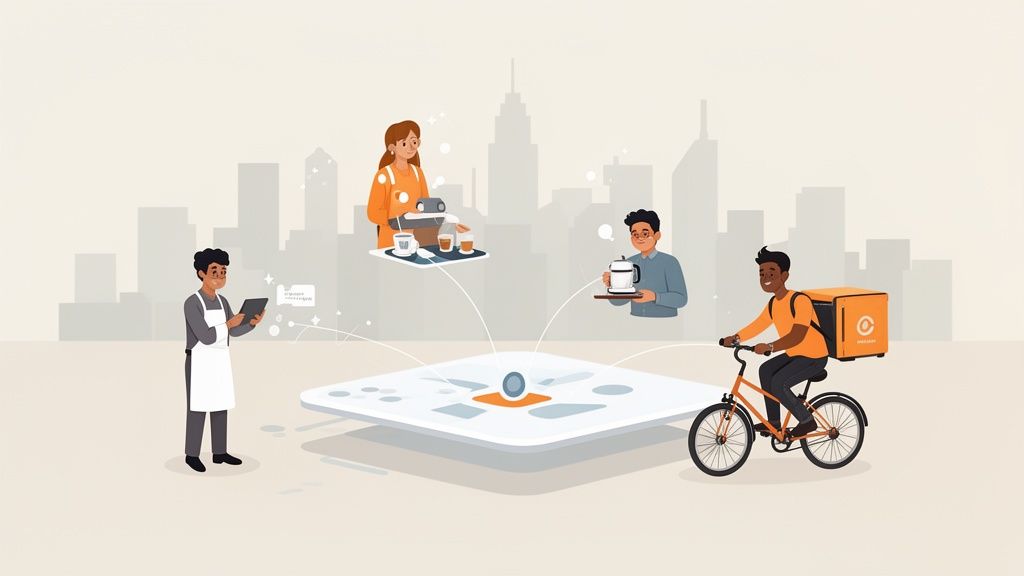
We are in the middle of a job market that is changing rapidly. The classic 9-to-5 job is increasingly making room for flexible, project-based work. This development, known as the gig economy, is no longer a distant vision of the future, but has long been a reality in many industries.
Why flexible working is becoming more important
There are solid reasons for this change. On the one hand, more and more people are looking for a better work-life balance and more autonomy in organizing their working hours. On the other hand, companies need to become more agile in order to be able to react to unpredictable market fluctuations.
Imagine an event management company that needs to mobilize hundreds of employees at short notice for a large summer festival. Or think of a restaurant whose staffing needs suddenly explode on sunny weekends. In such moments, traditional employment models are simply too rigid and too slow.
The gig economy builds a bridge between short-term needs and available workers. It gives companies the ability to scale quickly while workers enjoy the freedom to choose their own assignments.
In order to understand the different facets of this new working world, it is also worth taking a look at the concept of digital nomadism, which takes this development to the extreme.
The challenges of the new working world
But this newfound flexibility also brings with it completely new challenges. Managing a large, decentralized pool of employees can quickly become an ordeal. You may know the typical problems from your own experience:
- High administrative effort:An endless back and forth of emails, calls and Excel spreadsheets just to coordinate availability and shifts.
- Lack of transparency:Who is actually qualified, who is available and who has already confirmed which shift? The overview is quickly lost.
- Legal uncertainties:Correctly recording working hours and complying with regulations such as the GDPR suddenly become unnecessarily complicated.
This is exactly where a platform like job.rocks comes in. It was developed to remove precisely these administrative hurdles and to offer a modern solution for controlling flexible employee pools. Instead of sinking into chaos, you benefit from crystal-clear structures and automated processes. You can find out more about them in our further article Benefits of Flex Workand how you can use them specifically for your company.
What is really driving change in the labor market
You may be wondering why flexible working is suddenly such a huge issue. The answer is simple: This is not a short-lived trend, but a direct and logical reaction to profound changes that are currently happening in the Swiss labor market. The traditional employment models are simply reaching their limits.
The overall economic climate has cooled noticeably. Many companies act more cautiously and hesitate to make long-term personnel commitments if the order situation fluctuates from month to month. It is precisely this uncertainty that is the strongest driver of the demand for flexible workers.
The pressure on companies and employees is growing
The dynamics of the Swiss labor market are currently changing fundamentally and are making flexible solutions such as the gig economy a necessity for many. So the unemployment rate is up 3.1 percentincreased while the number of applications per position increases. This changes the rules of the game: employers have a larger pool to choose from, and job seekers have to be more adaptable.
It is becoming more difficult, especially for older job seekers, to quickly find permanent employment again - a clear sign that the classic models no longer suit everyone. More about the You can find economic forecasts for Switzerland on srf.ch.
This development is further exacerbated by a gradual but steady reduction in jobs in many companies. Instead of mass layoffs that attracted much attention in the media, many companies cut jobs in a trickle.
The result is an underlying but widespread job fear among the workforce. Fixed contracts no longer offer the perceived security that they once did.
Against this background, platforms like job.rocksincreasingly important. They give you the opportunity to cover your personnel needs quickly and accurately without having to commit to a long-term commitment.
Cushion seasonal peaks and unexpected orders
Industries such as catering, event services or logistics are inherently volatile. Here, the need for personnel can explode from one day to the next - or collapse again.
Imagine a catering company unexpectedly being awarded the contract for a huge wedding. Or think of a logistics center that suddenly has to handle twice the amount of packages during the Christmas season.
- Quick response:You must be able to find qualified staff within a short period of time.
- No long-term commitment:After the order or the end of the season, demand returns to normal. Permanent settings would simply be uneconomical here.
- Specialized Skills:Very specific qualifications are often required for such short assignments - for example service staff with banquet experience or forklift drivers with a valid license.
The ability to react flexibly to such peaks is no longer a nice extra, but a tough competitive advantage. A permanent workforce alone can no longer cope with these fluctuations.
The desire for autonomy is changing the world of work
But change doesn't just come from companies. There is also a clear push for more self-determination and flexibility on the part of employees. Many, especially the younger generations, no longer feel like living their entire lives according to a rigid 9 to 5 rhythm.
You want to get a better balance between work and private life, work on various projects or further your education at the same time. The gig economy offers them exactly this freedom.
These two big forces – economic pressure on companies and the desire for autonomy in the workforce – are the real drivers behind the Future of the gig economy. They create an environment in which flexible working models become the new normal. An intelligent tool to manage this new world of work is therefore not a luxury, but a necessity.
Typical hurdles when managing flexible teams
Flexible teams sound like a modern and agile solution, but let’s be honest: implementing it in practice is often anything but easy. Anyone who relies on gig workers faces very specific problems that can quickly slow down well-established processes. Managing flexible workforces often turns out to be an unexpectedly large waste of time.
The administrative effort literally explodes. You're probably familiar with it: countless emails and endless telephone chains just to find out who is available when. In addition, there are manual shift schedules in confusing Excel lists and error-prone time recording on pieces of paper that have to be laboriously compiled at the end of the month.
Organized chaos in practice
Imagine you are organizing a large open-air concert. In the short term you need 50people serving drinks, 20for admission control and 10for construction. A few days before the event, a third of the planned staff called in sick. And now the stress begins: Who can step in? Who do you still reach?
This example is commonplace in the event industry. Without a central system, you'll lose valuable hours on hectic phone calls instead of concentrating on the actual event. Manual coordination quickly becomes uncontrollable chaos.
- Availability ping pong:You send a request via WhatsApp group and receive dozens of uncoordinated responses at completely different times.
- Missing qualification overview:You don't know at a glance who has the necessary certificates for certain tasks - for example a hygiene certificate for the catering industry.
- High risk of errors:When manually transferring data into Excel tables or payroll programs, errors quickly creep in, which later cause real trouble during billing.
These operational difficulties not only cost time and nerves, but also money. Every hour you spend on administration is not available to support your customers or develop your business.
The biggest danger of manual processes is that they directly affect the quality of your service. If unqualified staff steps in at short notice or shifts remain unfilled, your reputation will suffer.
A clever software solution can make the crucial difference here. Not only does it take the manual work off your hands, it also ensures that the right person is always in the right place at the right time. The following table shows exactly where the pain points are and how an automated system can help.
Comparison of manual planning vs. job.rocks
This table shows the differences between traditional, manual workforce planning and using a specialized platform like job.rocks.
| Process step | Manual method (e.g. Excel, email) | Automated solution with job.rocks |
|---|---|---|
| Check availability | Awkward calls, confusing WhatsApp groups, long waits for answers. | Employees maintain availability themselves. The system immediately shows who is available. |
| Shift staffing | Manual allocation, often on a first come, first served basis, without a qualification check. | Intelligent, filter-based allocation. Shifts are automatically filled with suitably qualified personnel. |
| Communication | Chaotic communication across different channels (email, SMS, telephone). Information is lost. | Centralized communication via the platform. Everyone has the same level of information. |
| Time tracking | Error-prone timesheets, manual transfer of data into Excel lists. | Digital, second-accurate time recording via app. Data is immediately available for payroll accounting. |
| Compliance & Reporting | Laborious gathering of data. High risk of overlooking legal requirements. | Automated, complete documentation. Reports and evidence at the touch of a button. |
The comparison makes it clear: manual processes are not only inefficient, but also risky. Automation like job.rocks not only saves time, but also professionalizes the entire process and minimizes sources of error.
Legal pitfalls and compliance risks
In addition to the purely organizational problems, there are also legal pitfalls. The correct management of personnel data is now more strictly regulated than ever before. Especially those General Data Protection Regulation (GDPR)sets clear requirements for the handling of sensitive information.
Maintaining employee lists in insecure Excel files or sending personnel data via unencrypted channels can result in severe fines. Correct recording of working hours and punctual billing are also important in order to be on the safe side legally. These administrative details are crucial to long-term success. Many companies are therefore looking for a suitable one Software for short-term shift staffingthat automates and secures these processes.
Manual administration makes it almost impossible to ensure complete documentation. In the event of an audit by authorities, there is often no evidence that all legal requirements have been complied with. You cannot and should not take this risk.
How job.rocks really makes your personnel planning easier
You know the game: countless Excel lists, endless phone calls and the constant uncertainty as to whether there will actually be enough people for the shift at the end. Manual planning is a real brake. This is exactly where we start. Forget the chaos - job.rocks is the central tool we developed specifically for the dynamics of the gig economy to fundamentally change your workforce planning.
Imagine you are organizing a large music festival and need hundreds of helpers at short notice. Instead of calling everyone individually, you create a single request in job.rocks. You then send these specifically to your entire employee pool or just to certain groups.
Targeted inquiries instead of mass emails
With our intelligent filters, your request only ends up with the right people. Do you need staff with a driving license for the shuttle service? Or service staff who know how to mix a good cocktail? No problem. You select the necessary qualifications and the system only invites the right candidates.
Your employees receive the request directly via the app on their smartphone and can accept or decline with one click. On your dashboard you can see in real time who is available and who has already accepted the shift. This means you can fill vacancies in minutes instead of hours.
The heart of job.rocks is speed. You convert hours of administrative effort into just a few targeted clicks and remain in full control at all times.
Traditional workforce planning is a well-known bottleneck consisting of time-consuming steps such as availability queries, actual planning and tedious time tracking.
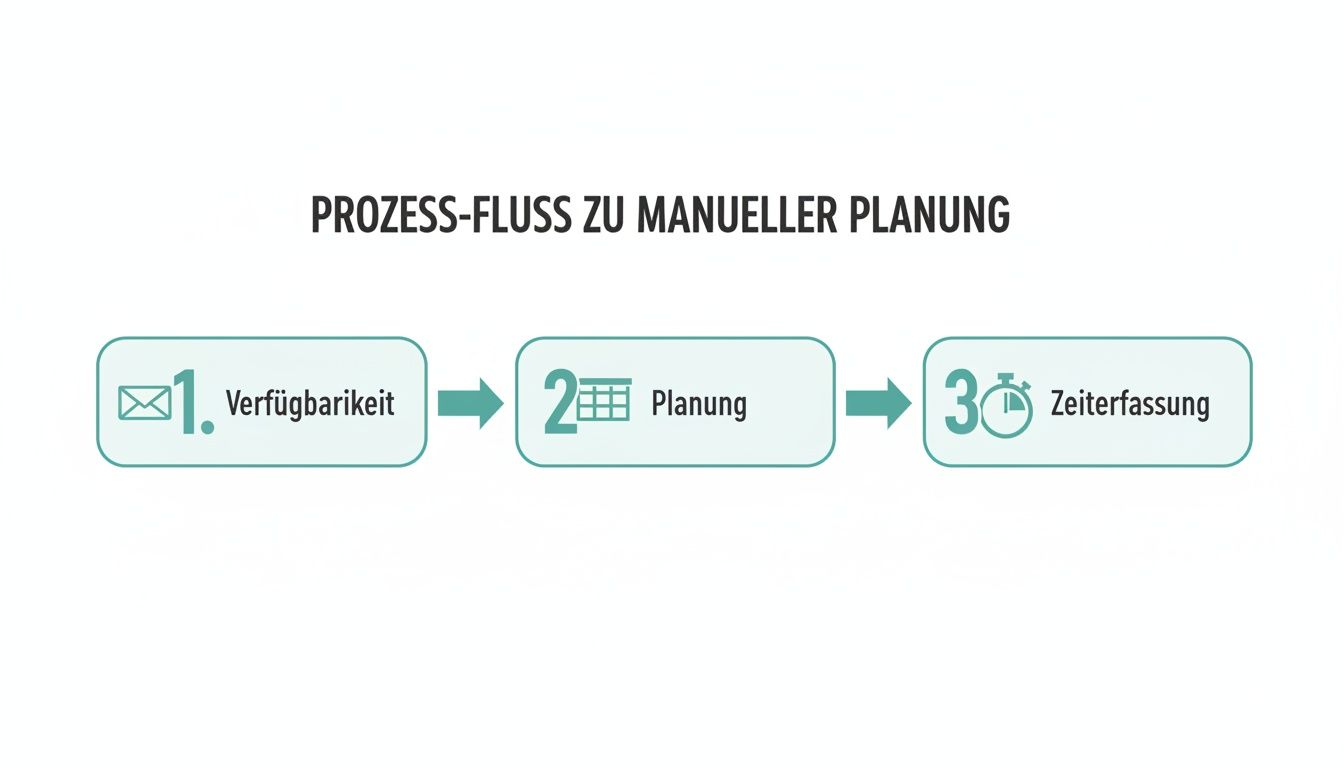
You can immediately see how fragmented and error-prone this old way is - delays and frustration are inevitable.
From deployment to billing: everything digital
job.rocks accompanies you through the entire process, from the first inquiry to the final wage preparation. The platform digitizes every step and creates a seamless, logical workflow.
- Automated time tracking:Your employees clock in and out directly via the app. Working times are recorded down to the second and forgery-proof. No more illegible timesheets.
- Simple hourly validation:After use, you can check and confirm the recorded hours with just a few clicks. If there are any discrepancies, you can clarify them directly via the platform.
- Seamless wage preparation:All released working hours are automatically prepared for payroll accounting. You simply export the data and pass it on to your payroll program or trustee.
This end-to-end digitalization not only saves you a huge amount of time, it also minimizes the risk of transmission errors that are commonplace in manual processes. Find out more about how a professional Workforce management softwarecan improve your processes.
Intelligent planning for a dynamic market
The Swiss labor market is changing, driven by technological progress. AI is accelerating these structural shifts, which has a direct impact on a flexible workforce. Almost fall annually 10%all places are gone, while at the same time new ones are created. Companies must therefore become more agile and be able to access different labor pools more quickly.
A platform like job.rocks becomes a decisive competitive advantage because it enables intelligent and lightning-fast personnel scheduling. Detailed You can find forecasts and analyzes at pwc.ch.
job.rocks is more than just planning software. It is a complete system that helps you keep track of things, increase your work performance and at the same time increase the satisfaction of your employees. The future of the gig economy demands smart tools – and job.rocks is the answer.
Concrete use cases from practice
Theory is a good basis, but the real evidence comes from practice. You can best see how exactly job.rocks changes everyday working life in the dynamic world of flexible working through concrete examples. Let's dive into three typical industries together and experience how companies take their personnel planning to a new level.
From these real-life stories, you'll see how the platform helps reduce costs, dramatically shorten open shift time to fill, and increase employee satisfaction at the same time. This is the one here Future of the gig economyin action.
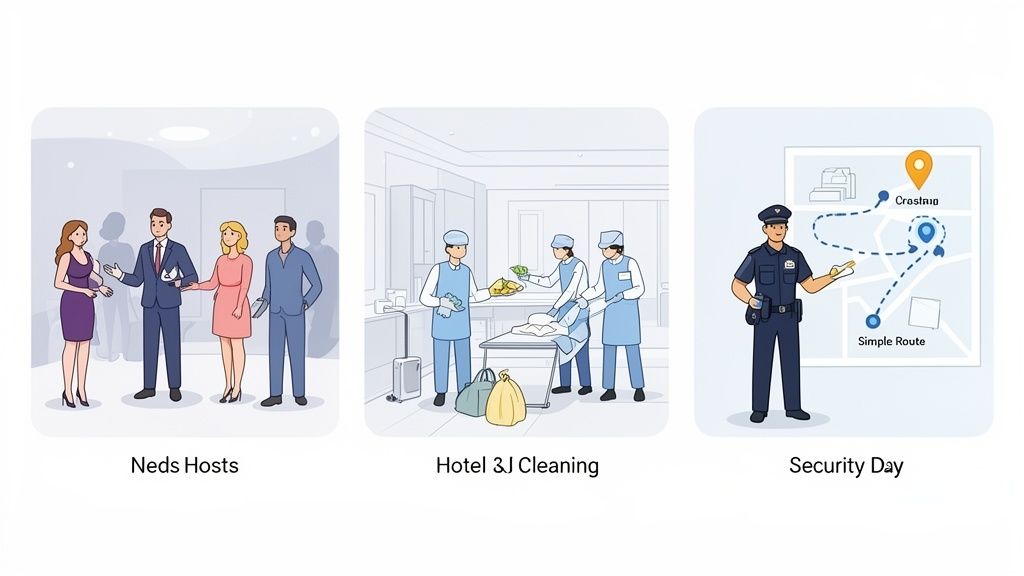
Event management: large-scale operation at a conference
Imagine a large event agency organizing an international conference with thousands of guests. The need for personnel is enormous and extremely diverse: hundreds of hostesses for the reception, technicians for the stages, service staff for catering and security personnel for admission controls.
This used to mean weeks of nerve-wracking planning work. Countless calls, emails and confusing Excel lists dominated the process. With job.rocks, reality looks different today.
- Targeted personnel search:The agency creates various job profiles directly in the platform – for example “hostess with English skills” or “technician with lighting desk experience”.
- Lightning-fast cast:With one click, the requests are sent to the appropriate employee pools. Employees receive a notification on their cell phone and can accept immediately.
- Live overview:The project manager sees how the shifts are filling up in real time on his dashboard. Losses can be compensated for immediately as the system automatically suggests available and qualified replacement workers.
The result is a massive time saving. The staffing time for hundreds of shifts is reduced from several days to a few hours. At the same time, quality increases because the right staff is always in the right place.
Hotel industry: Flexible staffing levels with fluctuating utilization
A hotel business in a tourist region knows the problem all too well: on sunny weekends and during the holiday season the hotel is completely booked, but in the off-season there is a yawning emptiness. A large, permanent workforce would simply be uneconomical in quiet periods.
This is where a flexible pool of cleaning and service staff comes into play, which is controlled via job.rocks.
When bookings suddenly pick up, the hotel manager sends a request for additional maids or breakfast waiters to the pool. The shifts are filled within a very short time and operations run smoothly.
Digital time recording via app also ensures absolutely transparent and fair billing. Every minute of work is recorded precisely and can be validated by management with one click. This creates trust and reduces the administrative effort for payroll accounting to a minimum. This keeps the hotel as agile and economical as possible.
Security industry: Intelligent route planning and complete documentation
A security company oversees multiple properties in a city, including construction sites, office buildings and shopping centers. Planning the guard tours and manning the gates used to be a logistical challenge.
With job.rocks, the company not only plans shifts, but also improves the routes of its mobile patrols. The system ensures that the right employees with the necessary qualifications – for example a first aid certificate or a permit to carry weapons – are assigned to the appropriate objects.
- GPS-supported time tracking:When they arrive at the property, employees clock in using the app.
- Complete documentation:All incidents and checkpoints are logged directly in the app.
- Immediate response:In the event of an alarm, the control center can immediately see which patrol is closest and send them specifically to the scene.
This precise control not only increases safety for customers, but also the company's work productivity. The complete digital documentation also serves as reliable evidence for clients and insurance companies.
Here we go: your path to an agile HR strategy
Are you convinced of the advantages and wondering how best to get started? Perfect. This section is your practical guide. We give you clear recommendations for action so that you can build a flexible and at the same time stable human resources strategy in your company. It's easier than you think.
The first step is an honest analysis. You need to understand your true flexible workforce needs before you act.
Step 1: Correctly assess your needs
Take a close look at your business data from the last few years. Where were there seasonal peaks or unexpected floods of orders that pushed your permanent team to its limits? A hotel business could analyze booking numbers to accurately forecast the need for additional service staff during peak seasons.
- Identify recurring patterns:When exactly in the year does your staffing requirement skyrocket? Is it the Christmas business, the summer holidays or a specific trade fair period?
- Plan for the unexpected:What type of short-term orders do you regularly receive? How many extra hands did you really need?
- Define the skills needed:What qualifications are crucial for these assignments? Do you need service staff with foreign language skills or logistics helpers with a forklift license?
With this analysis you create a rock-solid basis for your flexible employee pool.
Step 2: Build and maintain a qualified pool
A strong pool of gig workers is your most valuable asset in this game. It's not just about randomly collecting contacts, but rather building a reliable community. The best thing to do is to start by contacting former temporary workers, former interns or reliable freelancers with whom you have already had good experiences.
A well-maintained employee pool is more than just an address list. It is a network of people who know and value your company. Invest in these relationships because they are the key to success in the world Future of the gig economy.
Good, honest communication is the be-all and end-all. Keep your pool happy with regular but unobtrusive updates. Inform them about upcoming projects or simply ask about their current availability. This way they stay committed and feel like they are part of the team – even if they are not on site every day.
Step 3: Digitize processes and maintain control
The final and crucial step is the introduction of a central tool. With a platform like job.rocksYou can bundle all processes in one place - from inquiries to time recording to wage preparation. This means you retain full control at all times, ensure compliance with legal requirements and make your company fit for a flexible future.
Your agile HR strategy depends on the right tools. Put an end to confusing Excel lists and chaotic WhatsApp groups. Instead, rely on a professional solution that relieves you of the administrative work and gives you the freedom to concentrate on your core business.
Frequently asked questions about job.rocks
Here we answer the most important questions about it Future of the gig economyand how you can use job.rocks as a new standard for flexible working for yourself. We address the central topics that we come across again and again: data security, how the employee app works and of course the scalability of our solution.
How does job.rocks ensure GDPR compliance?
Data protection is our top priority - that's not just an empty phrase, but a promise. All personnel data is hosted on secure servers directly in Switzerland and is protected by modern encryption technologies.
We have introduced strict technical and organizational measures so that you can manage your employees' data in a GDPR-compliant manner at all times. Unlike unsafe Excel lists or confusing WhatsApp groups, with job.rocks you have full control over access rights and all data processing.
How exactly does the mobile app work for my employees?
The app is the heart of your flexible workforce. After your invitation, they can log in and maintain their availability completely independently. No more annoying follow-up calls.
You receive job offers directly as a push notification on your smartphone and can accept or decline with a single click. In addition, the app is used to record time to the second: employees clock in and out directly on site, which creates an absolutely error-free basis for your payroll.
For which company sizes is job.rocks suitable?
Our platform is fully scalable and grows with you. It is suitable for companies of all sizes.
A small catering company with a pool of 20Temporary workers benefit just as much as a large event agency that coordinates several hundred gig workers. Thanks to the flexible pricing model, the solution adapts exactly to your current needs - you only pay for what you really need.
Can job.rocks be connected to existing payroll accounting systems?
Yes, and that is exactly one of the biggest advantages in practice. At the end of each billing period, you can export the validated hours worked as a clean, error-free record with just a few clicks.
You or your trustee can import this file directly into all common payroll systems. This saves an enormous amount of time and eliminates the typical manual transmission errors that always happen sooner or later.
Are you ready to rethink your workforce planning and prepare for the future of flexible working? Discover job.rocksand find out how you can reduce your administrative effort to a minimum and finally increase your work performance again.